Idea’s What an Idea Sirji Campaign: Psychology of an Ad
The psychology behind Idea's 'What an Idea Sirji' ad: how it turned a mobile network into a problem-solver and a tagline into a catchphrase.
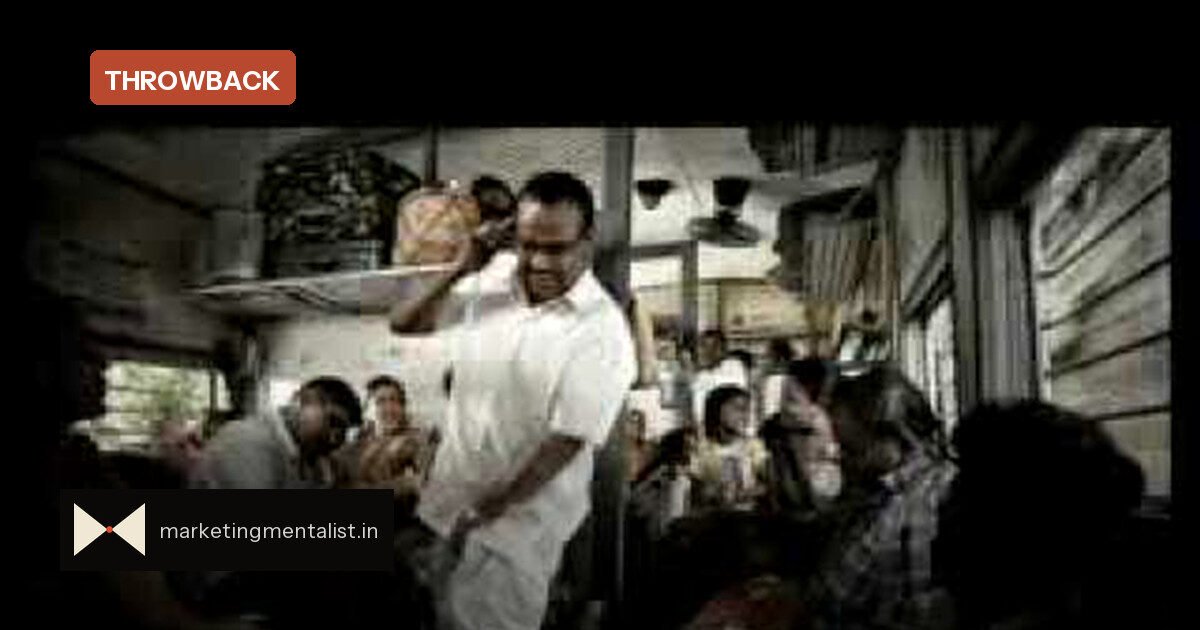
Most telecom ads sold towers, tariffs and coverage. Idea’s What an Idea, Sirji! film did something quieter: it sold the feeling of being clever.
The ad and when it ran
The film above ran during Idea Cellular’s long-running What an Idea, Sirji! campaign, created by Lowe Lintas, which dominated Indian television through the mid-2000s and beyond. It belongs to a series of simple, rural-meets-urban fables in which an ordinary person finds a smart way to use a mobile connection. The execution is deliberately low-fi: no celebrity, no network boast, just a small daily tension turned into a solution. The tagline lands as the punchline.
The levers it pulled
The film works less through persuasion than through framing and identity.
- Reframing. Instead of asking viewers to compare network quality, the film recasts a phone habit as an everyday life hack. The product shifts from calling service to instrument of your own ingenuity.
- Social currency. The line is ready-made for reuse. Viewers didn’t just remember the brand; they repeated the phrase to applaud clever fixes in their own lives, turning the ad into a cultural token.
- Humor through incongruity. The ending resolves a familiar tension with an unexpected visual punch. That mild surprise makes the message more memorable without heavy emotional storytelling.
What it did for the brand and the culture around it
For Idea, the campaign built a distinctive personality in a cluttered market. Rather than competing with larger networks on claims of speed or reach, it occupied a warmer position: the brand that believed every Indian was a problem-solver. The tagline grew beyond advertising into everyday speech—a shorthand for “that’s a smart, simple fix.” That is rare mental real estate for a telecom brand.
Culturally, the ad anticipated the meme era. Its structure—a normal person, a twist, a repeatable line—is the same format that later dominated short-form video. It made resourcefulness aspirational without making it expensive.
What still works today and what would not
The core device still works: shift the frame from product feature to user identity, and give people a line they want to say out loud. The “ordinary genius” narrative still travels well, especially in mass-market categories where consumers feel overlooked by premium advertising.
What would not work as easily is the pace and the proof. Today’s audiences scroll faster and trust more narrowly. A single gentle twist built around a landline-era problem might feel too slow. And a tagline-first strategy can hollow out quickly if the brand doesn’t keep filling it with credible product truths. The lesson isn’t to copy the ad; it’s to copy the reframe.
Watch the original: Idea on YouTube