How Surf’s Lalitaji made paying more feel smart
In 1980s India, Surf's Lalitaji turned a pricier detergent into a rational purchase by reframing value around cost per wash, not cost per kilo.
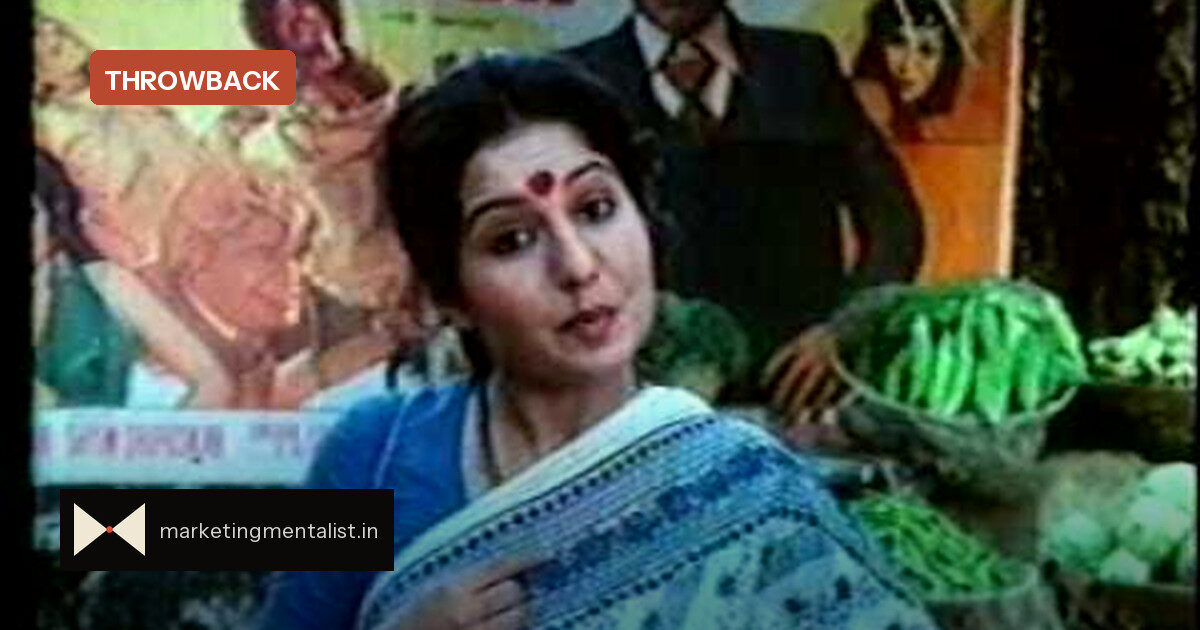
Before Lalitaji, detergent advertising in India mostly sold a softer, whiter fantasy. This ad sold arithmetic instead. It aired in the mid-1980s, when Surf was defending its premium position against cheaper powders, particularly Nirma, which had grown by selling more grams for less money. Surf’s response was not a price cut. It was a sharp-tongued housewife who made the higher price look like the only mathematically sensible choice.
The ad and when it ran
The film is from the mid-1980s, part of a long Surf campaign built around Lalitaji, a sari-clad homemaker who speaks directly, corrects the viewer, and refuses to be charmed by a lower sticker price. The line that carries the whole argument is the tagline: Surf ki kharidari mein hi samajhdari hai — “Buying Surf is the intelligent choice.”
The levers it pulled
Three behavioural principles did the heavy lifting.
- Price-quality inference. Consumers often treat a higher price as a signal of quality. Lalitaji leans into this. She never apologises for Surf being costlier; she treats it as evidence that it works better. The messenger’s confidence does the persuading.
- Mental accounting. This is the sharpest move. The ad shifts the unit of comparison from price per kilo to cost per wash. A cheaper powder that takes more scoops to clean the same load stops looking cheap. Surf becomes the rational budget choice, not the indulgence.
- Peer credibility. The argument is delivered by a practical housewife, not a celebrity selling glamour. She reads as a sensible neighbour who has done the calculation. That source makes the price defence feel like household advice rather than brand spin.
What it did for the brand and the culture around it
The campaign is remembered for helping Surf hold its premium ground without cutting price. That mattered because cheaper rivals had rewritten the category around low price. Lalitaji answered by changing the question: not “how much does a box cost?” but “what does a clean wash cost?”
Culturally, she became more than an ad character. She turned the middle-class housewife into an economic decision-maker—sharp, unromantic and respected for it. The phrase entered everyday memory as shorthand for the idea that thrift and quality can be the same choice. For a generation of Indian advertising, she also proved that a real person could be more persuasive than a star.
What still works today and what would not
The core pricing strategy still works. Any premium brand facing a cheaper competitor can use the same move: shift the comparison to cost per use, outcome per rupee, or time saved, instead of sticker price. A credible peer who has no obvious reason to lie remains more persuasive than a polished pitch. And answering the price objection head-on, with respect, beats pretending it doesn’t exist.
What would not survive is the execution. The ad’s whiteness-equals-clean visual would feel dated and culturally narrow. The one-way lecture tone—slightly scolding—would likely read as preachy on today’s social platforms. And building the entire insight around a single housewife archetype misses how laundry, purchase decisions and household roles have changed. The logic is timeless; the wrapper isn’t.
Watch the original: Surf on YouTube