Bingo Tedha Hai Par Mera Hai: The Psychology of the Ad
A 2007 Bingo ad made oddly shaped chips a badge of nonconformity. Here are the behavioural levers that made imperfection a reason to buy.
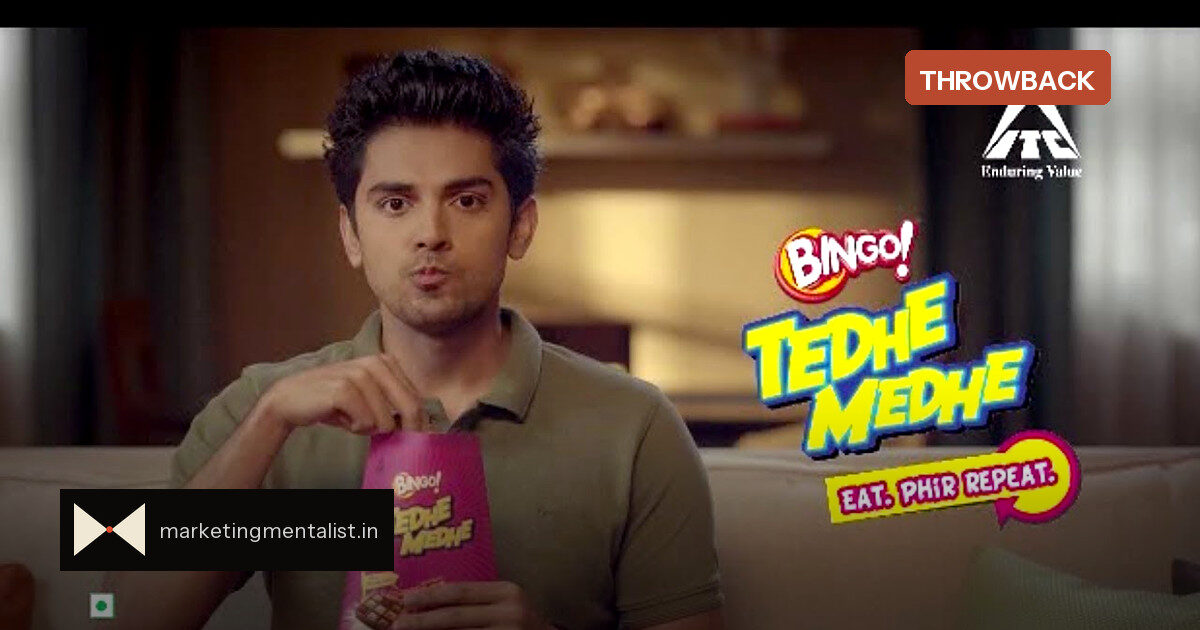
The ad and when it ran
In 2007, Bingo, ITC’s snack brand, released a television spot that took the brand’s oddly shaped chips and made them the hero rather than a manufacturing accident. The film built a small world of eccentric characters who owned their crooked edges and slightly off behaviour. The line “Tedha Hai Par Mera Hai” did the heavy lifting: it translated an irregular chip into a declaration of belonging.
At the time, the Indian snacks category was largely about taste, crunch and a familiar round or square chip. Bingo’s campaign broke that visual code by treating uneven shape as a personality, not a defect.
The levers it pulled
The spot worked because it borrowed three psychological levers.
- The pratfall effect: a harmless flaw can make something more likeable. The chips’ twisted forms would normally signal poor quality. By pairing them with likeable oddball characters, the film reframed the flaw as charm.
- Optimal distinctiveness: people want to belong and stand out at once. The tagline made crookedness a chosen identity: “it’s bent, but it’s mine.” That gave teenagers and young adults a low-stakes way to signal nonconformity.
- Processing fluency: the rhyming tagline was extremely easy to recall. Repetition of a simple, rhythmic phrase reduced cognitive effort and made the brand feel familiar, even while the visual style felt new.
What it did for the brand and the culture around it
Bingo’s campaign gave ITC a distinct voice in a category where multinational brands had set the visual rules. The catchphrase became a pop-culture shorthand, used to claim everything from a scuffed phone to an unusual choice in clothes. It became a way to own one’s quirks.
The brand didn’t need to say “we are for rebels.” It simply made the product’s physical difference a badge the audience could wear. That is harder than it looks: the campaign made a feature out of what could have been a quality complaint.
What still works today and what would not
The core insight still works: if you can reframe a perceived negative as a deliberate choice, you change the buyer’s decision frame. Brands today can use the same move for “ugly” produce, uneven design, or unconventional packaging. The phrase still travels because it assigns ownership to the consumer, not the factory.
What would not land as smoothly is the loud, clownish quirkiness of the film’s characters. Today’s audiences expect oddness to feel specific and emotionally true rather than simply eccentric. Also, nonconformity has become so heavily marketed that a new campaign would need a sharper, more insider take to avoid sounding like a costume.
Watch the original: Bingo on YouTube