Slovic hits Rs 300 crore run rate selling gyms for the home
How a Rs 300 dumbbell set became the entry point to a nearly Rs 300 crore fitness brand for beginners, women and small-town India.
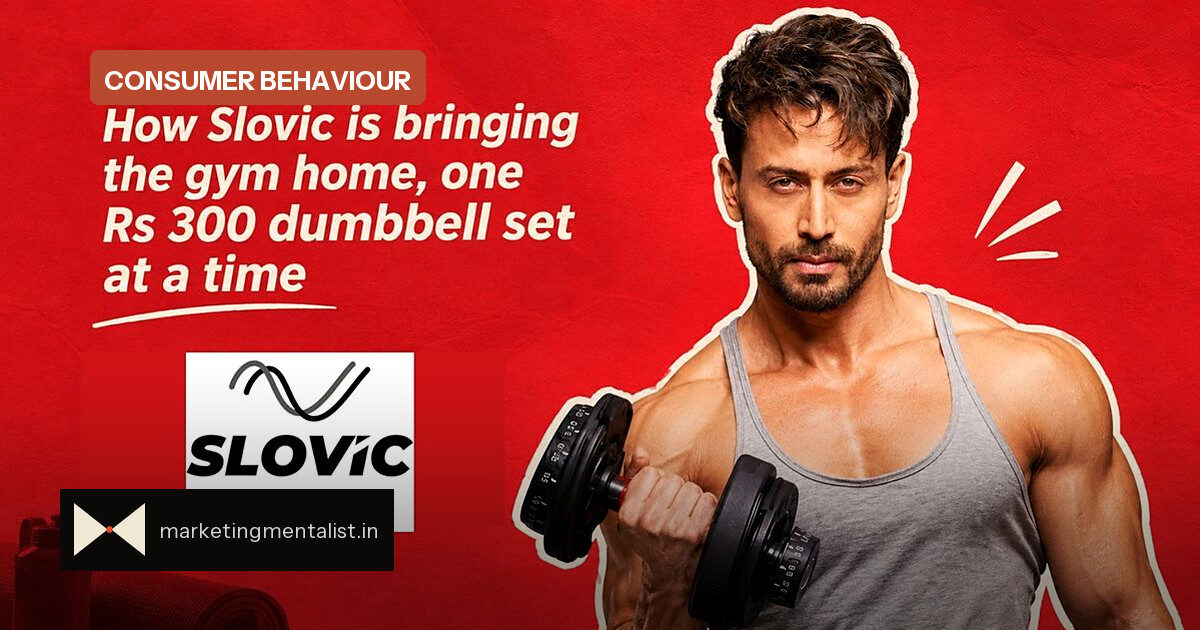
Slovic began with a simple observation: almost everyone knows fitness matters, but very few have an easy, affordable way to act on it. Launched in 2021 by Aqib Mohammed and Shashwat, the brand started with resistance bands on Amazon and has grown into a multi-category fitness business operating at an annual run rate of nearly Rs 300 crore.
That scale was not built on gym memberships or premium machines. It was built on a Rs 300–400 entry point, quick-commerce delivery and a promise that a workout can happen at home.
The insight: high awareness, low access
Aqib Mohammed estimates gym penetration in India at just 1–1.5%, compared with an estimated 8–10% in international markets. The brand saw a familiar contradiction: people know exercise is important, but most do not have a convenient way to begin.
“We felt this is a very big gap that can be fulfilled by creating a brand that creates affordable, accessible products across age groups and makes them available across geographies,” Mohammed told Afaqs!
How customers actually climb the ladder
Buyers rarely start with a full home gym. They begin with a cheap dumbbell set, then add pull-up bars, resistance bands and tubes as regular exercise makes them more interested in new workouts. The first purchase lowers the risk of trying fitness; the habit creates the basket.
- Low-ticket entry: a product at Rs 300–400 replaces a gym contract as the first trial.
- Habit builds need: regular use makes customers more willing to experiment.
- Fitness drives lifetime value: fitter customers spend more on fitness products over time.
Mohammed’s summary of the model: “The single biggest lifetime value increaser for us is just getting people fit. Because fit people spend more money on fitness products.”
Who is actually buying
The revenue base is concentrated among 18–30-year-olds, with a nearly even male-female split in workout products. That is a meaningful departure from the gym market, where men are the visible majority. Resistance tubes, for example, are bought mostly by women even though they are strength-training tools. Slovic is deliberately encouraging strength training for women and framing fat loss as a byproduct, not the primary goal.
The geography is also broader than the usual metro story. North India and Delhi-NCR lead, while tier-one and tier-two markets contribute almost equally.
What marketers can learn from the model
The “Gym Ghar Lao” campaign, featuring Tiger Shroff and largely created by Slovic’s internal Gen Z team, works because it removes the real barrier: people do not lack motivation as much as they lack time, proximity and a low-stakes way to start. Quick commerce adds to this by making dumbbells a 10-minute purchase rather than a planned one.
Slovic remains online-only, with e-commerce and quick commerce split fairly evenly and its own D2C site still in high single digits. That suggests the brand is not chasing offline status yet; it is chasing distribution everywhere the beginner already shops.
Apply the ladder to your category
The framework here is progressive customer commitment. Do not sell the full solution first. Sell a small, low-risk first success, make it easy to use, and let the habit grow the relationship. For a fitness brand that first success is a Rs 300 dumbbell; for your brand it might be a starter kit, a first project or a single low-commitment service.
Slovic’s growth is less about fitness enthusiasm than about removing every excuse between someone and their first rep.
Source: Afaqs!