The Psychology Behind Pepsi’s Yeh Dil Maange More
The campaign didn't sell cola—it sold the feeling of wanting more. What Pepsi's Yeh Dil Maange More still teaches marketers about Indian aspiration.
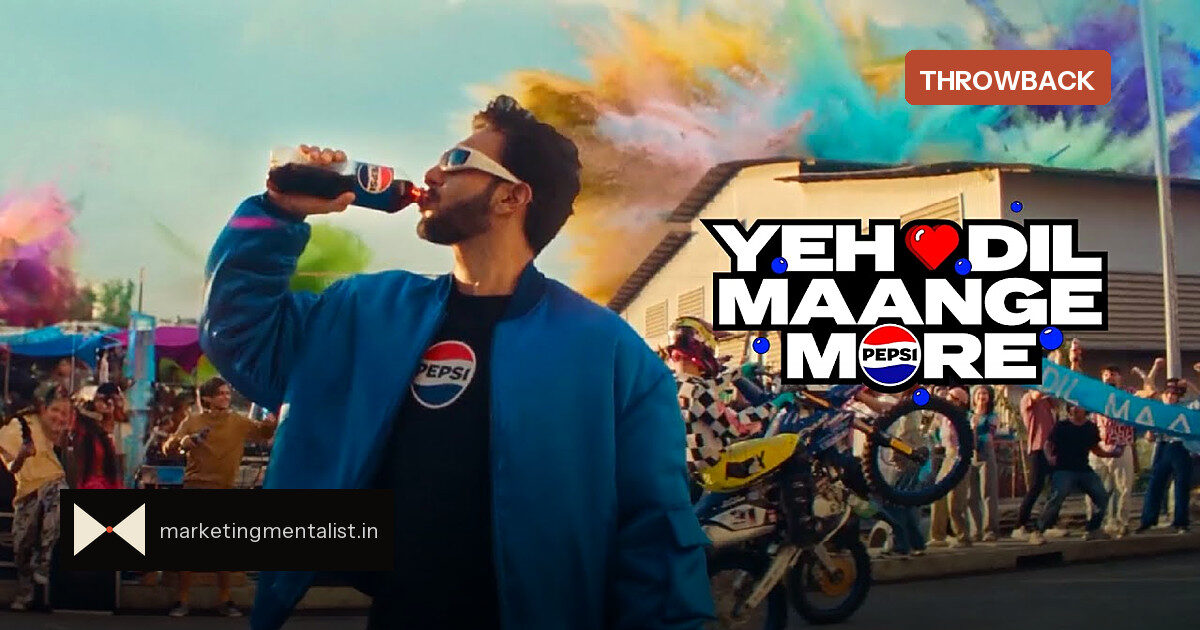
The ad and when it ran
Pepsi’s Yeh Dil Maange More line belongs to the brand’s turn-of-the-century Indian playbook—an era when cola advertising was less about thirst and more about attitude. The film above is a later reprise featuring Ranveer Singh, but it carries the same genetic code: movement, noise, swagger, and a tagline that treats wanting as a virtue.
The levers it pulled
At its core, the ad runs on three behavioural ideas.
- Self-signalling. The film never really argues that Pepsi tastes better. It shows a person choosing to want more—louder, faster, bigger. In behavioural terms, the drink becomes a badge of identity: someone who refuses to settle. The cola is secondary; the declaration is the product.
- Excitation transfer. The film’s energy—music, motion, charisma—gets misattributed to the brand. Psychologists call this excitation transfer: arousal from one source colours the next judgement. By the time the tagline lands, the viewer’s pulse is already up, and Pepsi gets credit for it.
- Social identity. The film makes wanting more a membership badge—young, restless, in on the joke. The tagline becomes an identity claim, not a product claim. It lets people signal which tribe they belong to, and it makes ambition feel like belonging rather than selfishness.
What it did for the brand and the culture around it
The line became a slogan for a generation. It gave Pepsi India a clear emotional territory against bigger, more family-centred cola advertising. Instead of selling cola, Pepsi sold the feeling of never being quite done—with cricket, with music, with one’s own limits. Over time, the phrase escaped advertising and entered everyday speech, the surest sign a brand has lodged itself in culture.
For the brand, the campaign is credited with strengthening Pepsi’s youth appeal in India. It aligned the drink with cricket and Bollywood’s rising energy without making the product the hero. That let Pepsi stay culturally relevant even as cola consumption became more occasional.
What still works today and what would not
The insight still works: aspiration is not a demographic, it’s a stance. Brands that tap the desire for more can rally an audience quickly. The line also shows that a simple, repeatable phrase can outlast a long story—especially in short-form media, where memory is built in seconds.
What would not work today is the uncomplicated version of ‘more’. Modern consumers are wary of endless consumption; they want more meaning, more autonomy, more calm as often as more stuff. A straight lift of the tagline without irony or self-awareness would feel tinny. The Ranveer reprise gets some of this right by leaning into performance rather than possession.
Watch the original: Pepsi on YouTube