Why Indian Shoppers Are Choosing Homegrown Beauty Brands
Affordability is only part of the story. Local relevance, social proof and lower trial risk are reshaping India's beauty basket.
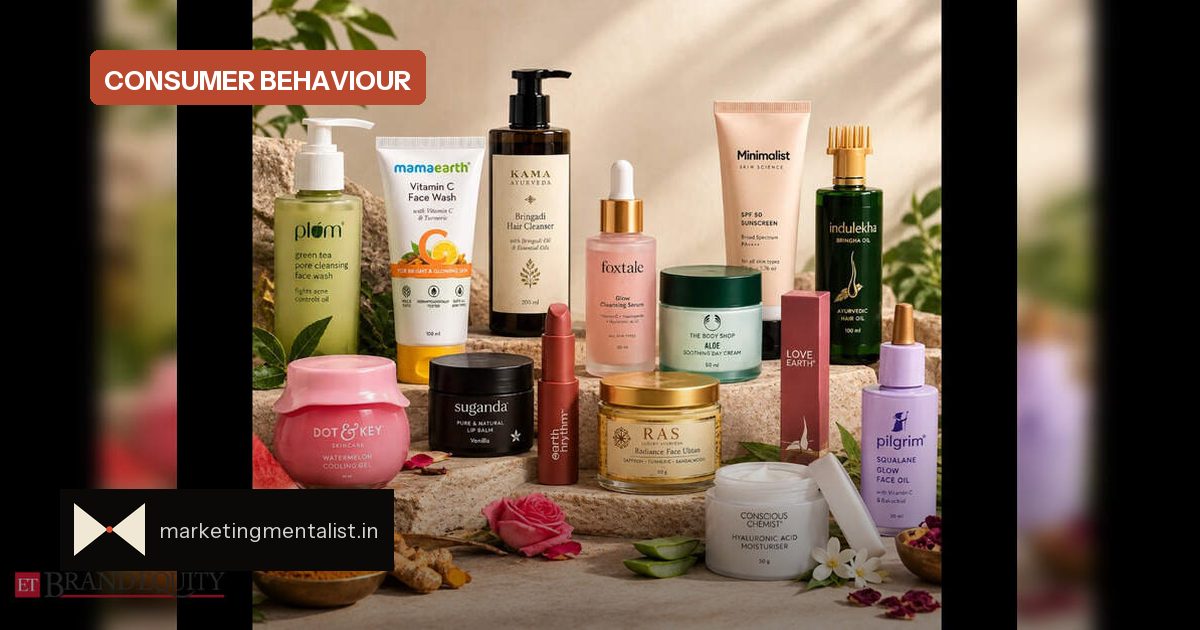
For years, a global beauty label could do much of the selling on its own. The name carried familiarity, trust and permission to charge more. That assumption is becoming harder to sustain. Indian shoppers are now comparing ingredients, claims, reviews and prices in minutes—and a logo alone is no longer enough to close the sale.
The trial-risk math
Buying an unfamiliar beauty product is a small bet. A Rs 3,000 serum from a brand you do not know can feel like a costly gamble. A Rs 599 or Rs 999 serum changes the calculation: if it disappoints, the loss is limited; if it works, the brand earns a repeat customer. This is pricing psychology at work. The Rs 500–Rs 1,000 band has become India’s safe zone for experimentation.
But value is not simply cheapness. As Kotalwar told ETBrandEquity, “Affordability today is less about being cheaper and more about getting the right product for the right concern at the right value. A global name alone is not enough anymore.”
Local relevance becomes functional
“Made for India” has moved beyond heritage ingredients and local inspiration. It increasingly means designing for the actual problems Indian consumers face—hard water, humidity, specific skin and hair textures. The persuasive question is no longer “Is this brand Indian?” but “Does this product solve my visible concern at a fair price?” That is a stronger position because it speaks to the job the shopper is hiring the product to do.
Content meets the consumer first
The path from awareness to purchase has compressed. A creator recommends something, a shopper searches for it, reviews are scanned, and the order can follow within minutes. Esha Joshi, DGM, marketing and communications at Shoppers Stop, Global Beauty Brands, describes the change simply: “The content speaks for the brand first and then there is a product.”
That inverts the old funnel. For many newer beauty labels, social proof and demonstrated efficacy create the first impression—before packaging or shelf presence get a chance. This also explains the heavy reliance on creators, reviews and affiliate content: the goal is not just visibility, but lowering the buyer’s sense of uncertainty early.
What marketers should do
- Reduce the cost of trial with an accessible entry price—not to look cheap, but to make the first use feel safe.
- Make local relevance concrete by connecting formulation to a visible use case, not just a heritage story.
- Design for content-first discovery: reviews, demos and creator proof are your new packaging.
- Choose one sharp position. As Joshi warns, “If you are trying to be everything to everyone, you become nothing.”
- Use fast feedback loops to learn from search behaviour, content response and repeat purchases.
The first purchase may be won at Rs 599. The harder question is what earns the next one. In a market where a new Indian beauty brand launches every month, attention is scarce. The enduring advantage does not belong to the biggest logo or the lowest price—it belongs to brands that reduce uncertainty, deliver on the promise, and give consumers a clear reason to remember them.
Source: ETBrandEquity.com