Hamara Bajaj: The 1989 ad that made a scooter family
How Bajaj Auto’s 1989 Hamara Bajaj campaign used social identity, emotion and repetition to turn a scooter into middle-class pride.
The ad and when it ran
In 1989, Bajaj Auto released a corporate film that ended with a phrase India would repeat for decades: Hamara Bajaj. It was not a scooter ad in the usual sense. There was no list of features, no mileage claim, no side-by-side comparison. Instead, the film placed the Bajaj Chetak inside the rituals of an emerging Indian middle class—weddings, festivals, first paychecks, family trips, small-town enterprise—and gave the viewer a simple possessive pronoun: hamara, ours.
The timing mattered. Liberalisation was around the corner, choice was about to explode, and Bajaj was already the scooter people waited years to buy. The campaign took a utilitarian product and made it emotional infrastructure.
The levers it pulled
The film worked because it borrowed from behavioural science long before marketers used that language. Three levers stand out.
- Social identity theory. People define themselves partly by the groups they belong to. The ad made Bajaj ownership feel like membership in the Indian middle class—not a purchase but a badge of belonging.
- Affect heuristic. The music, the warmth, the familiar settings loaded the brand with feeling. When viewers later thought of Bajaj, they didn’t recall specifications; they recalled pride, family and arrival.
- Mere-exposure effect. The jingle and the line Hamara Bajaj ran heavily and consistently. Repetition made the phrase feel not just familiar but true—like something the country already believed.
Each lever did the same job: it moved Bajaj from the category of “scooter” to the category of “ours”.
What it did for the brand and the culture around it
The campaign gave Bajaj a moat that competitors couldn’t easily copy. For a generation, the scooter in the driveway was not a Chetak; it was Hamara Bajaj. The tagline became shorthand for middle-class aspiration and a phrase used in conversations, wedding toasts and even later tributes. Bajaj had sold millions of scooters before 1989, but this campaign turned that scale into a story: the vehicle as proof that a household had arrived.
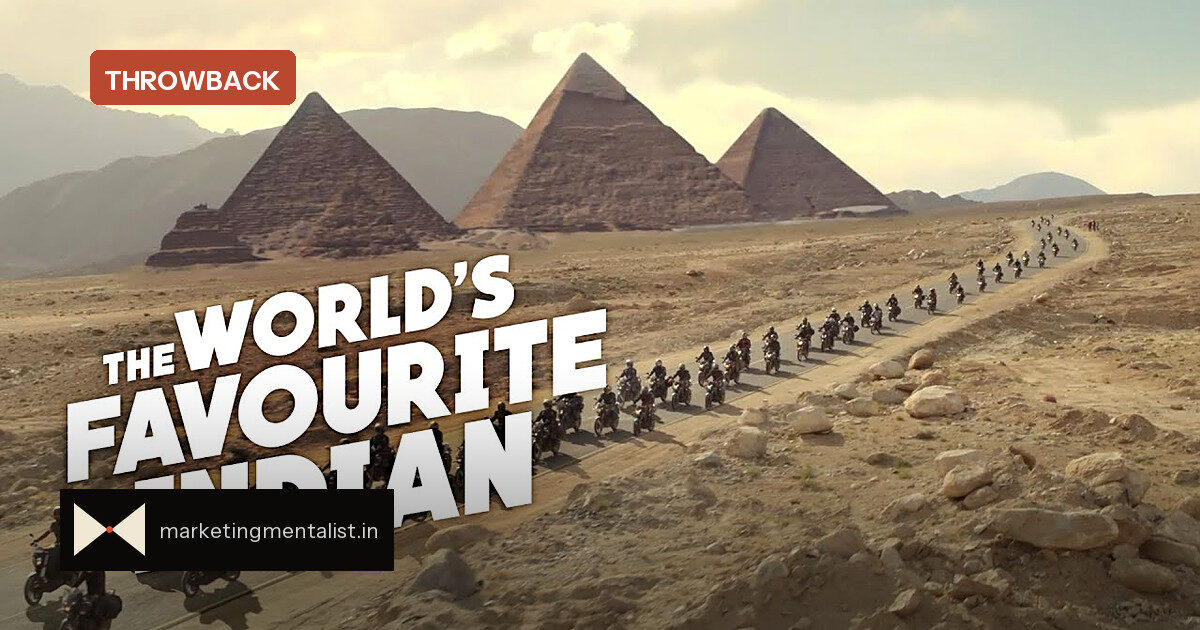
Culturally, it captured a specific moment. Before global brands flooded the market, Bajaj positioned itself as the world’s favourite Indian—a local hero at a time when “Indian” was becoming a point of pride rather than a compromise. The ad didn’t just reflect that shift; it helped accelerate it.
What still works today and what would not
The core idea still works: make the customer the hero, wrap the product in identity rather than specs, and repeat a short ownership line until it becomes the customer’s language. The word hamara is still the most powerful part—it hands possession of the brand to the buyer.
What wouldn’t work: a single monolithic idea of the Indian middle class. Today’s audience is more diverse, more sceptical and more likely to ask, “Show me.” An anthem without proof points—real owner stories, reliability data, service experience—would feel thin. And a broadcast-only, one-film strategy would struggle in a feed where attention is split and trust is built in fragments.
The lesson endures. The best brand ads don’t say “buy this”; they say “this is you.”
Watch the original: Bajaj Auto on YouTube