Amul’s 25 g Protein Cubes Turn Snacking Into a Ritual
Amul's 25 g protein cubes turn a functional snack into a shake-it-yourself ritual. Here's how participation and price shape trial.
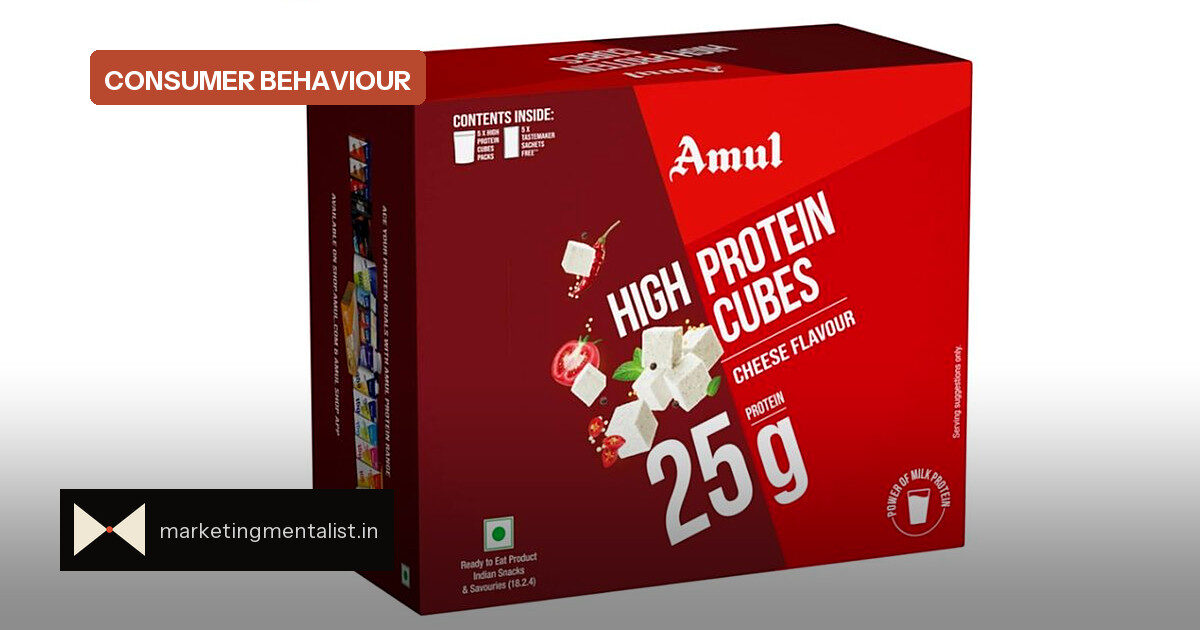
Amul is turning a 38 g protein cube into a snack you finish yourself. Its new High Protein Cubes carry 25 g protein and 150 kcal per single-serve pack, sold as a box of five for Rs 80 on the Amul Shop app and website.
The launch, announced on Amul’s Instagram and by brand manager Shefali Vijaywargiya on X, is a savoury extension of the cooperative’s high-protein range. But the centrepiece is not just the protein count; it is the ritual built into the format.
What’s in the box
Each box contains five 38 g packs and five seasoning sachets in Peri Peri, Korean Kimchi, Tandoori, Cheese & Herbs and Tomato. The suggested ritual is deliberately low-effort: pour the seasoning into the pack, shake it, and eat. Amul also suggests dropping the cubes into gravies or soups, or using them in bhel.
Why a shake-it-yourself format matters
By asking buyers to season and shake the cubes, Amul is making consumption active rather than passive. Behavioural scientists call this the IKEA effect: when people invest effort in a product, they value it more. The effort here is small, but visible and enjoyable, which matters for a convenience snack.
Rituals also improve involvement. A short pre-eating routine can make a snack feel more deliberate and memorable, even when the underlying product is a cube-shaped protein crisp. This helps Amul avoid competing on protein alone.
Protein is the claim, participation is the memory
Amul entered the high-protein direct-to-consumer space in 2022 with paneer and dahi, then added lassi, buttermilk, milkshakes, whey protein, high-protein milk and mango kulfi. The cubes move the portfolio into ready-to-eat snacking. At Rs 80 for five single-serve packs, the effective price is around Rs 16 per serve, placing it within easy trial range.
That price matters. Functional foods often charge a premium; Amul is using accessibility to drive trial, while the flavour sachets create a ritual that can carry word of mouth. Shefali Vijaywargiya put it as an invitation: “We’d love to see the innovative ways you consume Amul High Protein Cubes.”
The strategic signal
This is not just a new SKU. It signals that Amul is treating protein as a platform, not a single product category. By moving from dairy staples into snackable formats, the brand is following the same behavioural thread: make high protein easy to buy, easy to consume and slightly fun to prepare.
What marketers can borrow
- Add one low-effort participation step: shake, mix, tear or garnish.
- Keep the functional claim sharp and specific, such as 25 g protein per serve.
- Let consumers co-create the final flavour rather than prescribing a single taste.
The broader lesson is that convenience does not have to mean passive. A small ritual can make a new product feel personal, and that feeling is often what drives repeat purchase.
Source: Afaqs!