True Balance Fatafat Loan: The Psychology Behind 100M Views
True Balance's new Fatafat Loan film turns an eye-clinic surprise into a quick-credit story. Here's the psychology behind its 100-million-view campaign.
The new film
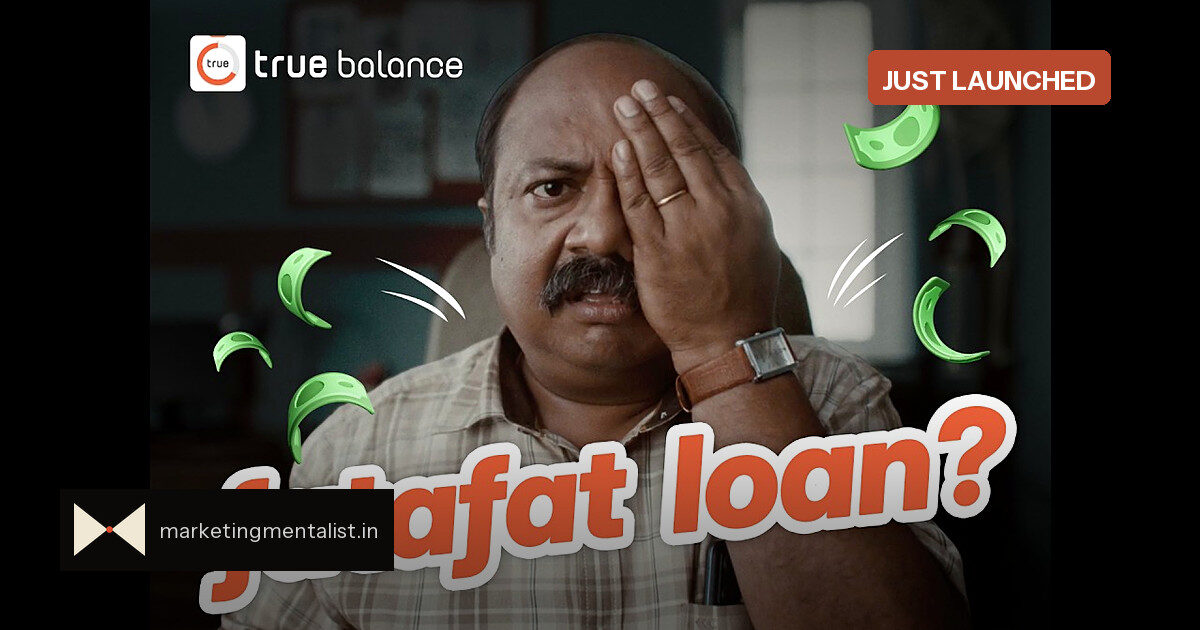
True Balance launched its latest Fatafat Loan brand film in mid-October 2026, aimed at India’s digitally active borrowers who want small, fast credit without a heavy process. Nayansukh Ji has just had his eye bandages removed when the doctor’s test takes a comic turn: he needs another operation. That unplanned expense is the whole setup. He turns to True Balance, gets a fatafat loan, and the film closes on the campaign’s promise: Loan Milega Fatafat, Life Hogi Takatak. The ad is a continuation, not a departure—earlier films under the campaign have crossed 100 million views.
The levers it pulls
The film works less through information than through a few quiet behavioural moves.
- Familiarity heuristic. The tagline, the structure, the comic tone and the brand’s hero moment all follow the pattern the campaign has already built. That repetition makes the new film feel easier to process, and that fluency is misread as trust.
- Mental accounting. The loan is not framed as aspiration or lifestyle spending. It is a surprise medical bill—an unexpected, no-fault expense that people mentally file under emergency. That makes borrowing feel sensible, not indulgent.
- Tension-release. The comedy sets up a small, believable stress spike: another operation. True Balance appears as the resolution. The anxiety is discharged through the product, which feels faster and friendlier than a list of rates and features would.
The bet the brand is making with it
True Balance is betting that a familiar, funny story can do more for trust in a high-anxiety lending category than a more polished or feature-led one. The new film does not introduce a new claim; it re-installs one. Designed for mass distribution, it anchors a wider brand-building effort. The early numbers give that bet some support. In the last quarter, the company’s third-party tracker showed a 27% increase in brand awareness and a 6% rise in brand consideration, along with improved conversion rates.
There is a second bet underneath: the company has been piloting AI-generated films under the same campaign since September 2026. Three have been produced so far, each in days rather than weeks. They function as a testing ground—cheap, quick creative variants that help the team learn what resonates before scaling up. The AI films alone have crossed 20 million views. CMO Ashish Aggarwal frames the strategy squarely: success is about influencing consumer behaviour, not just generating views.
What to borrow for your next campaign
If you advertise in a category people find stressful, the film’s structure is reusable. Start with a small, believable money shock—something ordinary, not catastrophic. Put a recurring face in the middle of it. Then let a fixed promise close the loop. The repetition does the persuasion.
The less obvious lesson is the AI layer. True Balance is using fast, low-cost AI films as a creative petri dish, not as the final campaign. That lets the team test tone, story beats and formats before committing to the hero film. For a brand team, that is a useful discipline: spend on polish only after the cheap version tells you something.
Watch the original: True Balance on YouTube
Source: Passionate In Marketing