Some 10M-Follower Meme Pages Cost ₹50,000 a Post
Meme pages are moving from late-campaign buzz to planned media. Here's why brands now pay for native voice, timing and community over follower count.
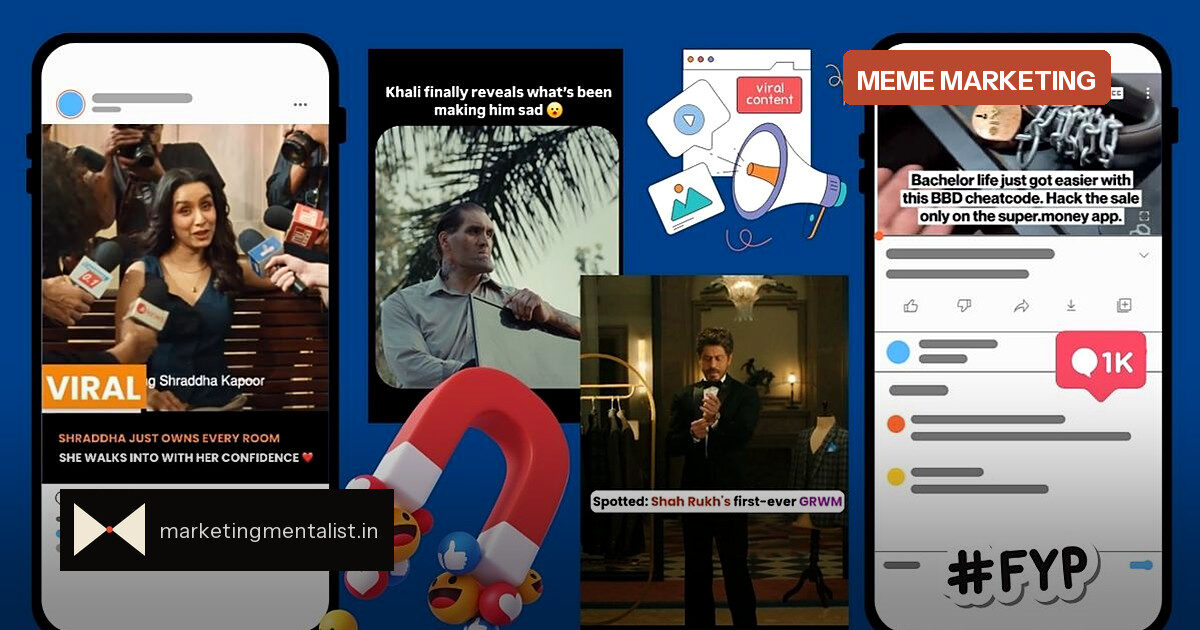
When Foxtale signed Shah Rukh Khan, the build-up did not rely on a single announcement. Karan Johar shared a peek at Khan’s personal bag, and banter with Farah Khan turned on which Khan gets the campaign this time. For anyone who does not follow Foxtale, the moment could still land through a celebrity story, a joke, or a meme page remixing it into content.
That is the shift. Brands are no longer only buying visibility; they are buying the way the internet talks.
From late buzz to planned media
Two or three years ago, meme pages were often invited late in a campaign to create noise. Viren Vesuwala of White Rivers Media says planners now use them to reach tightly defined communities that regular media struggles to enter, and evaluate them on engagement, audience trust and cultural fit rather than follower count alone.
Ashutosh Valani, co-founder of RENÉE Cosmetics, puts the distinction simply: “Influencers lend a brand their face, meme pages lend it their voice.” RENÉE treats meme pages more like publishers than influencers, paying for reach but really for timing and a sense of humour.
What changes in the brief
The brief changes too. Brands can give the insight and the key takeaway, then let the page adapt the idea to its audience. RENÉE’s strongest meme-led work, Valani says, came from spotting a moment early and letting a set of pages riff on it within hours, not weeks.
Vesuwala adds that brands should protect the essentials: core message, factual accuracy, mandatory disclosures and brand safety. Beyond that, tight control hurts the result.
The economics of a meme page
Pricing varies, but indicative agency rates show the range. A. Aziz Khan of RVCJ Digital Media puts standard Instagram integrations at:
- Rs 20,000–50,000 for pages above one million followers
- Rs 50,000–80,000 for pages above five million followers
- Rs 80,000–2 lakh for pages above ten million followers
Sankalp Samant of Idiotic Media offers a lower figure for some large pages: around Rs 50,000 for a post from a ten-million-follower page. The difference reflects variation in pages, performance and deliverables.
The comparison with influencers is stark. A ten-million-follower influencer could charge around Rs 10 lakh, while a meme page with a similar following could cost a fraction of that. This is not like-for-like inventory: an influencer sells personal recommendation, while a meme page sells access to a community that follows for humour, relatability and everyday cultural commentary.
Why the psychology works
Meme pages work because their content feels native to the internet. The audience has already opted into a tone and an in-group. When a brand shows up in that voice, it borrows the page’s social proof; when it sounds like an ad, the permission disappears. That is the core tension: the freedom that makes a meme travel also makes it harder to control.
Virality is increasingly discussed at the planning stage as an outcome to design for. But Valani warns that humour ages fast and lands differently across audiences, so page selection and brand safety matter as much as the creative.
Measure the reaction, not the tap
RENÉE judges meme-led campaigns on shares, saves and comment sentiment rather than likes, because a forwarded meme does more work than a double-tap. RVCJ also looks at Reel views, watch time and engagement rate, and, for performance-led campaigns, clicks, leads, coupon redemptions and sign-ups.
The practical playbook is clear: bring meme pages into the plan early, give them the takeaway and boundaries, let them speak in their native voice, and measure what people do with the content.
Source: Afaqs!