Why Indians Now Wait Longer but Spend More on Smartphones
India’s smartphone market shows a pricing paradox: longer upgrade cycles, EMI-led spending and selective premiumisation. Here’s what it means for brands.
India’s smartphone market has stopped asking ‘Should I upgrade?’ and started asking a harder question: ‘Will this upgrade actually earn its price?’
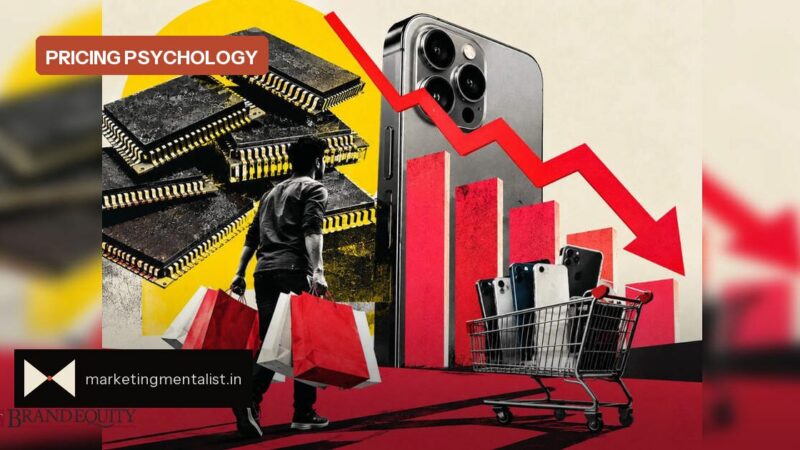
New data from the first quarter of 2026 makes the shift visible. The average selling price hit a record USD 302, up 10.4% year-on-year. Shipments fell 4.1%, while market value grew 5.8%. Volume is falling while value is rising—and that is rewriting how premium demand works.
The premiumisation paradox
Consumers are not trading down. They are holding on to devices for 3 to 3.5 years, or even 36 to 48 months in parts of the market, yet premium and mid-premium segments continue to grow. Karan Taurani, EVP at Elara Capital, said: “The smartphone purchase cycle in India has moved upwards from around 24 months to 36-48 months, and we don’t see replacement cycles becoming shorter.”
This is the core paradox. Longer ownership cycles are happening at the same time as selective premiumisation. Apple accounts for close to two-thirds of India’s premium smartphone user base, and the premium segment is still growing in the high teens to early twenties. Buyers are willing to spend more—but only when the incremental value feels sufficiently differentiated.
Why an EMI changes the mental math
Financing is doing quiet psychological work here. Counterpoint Research estimates financing will account for 42% of smartphone sales in India in 2026, up from 35% in 2025. A Rs 1 lakh phone framed as a Rs 5,000 monthly payment feels less painful than a six-figure upfront price. That is mental accounting and the pain of paying at work.
But an EMI does not make a phone cheaper. It makes the price easier to process. Buyers still know they are stretching for a premium device. The real marketing challenge, as Rohit Ohri of Ohriginal points out, is that Gen Z jokes about selling a kidney for the latest iPhone show the desire is real and the sticker shock is real. Buzz does not automatically become a purchase.
From specs to staying power
If replacement is driven more by breakage and functional decline than by new features alone, then durability, software support, battery life and resale value become the real sales pitch. Buyers are not asking for more features; they are asking whether a phone will perform well for several years.
For brand managers, the playbook needs to shift:
- Reframe the offer around total cost of ownership over the life of the device, not launch-day specifications.
- Use exchange and trade-in framing to lower the perceived switching cost.
- Build post-purchase relevance through software updates, service quality and loyalty triggers.
- Anchor the premium price with meaningful improvements in camera, battery, AI or user experience—not incremental bumps.
The most important strategic message may be: spending more today can mean spending less often tomorrow. That is a value argument, not a feature argument. If brands can make it believable, a longer upgrade cycle stops being a headwind and starts looking like a retention opportunity.
Source: ETBrandEquity.com