How Tata Tea’s Jaago Re Made Waking Up a Duty
How a tea brand turned a daily habit into an identity badge by tapping civic guilt, identity signalling and a simple command.
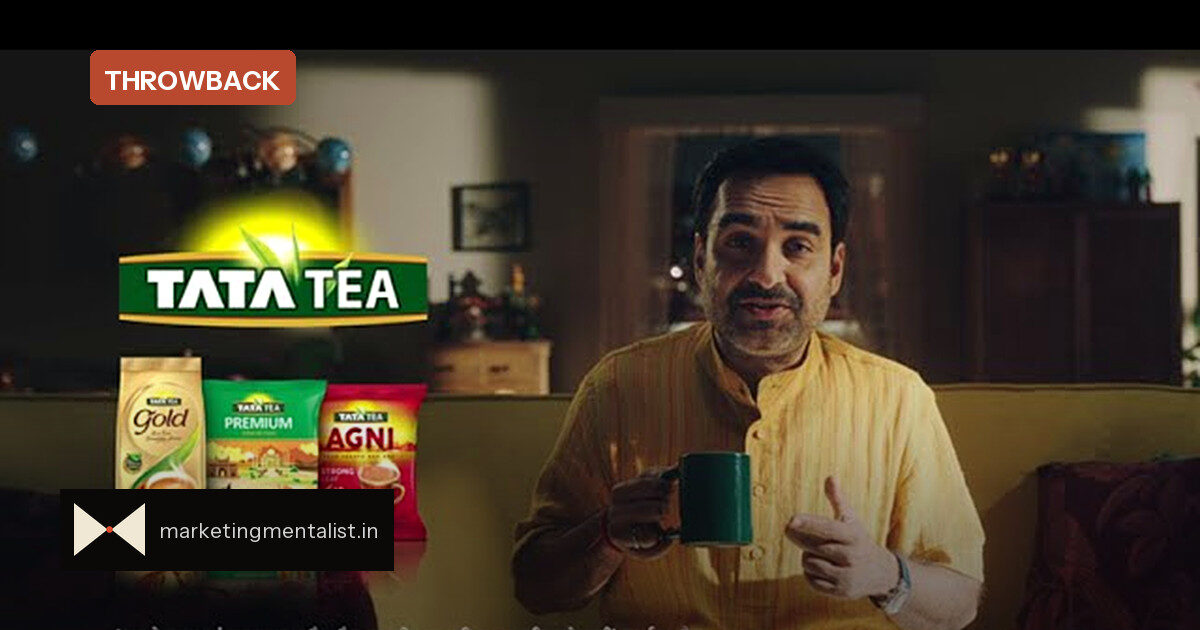
The ad and when it ran
Tata Tea launched its Jaago Re platform in the late 2000s, after the brand had spent years talking about taste and freshness. The campaign ran through subsequent election cycles and social campaigns, and the climate film is one of its sharpest iterations. It uses an ordinary household ritual to make waste feel personal, not abstract.
The timing mattered: India was becoming more vocal about climate and civic responsibility, but ordinary brands still kept their distance from uncomfortable subjects. Tata Tea walked into that gap with tea, not a banner.
The levers it pulled
The spot is a compact piece of behavioural design. Three principles do most of the work.
- Identity signalling. The film barely sells tea. It sells the feeling of being a person who cares. Once the campaign ties Tata Tea to that self-image, buying it becomes a way to say, “I am awake.” That reframes a low-involvement purchase as a badge.
- Cognitive dissonance. The film sets up a gap between what people claim to value and what they casually waste. Holding that gap open is uncomfortable, and the brand offers a simple resolution: start with one small, daily act. The tea becomes the ritual that closes the loop.
- The fresh start effect. Jaago Re is built on the first moment of the day. Mornings already function as temporary landmarks when people are slightly more open to resetting habits. The campaign intercepts that moment and gives it a civic script.
The genius is that the product never has to be the hero. The brand is the platform.
What it did for the brand and the culture around it
In a category where brands competed on aroma, strength and price, Tata Tea began competing on values. The platform is credited with shifting the brand’s perception from a household commodity to a purpose-led label. Retailers and marketers saw that an everyday tea brand could carry a social conversation without turning buyers away.
Culturally, Jaago Re helped normalise brand activism in Indian advertising. It made it acceptable for a mass product to talk about voting, corruption and climate before purpose became a buzzword. The tagline became shorthand for civic wakefulness, not just a tea promise.
What still works today and what would not
What still works is the architecture: attach purpose to an existing daily ritual, name a clear antagonist such as apathy, and give people a simple command rather than a lecture. That is still a strong template for commodity brands.
What would not work as smoothly today is awareness-only moralising. Consumers now expect brands to show proof of the change they are asking for. A brand that tells people to wake up while staying silent about its own footprint will be called out quickly. The tone would also have to be more participative, less sermonising.
Tata Tea’s insight remains valid: people will not pay much more for tea, but they will pay attention if the tea lets them feel like better citizens.
Watch the original: Tata Tea on YouTube