
The psychology of Hero Honda’s Fill It. Shut It. Forget It.
The behavioural science behind Hero Honda's campaign that turned a mileage claim into a national ritual of pride and memory.
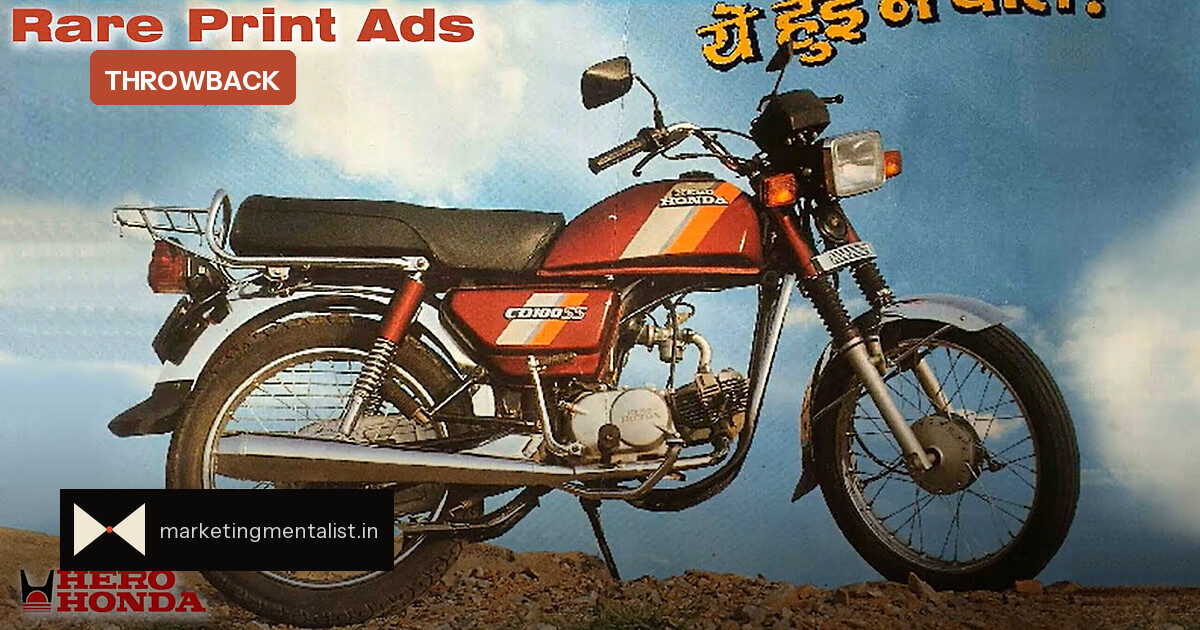
The ad and when it ran
The Fill It. Shut It. Forget It. campaign belongs to Hero Honda’s CD100 era — the late 1980s and early 1990s, when a four-stroke commuter motorcycle felt like a serious, grown-up purchase. It ran across the CD100 and CD100 SS years, selling not speed or chrome but a quieter promise: a bike you fill, close, and then simply stop thinking about.
The levers it pulled
First, cognitive fluency. The line is a three-beat, parallel command. That ease of processing makes a rational mileage claim feel obvious and true — a cousin of what researchers call rhyme-as-reason. The film tied the phrase to the act so tightly that the words and the ritual became one rememberable loop.
Second, self-persuasion. The ad did not argue with a spec sheet; it instructed. By mentally rehearsing the sequence, the viewer pre-lived ownership. If you can perform the ritual — fill, shut, forget — the benefit feels settled before anyone quotes a number.
Third, social identity. The line was portable. It handed Hero Honda owners a script for the classic Indian question, ‘kitna deti hai?’ Answering became a small performance of good judgment. Mileage stopped being a statistic and became a badge.
What it did for the brand and the culture around it
Hero Honda came to stand for fuss-free, mature commuting. While much two-wheeler advertising leaned on speed and glamour, this campaign planted the brand in reliability and mileage — and made that territory feel aspirational rather than boring.
- Fuel efficiency became a story of time and independence, not just kilometres per litre.
- Reliability turned into a social identity owners could claim out loud.
- The phrase became a shared shortcut for choosing a commuter motorcycle.
In the years that followed, the brand became a fixture of Indian middle-class life, and the line outlived individual ad films.
What still works today and what would not
The core device still works: package a rational attribute as a repeatable behavioural script. The command form, the short parallel verbs, the focus on time saved rather than fuel consumed — all of that transfers cleanly to modern categories like EVs, apps and D2C products.
What would not work is the ad’s unhurried, single-claim simplicity. Today’s feed demands contrast in the first second, and fuel-efficiency claims now arrive with regulatory disclaimers and a more sceptical audience. A single polished demo would need multiple creators, proof points and hooks to earn attention. But the underlying principle — give people a phrase they can repeat with pride — remains deeply modern.
Watch the original: Hero Honda on YouTube