How Lifebuoy turned handwashing into a survival ritual
The behavioural science behind Lifebuoy's Help a Child Reach 5 campaign: story, social proof and ritual that made handwashing feel personal.
The ad and when it ran
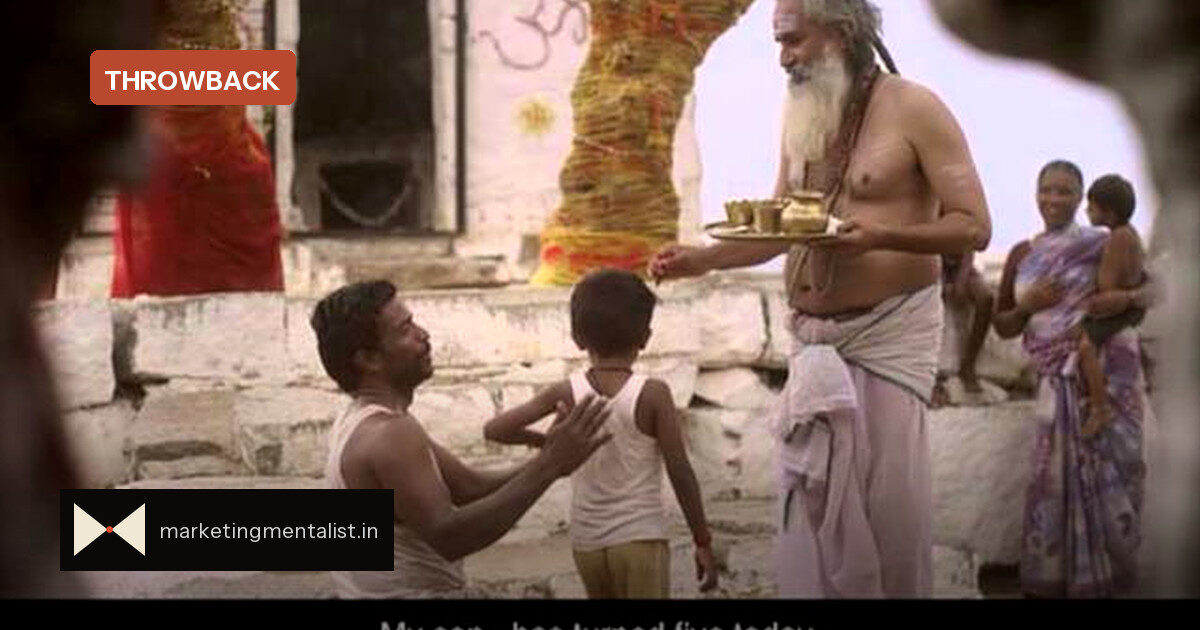
In 2013, Lifebuoy took its Help a Child Reach 5 mission to Thesgora, a village in Uttar Pradesh, and turned it into a film called Gondappa. The ad ran as part of a global push to make handwashing with soap a public health ritual, not just a household chore. Instead of leading with germs or product claims, it followed one man’s fight for a very personal milestone: a child surviving to five.
The levers it pulled
Three behavioural principles do most of the heavy lifting.
- Identifiable victim effect. People respond more to one specific person than to statistics. The film invests its emotion in Gondappa and the child at the centre of his story, so child mortality becomes a face you worry about, not a public health dataset.
- Social proof. Handwashing is shown moving from a private act to a visible community norm. When neighbours watch and children copy, the message becomes ‘this is what people like us do here’, which is more persuasive than a brand directive.
- Implementation intentions. The campaign ties soap use to existing cues, such as before feeding and after the toilet, and makes stations easy to see and use. That reduces the gap between intending to wash and actually doing it.
What it did for the brand and the culture around it
For Lifebuoy, the campaign shifted the brand from a functional germ-killer to a symbol of child survival and parental care. It gave the tagline Help a child reach 5 a story people could retell, which is stronger than a product demonstration.
Around it, the campaign helped make handwashing a public, almost ceremonial act in a high-risk district. It became a reference point for purpose-driven marketing in India: the idea that a soap brand could talk about survival and parental love, and still build equity, was no longer theoretical.
What still works today and what would not
What still works: leading with one person’s story, making a private behaviour publicly visible, and building a ritual around an existing cue. These travel well across categories.
What would not land as easily now: a big brand arriving in a low-income village with a health mission can attract suspicion if it feels like saviour storytelling. Modern audiences expect evidence, local partnership and long-term commitment. The slow, cinematic reveal also fights shorter attention spans in feed-first media, so the same idea would likely need a sharper, creator-native edit.
Watch the original: Lifebuoy on YouTube