Saif Ali Khan’s Ghee Prize Is Now a Brand Memory
How an unscripted KBC reaction over a two-year ghee supply became a meme, followed Saif Ali Khan to Instagram and resurfaced on Netflix.
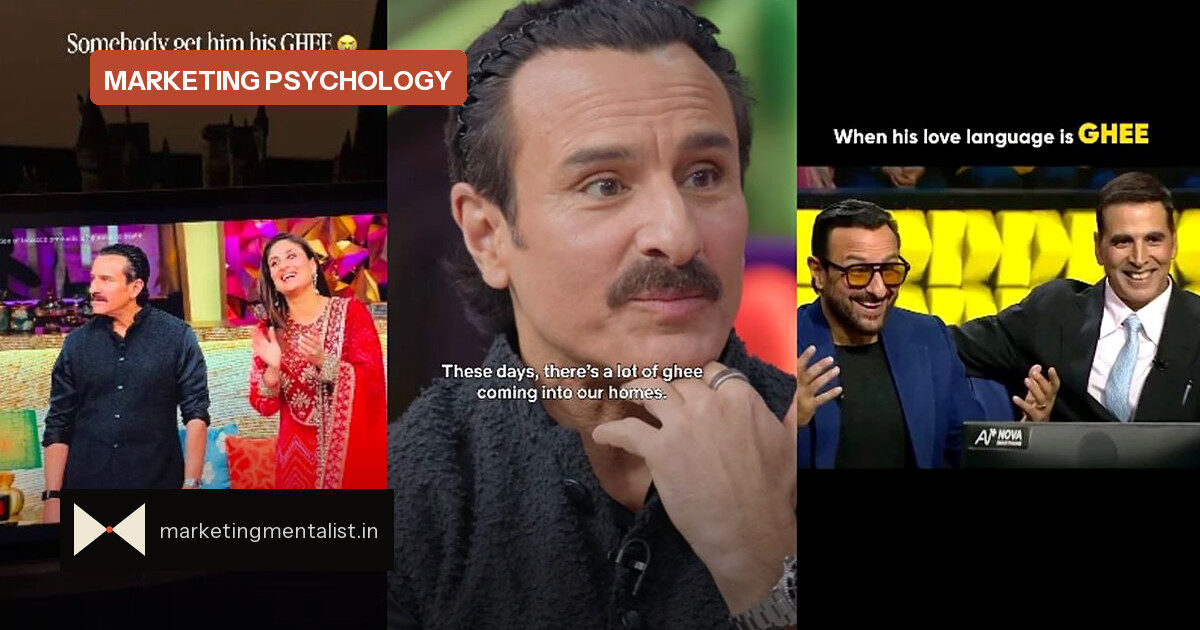
When Saif Ali Khan joined Instagram, the comments section arrived with a question that had nothing to do with film announcements: where was the Gowardhan ghee? It was a callback to his viral turn on Kaun Banega Crorepati, where answering a tenth question correctly was worth a two-year supply of the dairy brand’s ghee.
Saif’s unscripted reaction—“This is it; this is why I came,” as he put it—became meme material, helped along by co-guest Akshay Kumar’s laughter. The joke then followed him across platforms, landing on Netflix’s The Great Indian Kapil Show, where Saif clarified that he had not received the ghee, adding, “Even my cheque’s not come.”
Why an ordinary prize punched above its weight
Gowardhan’s integration worked because it did not behave like an endorsement. A film star losing composure over danedaar ghee, a familiar kitchen staple prized for its grainy texture, gave audiences an incongruous and relatable moment. Users joked that Saif was a “Gen Z born in the wrong era.” The laughter was about him, but the object of the joke was the brand.
That is a subtle switch. Viewers were not being told to remember Gowardhan; they were remembering the prize attached to a reaction they wanted to share. Reach became recall because the moment felt human.
- Relatability: ghee is a household product, so the excitement was easy to understand.
- Incongruity: a film star celebrating dairy with award-show energy made the clip forwardable.
- Repetition: Instagram comments and a Netflix appearance revived the memory after the episode aired.
Planned placement versus shared attention
Parag Milk Foods has described Gowardhan’s KBC partnership as a four-year association across television and digital. The prize mechanism gave the product a functional role inside the show rather than limiting it to an ad break. But the second life came from audiences: clips, memes and comments turned a placement into a running reference.
The difference matters. A planned association is something a brand buys; shared attention is something it earns. Netflix’s availability in more than 190 countries and regions gives the Kapil show moment an international stage, though the humour rests on a very Indian kitchen staple.
The Koffee with Karan parallel
The pattern is not new. The Koffee with Karan hamper became a talking point beyond the show, and comedians Tanmay Bhat and Rohan Joshi later unpacked one in a YouTube vlog. That prize was showcased; Gowardhan’s visibility grew from Saif’s reaction and the memes that followed. In both cases, the prize became its own content format.
What marketers can borrow
The lesson is not to put ghee on a game show. It is to design integrations that leave room for an unscripted human moment, then let the audience complete the story. The follow-up on Kapil’s show worked because it acknowledged the joke instead of forcing a product message. For brand managers, the real asset is not the placement window but the conversation that outlives it.
Source: Afaqs!