Why 5-8% price hikes won’t cool festive appliance demand
Appliance prices are up 5-8% ahead of the festive season, yet brands still expect double-digit growth. Premiumisation, EMI and replacement demand explain why.
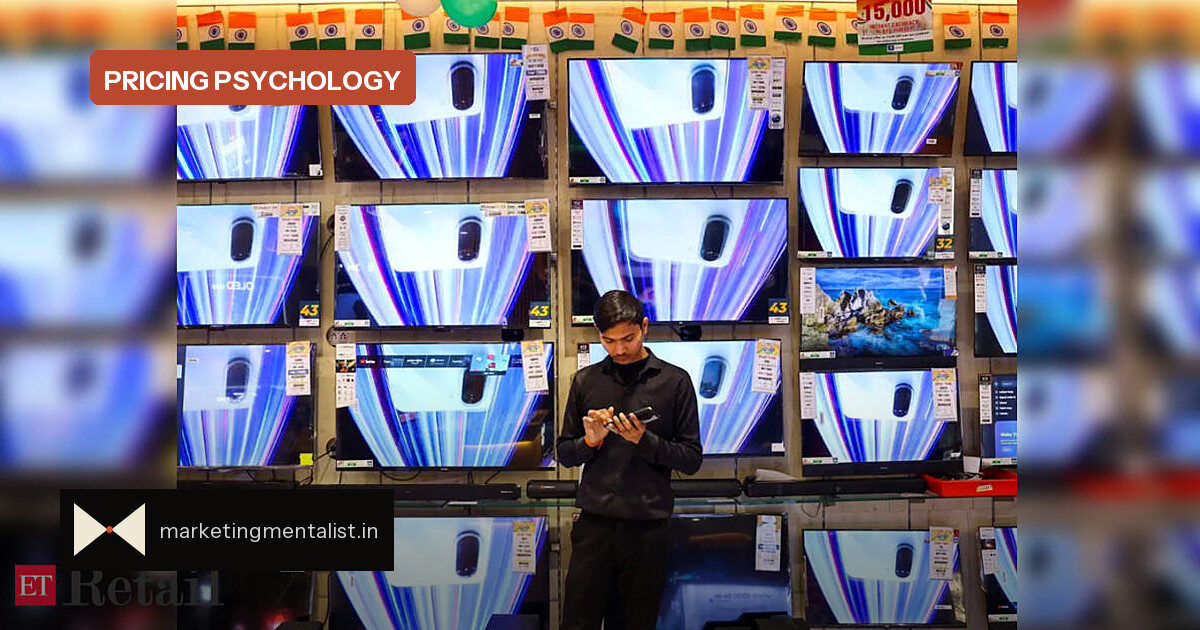
Festive-season marketing in India usually means one thing: price cuts. This year, the appliance aisle is flipping the script. Air-conditioner and appliance prices have climbed 5-8% ahead of the Onam-to-Diwali window, and manufacturers still expect double-digit value growth.
The increase is the third round of revisions this year, pushed by higher costs of copper, aluminium, steel and crude derivatives, alongside freight and currency pressure. The interesting part is not the hike. It is that demand is not collapsing.
The psychology of buying when prices rise
When an item you already planned to buy costs more, rational economics says demand should fall. But festive buying is not purely rational. It is loaded with occasion, replacement need and social timing. A consumer who has decided to buy a refrigerator for Diwali has a reference point – the old product, the occasion, the family expectation – that a 5-8% hike does not easily dislodge.
Haier Appliances India CEO N S Satish told PTI the industry could grow 10-15% by value, with his own company targeting 30-35%. He was blunt about double-digit prospects: “Definitely. It will.” His explanation: buyers either step down a capacity within their budget or use EMI to upgrade to a premium model.
EMI is the real price
This is the most marketer-relevant insight. Easy financing decouples the sticker price from the monthly outgo. A 5-8% hike on a Rs 40,000 AC is roughly Rs 2,000-3,200 – noticeable as a lump sum, but nearly invisible when spread over six or twelve months. Payment decoupling is doing the heavy lifting: the consumer feels the monthly instalment, not the total. Brands pushing festive EMI schemes are effectively selling a smaller psychological price.
Premiumisation rewires the anchor
At the same time, feature-rich, energy-efficient, smart appliances are pulling buyers upward. LG’s Sanjay Chitkara says festival-time shoppers are upgrading beyond the usual categories into dishwashers, microwaves, audio and water purifiers, with its Essential Series drawing first-time buyers from Tier-2 and Tier-3 towns. Sony’s Sunil Nayyar expects 15-20% overall value growth, led by premium BRAVIA televisions and larger screens.
The pattern: consumers accept the higher price, then trade up within the new price level to feel they are getting more for it. The hike becomes the new anchor, and premiumisation converts the anchor into higher-value baskets rather than lost sales.
Why old-price inventory is a hidden sales tool
- Godrej raised AC prices on October 1 but says channel inventory bought earlier will last 1-1.5 months, so Diwali shopping largely happens at old prices.
- This creates a genuine, time-limited window – the classic “buy before the new price takes effect” trigger.
- Post-Diwali, new prices become the baseline, and the festive discount psychology resets around them.
Godrej’s Kamal Nandi put it plainly: “Diwali should largely get covered with old-price inventory. Post-Diwali, the new prices will certainly take effect.”
What marketers should take away
This is a live case study in reference points. A price hike does not automatically shrink demand when four conditions hold: the purchase is occasion-driven, replacement is overdue, financing flattens the perceived cost, and premium features give buyers a reason to re-anchor upward. The festive period, which sector reports say contributes 30-40% of annual appliance sales, is exactly that window.
The market’s long-term trajectory backs the optimism: BCG and CII project the Indian consumer durables market to grow 8-10% annually and touch Rs 3-3.25 lakh crore by 2030. For now, the festive test is whether value growth outruns the price hike – and every brand quoted here is betting it will.
Source: ETRetail.com