
Premium variants lift curd category growth to 25%
Mother Dairy MD on why Indian consumers mix affordable staples with premium upgrades - and how to price for selective trade-offs.
The same shopper, two budgets
India’s next wave of FMCG growth will not be defined by a uniform shift toward premium products or cheaper alternatives. It will be defined by the same shopper doing both at once, according to Jayatheertha Chary, Managing Director of Mother Dairy Fruit & Vegetable.
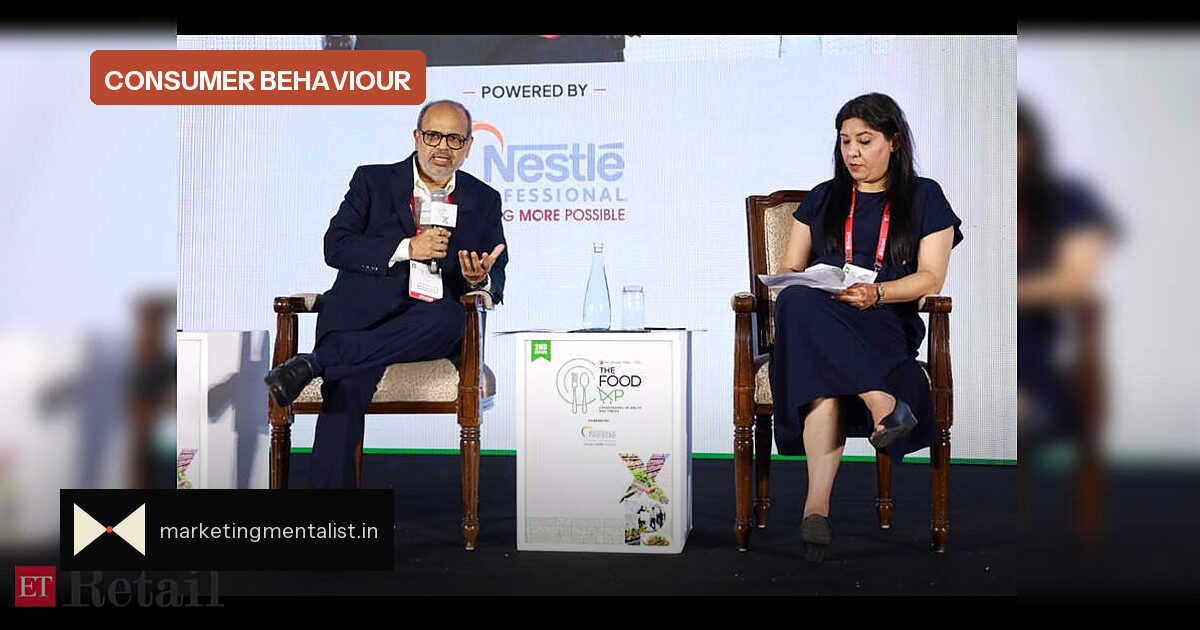
Speaking at the ET FoodXP 2026 summit, Chary argued that consumers make purchasing decisions based on income, age, lifestyle and specific needs – not on a single behavioural trend. A household may hunt for the most affordable everyday staples while happily paying a premium for high-protein milk or probiotic curd.
The insight challenges the binary that has dominated FMCG strategy for years. Marketers have treated affordability and premiumisation as opposite ends of one spectrum. Chary’s framing suggests they are parallel tracks the same consumer runs at the same time.
Mental accounting on the shopping list
This is mental accounting in action. Behavioural scientists describe how people sort spending into separate mental buckets: necessities go in a value bucket, while health, taste and convenience sit in an aspiration bucket. What looks like inconsistency – frugal on one aisle, extravagant on the next – is actually a coherent internal logic.
For brand managers, this fragments the market in a useful way. Chary noted that a college student, a working parent and a fitness-conscious consumer in the same household may each want something different from the same category. Tier-two and tier-three markets, he added, are now showing the same evolving preferences.
The proof: curd jumps from 16-18% to 25%
Chary offered a concrete example. Mother Dairy’s curd category had been growing at roughly 16-18%. After the company introduced premium variants – including probiotic curd and other differentiated offerings – growth accelerated to around 25%.
That single jump shows how innovation inside a familiar category can expand demand without asking consumers to change their habits. The trigger was not a new category; it was a new reason to buy within a category people already understood.
But Chary added a caution: features alone will not sustain demand. “Taste is central to everything,” he said. Nutritional or functional benefits only stick when the product remains enjoyable.
Chary also offered a reality check on niche premium products. A2 milk, for instance, remains a niche play partly because the required milk supply cannot yet be scaled to serve a much larger population. That constraint should temper expectations for rapid premiumisation in traditional categories – even as differentiated variants find early adopters.
The Rs 5 question
The pricing lesson is subtle and practical. Chary said some consumers will happily pay an extra five rupees on a product when they can point to the benefit that justifies the difference – better taste, higher protein or added convenience. Perceived value, not premium positioning, drives willingness to pay.
For manufacturers, that means pricing strategy must be supported by clear product differentiation. Calling something premium is not a strategy; it is an unproven claim until the consumer experiences the promised benefit.
What to do with this
The playbook for FMCG and D2C marketers falls out naturally:
- Map the mental budgets consumers use, not just their demographics
- Anchor everyday staples as the value entry point
- Layer differentiated variants for aspiration budgets and specific needs
- Price the upgrade against a felt benefit, never against a label alone
- Protect taste even when adding nutrition or function
Source: ETRetail.com