Why Indian Ads Are Stacking Celebrity Casts
Why Indian brands are swapping solo celebrities for ensemble casts—and how Rungta Steel, Flipkart and Myntra keep the crowd from becoming the story.
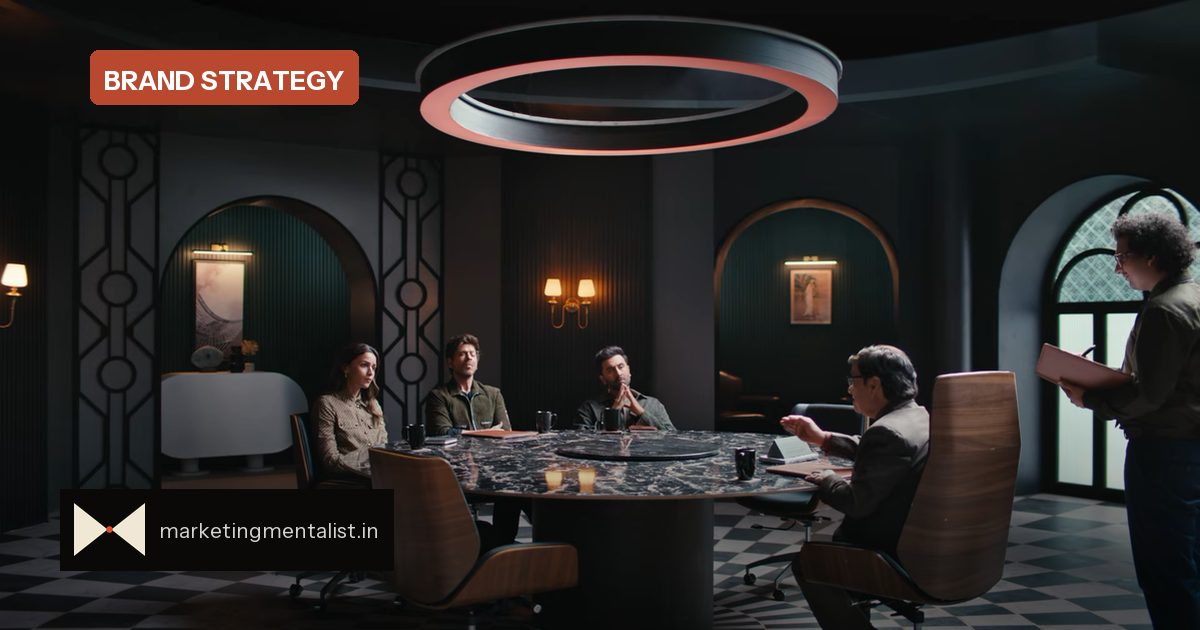
Rungta Steel’s latest commercial plays like three hero-film pitches competing for one script. Shah Rukh Khan, Alia Bhatt and Ranbir Kapoor arrive with their own version of the perfect Rungta ad, and each idea leans on a familiar screen persona. The concepts feel instantly recognizable—until the brand reveals a different plan altogether.
A single star is becoming an opening cast
On paper, the film is selling steel. But it quietly reflects something larger happening across Indian advertising: brands are no longer content with one celebrity carrying a campaign. They are assembling ensembles.
What once looked like a solo performance now resembles a crossover event. Recent months have made the pattern hard to miss.
- Flipkart’s pre-Big Billion Days campaign brought together Rohit Sharma, Jackie Shroff, CID’s Aditya Srivastava, Samay Raina and others, mixing cricket, television nostalgia and internet culture.
- Myntra’s 24th End of Reason Sale enlisted Ranbir Kapoor, Kiara Advani and Triptii Dimri across films that use exaggerated everyday situations and humour.
- Ajio’s festive campaign paired Varun Dhawan and Shraddha Kapoor with cultural figures Zeenat Aman and Uorfi Javed.
- Swiggy Instamart’s group-ordering campaign stacked internet-famous names: Vada Pav Girl Chandrika Dixit, Puneet Superstar, Dolly Chaiwala and Ganji Chudail.
Vimal’s long-running cast of Shah Rukh Khan, Ajay Devgn and Tiger Shroff remains perhaps the most enduring example. The chemistry is remembered almost as much as the product.
Why ensembles work now
The appeal starts with attention economics. Audiences are fragmented across platforms, communities and fandoms. One celebrity can bring reach. Three or four can bring several audiences at once: a cricketer brings sports fans, a film star brings entertainment followers, an internet creator brings digital-native relevance.
This can be thought of as audience stacking—choosing each cast member less for universal appeal than for the distinct segment they unlock. The result looks less like a traditional ad and more like a guest list.
The risk: crowd becomes the story
The challenge is ensuring the ensemble does not swallow the brand. The best campaigns use star power as a device rather than a distraction.
Rungta’s film understands this. The joke is not that three celebrities appear together. The joke is that even three celebrities cannot resist making the ad about themselves, and the brand, by holding its ground, becomes the calm centre.
What marketers should do
Before signing a cast, identify the audience segment each name genuinely unlocks. Ask whether the celebrities create chemistry or just noise. If the brand is absent from the script, the budget may be buying fame for the stars instead of memory for the product. Self-aware humour works well here: it lets audiences enjoy the spectacle while the brand keeps the final word.
Source: Afaqs!