Kuch Meetha Ho Jaye: When Chocolate Became a Ritual
A throwback look at how Cadbury Dairy Milk's Kuch Meetha Ho Jaye turned an old Indian phrase into a mental shortcut for everyday chocolate.
Cadbury Dairy Milk did not need to teach Indians that good news deserves something sweet. The phrase already existed. Kuch meetha ho jaye was a cultural instruction: after a good result, before a happy moment, something sweet must cross the lips. The campaign simply placed a chocolate bar at the end of that sentence.
The ad and when it ran
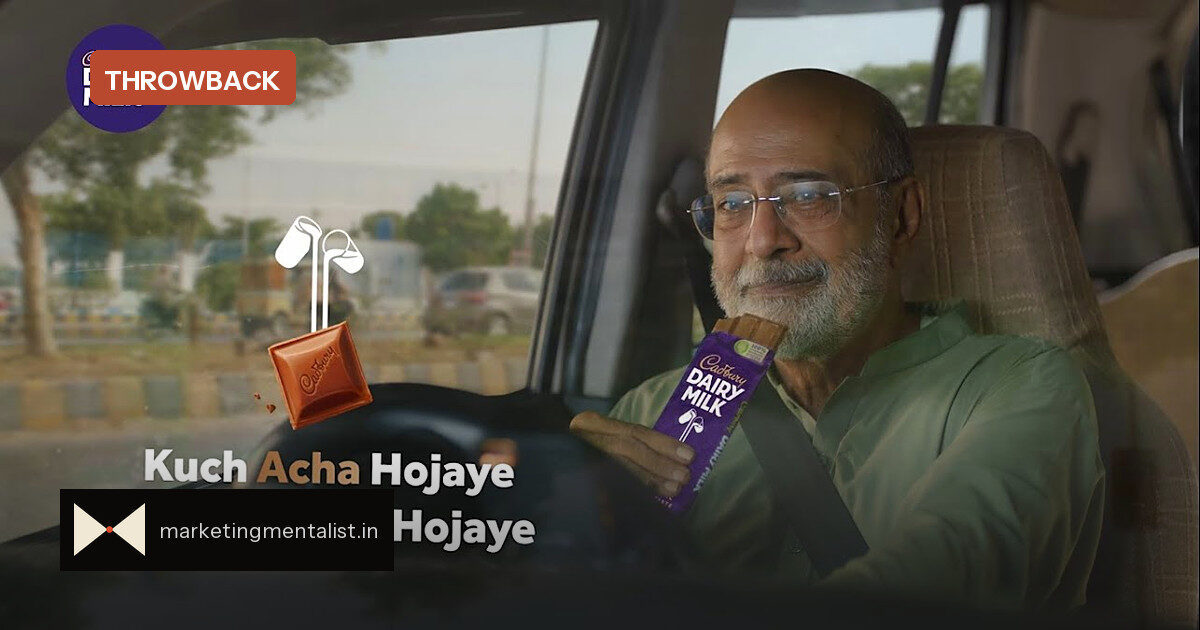
This film comes from a long-running Cadbury Dairy Milk platform that took shape in India in the mid-2000s and ran through the following decade. The execution—a Pakistani variant, Kuch Acha Hojaye, Kuch Meetha Hojaye—shows the insight in a lighter, everyday key.
The setting is deliberately ordinary. No grand festival, no product close-up at the start. The story treats chocolate not as the hero, but as the ritual object: what you reach for after small, good news.
The levers it pulled
Three psychological mechanisms did the heavy lifting.
- Occasion substitution. The campaign did not try to build a new habit. It borrowed an existing one. Indians already marked good news with something sweet. Dairy Milk simply substituted for the mithai box. That is far easier than convincing people to start a new ritual.
- Implementation intention. The line functions as an if-then plan: if something good happens, then chocolate. The film reinforces that cue repeatedly, making Dairy Milk the default response to small wins.
- Mental accounting. A chocolate bar is an affordable, low-risk way to complete a social script. It moved Dairy Milk out of the guilty-indulgence account and into the social and emotional account.
What it did for the brand and the culture around it
The line outlived the ads. Kuch meetha ho jaye became shorthand in Indian homes for marking a small success with chocolate, not a full mithai spread. For Cadbury, the campaign is credited with lifting sales and, more importantly, usage frequency: chocolate stopped being only a festival or birthday treat and became a daily, low-friction celebration.
Culturally, the ad did something rare: it attached a brand to an existing piece of language. The phrase belonged to everyone; the campaign made Dairy Milk the product that completes it.
What still works today and what would not
The strategy still works. Ritual hijacking, a simple verbal cue, and mental availability are durable. Brands that slot into existing consumer routines almost always have an advantage over brands that must create demand from scratch.
What would not travel unchanged is the unapologetic sweetness. A 2020s version would face more questions about sugar, portion size, and everyday indulgence. The occasion insight is stronger than ever; the product wrapper around it would need more nuance—healthier options, smaller formats, or a deliberate portion message.
The lesson for marketers is not that chocolate is powerful. The lesson is that the cheapest attention is often hidden inside a phrase people already say.
Watch the original: Cadbury Dairy Milk on YouTube