From shelf space to trust: mall F&B share rises 8% to 19%
At ET FoodXP 2026, leaders said shelf visibility only buys trial. Trust, channel fit and premiumisation decide who wins repeat food purchases.
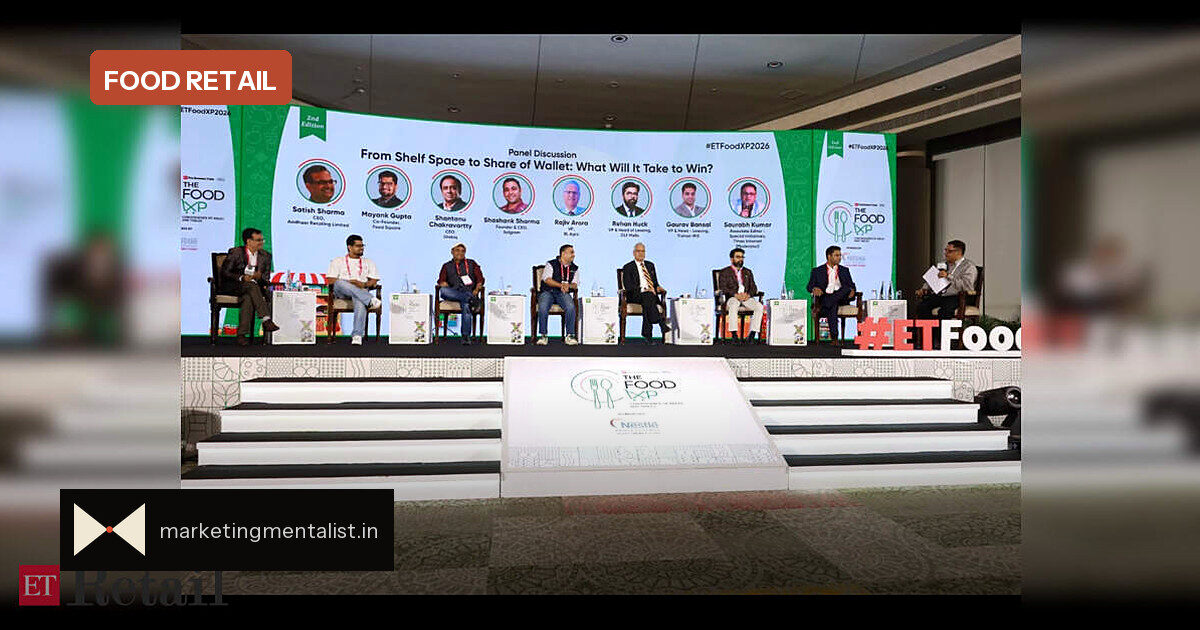
Getting a product on the shelf was once the whole growth strategy for Indian food brands. At the 2nd Edition of ET FoodXP 2026, industry leaders argued that visibility is now only the entry ticket. The panel discussion, From Shelf Space to Share of Wallet, made the case that repeat purchase is won by trust, consistency, emotional relevance and channel-specific strategy.
Trust is the real moat
Rajiv Arora of BL Agro said trust, relevance, quality, value and consistency are the foundations of loyalty. Celebrity endorsements may build awareness, but shoppers return because of product quality. For established FMCG businesses expanding into new categories, consistency becomes even more important because consumers form expectations through repeated purchase.
Satish Sharma, who brings more than three decades of retail experience, saw the same shift in smaller towns. Affordability still matters, but buyers increasingly pay for products they associate with reliability, quality and trust. That challenges the old assumption that rural consumers choose on price alone.
Premiumisation is no longer a metro story
Mayank Gupta of Food Square pointed to demand for truffle-infused maple syrup as an example of how quickly curiosity is rising. Travel, digital content and global food culture are pushing consumers to try unfamiliar flavours and international products. Shoppers now explore variations of familiar products rather than sticking to conventional choices.
Rehan Huck of DLF Malls added that travel and social media expose consumers to brands and trends before they reach local markets. Matcha, boba and açaí bowls are entering the organised retail conversation. The challenge, he noted, is knowing which trends have staying power and which are temporary noise.
Different channels, different jobs
Shantanu Chakravartty of Globiq argued that one national product and pricing plan cannot fit every retail environment. An airport traveller, a university student and a metro commuter make purchases with different needs, budgets and attention spans. Brands need to adjust assortment, price points, placement and visibility for each location, and make offers work within a narrow window of attention.
Satish Sharma reinforced that local adaptation should not become a quality compromise. Quick-commerce, modern trade and neighbourhood stores serve different purchase missions, so pack sizes and pricing can change. But core product standards must stay consistent, because consumers compare experiences across channels and geographies. Mayank Gupta made a related point: shoppers notice when the same brand sells a substantially different formulation in another market.
Turning visibility into habit
Shashank Sharma of Solgram said emotional connection matters beyond functional attributes. If a preferred brand is unavailable, consumers switch; availability earns the first trial, not loyalty. Positioning, packaging, communication and values must give the buyer a reason to return, and the message has to match the product experience.
Here is the playbook that emerges:
- Trial: use visible placement, sampling and the right pack size to get the first purchase.
- Habit: back it with consistent quality and a trust-based or emotional reason to repurchase.
- Fit: tailor assortment and pricing to each channel without changing the formulation consumers trust.
Mayank Gupta said conversion requires managing availability, discovery, sampling, pack sizes and pricing together. Rehan Huck added that the task differs by maturity: emerging brands chase attention and first trials, while established brands protect habits and prevent switching.
DLF Malls offered a sign of food retail’s growing role: F&B space in its planned mall developments has risen from about 8% to 19%, with potential to move toward 22–25% depending on consumer response. That makes food a stronger anchor for engagement and dwell time, but it still does not buy loyalty by itself.
Source: ETRetail.com