Kissan’s 6.17M-Mum Proof Strategy
How Kissan turned a real-tomatoes claim into family participation and made 6.17M mothers its proof, plus the strategy lessons.
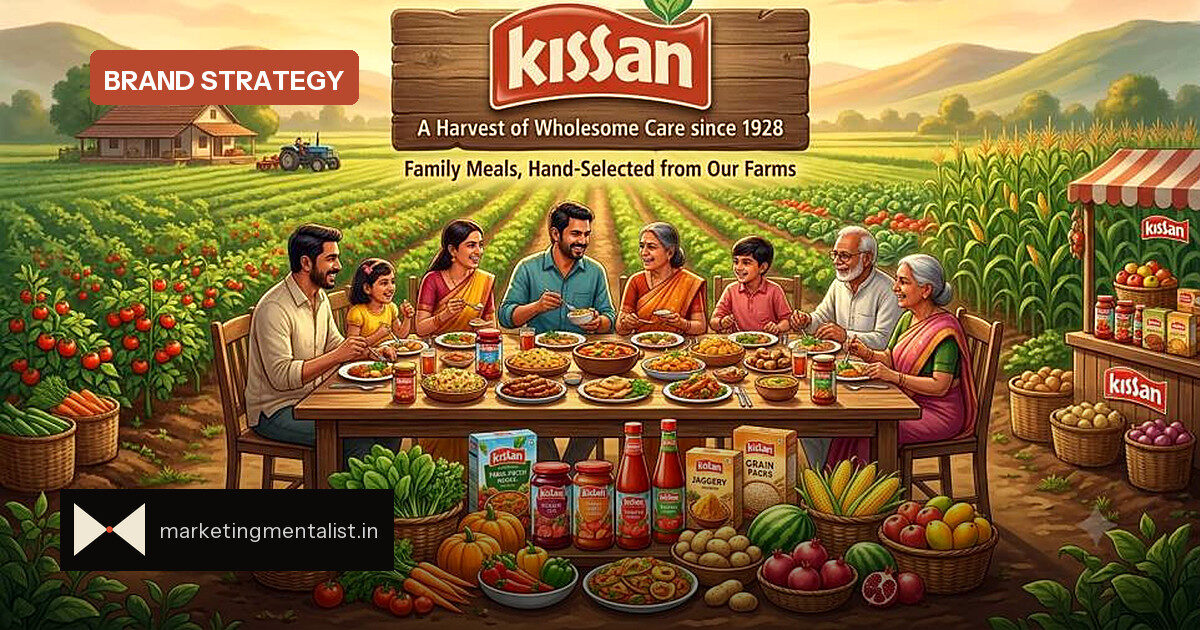
Kissan’s family play is less about ketchup and more about where proof lives. When non-buyers dismissed the brand’s “100% real tomatoes” claim as marketing, Kissan let mothers and children grow the evidence themselves. Agency-reported figures say 6.17 million mothers bought the tomato-cap pack, and Kissan grew 14.6% while the category grew 4.4%.
A quick caveat: the performance numbers come from award entries and WARC case summaries, not from audited company disclosures, so read them as self-reported.
The real category problem
Ketchup is a low-involvement, accompaniment-style purchase. Bottles look similar across brands, private labels and discount sauces crowd the shelf, and homemade chutneys own the “fresh and healthy” perception. Maggi dominated mindshare with media money. The strategic question was never just winning new shoppers; it was earning a reason to be chosen and used more often inside households that already bought sauces.
Turning a claim into a family activity
Kissanpur, launched in 2013, turned the pack into participation. The tomato-shaped cap carried seeds and doubled as a small pot. Children grew plants, shared their progress on Facebook, and top growers saw their faces on bottles. The tomatoes were collected and used in Kissan bottles. A newspaper front page distributed seeds to 2.5 million households, and a school programme reached more than 25,000 children.
The psychological move was simple: the mother did not have to trust an advertisement. She watched the claim happen on her balcony. Experiential proof replaced assertion.
Stable audience, different formats
Kissan kept the audience constant—the mother feeding a child—while changing the format. In 2018, Kissan Tiffin Timetable shifted from the physical pack to an online recipe repository curated by chefs. WARC reports 11 million organic YouTube and Facebook views, 42 million Twitter reach, and conviction scores up by 2,000 basis points.
Farm credentials as reinforcement
Kissan’s website adds a supply-side story: in 2019, 76% of tomatoes used in Kissan ketchup came from sustainable sources, roughly 8,000 farmers cultivated tomatoes for HUL, and a 90-day tomato varietal cut the traditional 150-180 day growth cycle. The sources do not link this directly to Kissanpur, but it gives the family story a credible backstage.
What brand builders can borrow
- Make the package a participation device, not just a label.
- Sell to the household’s conviction-builder, not only the end user.
- Let buyers produce the proof before you scale the paid claim.
The bigger lesson is that a credible product claim can be designed as an activity. When trust is the barrier, participation often changes minds faster than media weight.
Source: MarkHub24