
India’s Premium Wave Is Outgrowing Its Metro Map
India's premiumisation wave is spreading beyond metro India. Homes, phones, cars and daily essentials are trading up. Here's what brands should do next.
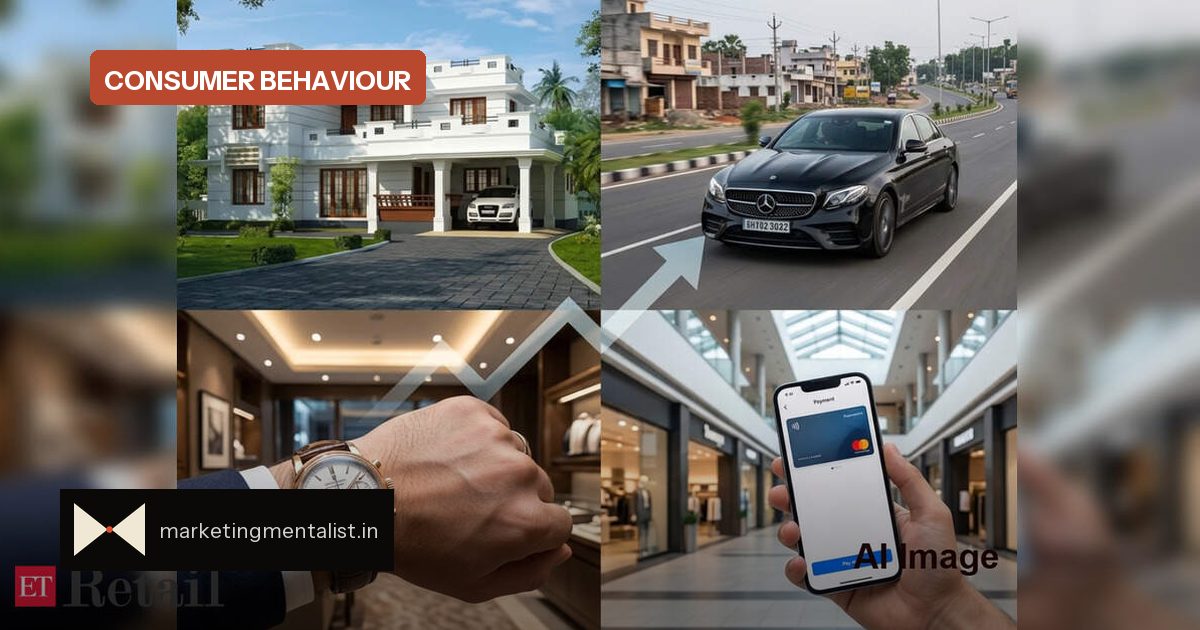
India’s premium story is changing postcode. Across homes, cars, phones, appliances and everyday essentials, consumers are trading up in places brands once treated as mass or entry-level markets.
The upgrade is spreading beyond the metro
In the first half of 2026, 54% of residential sales in eight major cities were homes priced above ₹1 crore, up from 49% a year earlier, according to Worldpanel by Numerator. Utility vehicles contributed 68% of total passenger vehicle sales, and imports of pricier Swiss watches surged 37% in the same period.
The appliance market shows the same pattern at lower price points. Godrej Enterprises Group business head Kamal Nandi said consumers across markets and income groups are upgrading to larger capacities, including first-time buyers and upcountry locations.
- Homes: 54% of sales in eight major cities were above ₹1 crore in H1 2026, up from 49%.
- Vehicles and watches: utility vehicles were 68% of passenger vehicle sales; Swiss watch imports rose 37%.
- Appliances: the 180-190 litre fridge segment now has about 60% of single-door direct-cool sales, while sub-180 litre models shrank 5-6%.
- Phones: sub-₹15,000 smartphones fell from 45% of sales in 2024 to 24% this year.
What the smartphone shift reveals
Smartphones are the clearest signal. The share of models priced below ₹15,000 fell from 45% in 2024 to 42% in 2025 and then to 24% this year, Counterpoint Research data shows. Premium smartphone purchases in tier II and beyond grew 8% year-on-year in 2025, helped by wider financing options.
Counterpoint research director Tarun Pathak said rising memory costs have also pushed brands to move portfolios up the price ladder. But the behavioural shift is bigger than cost: easier EMI is lowering the psychological hurdle between “can I afford this” and “this is the new normal for me”.
Why this matters for brand strategy
The risk, as finance minister Nirmala Sitharaman pointed out, is that consumption growth built only on urban premiumisation becomes structurally fragile. Unilever CEO Fernando Fernandez said the opportunity is not only selling expensive goods to affluent buyers; it is helping mass consumers step up the value ladder as incomes rise.
Marketers should therefore design an upgrade ladder, not a single flagship step. Accessible entry points still matter. L’Oréal India managing director Jacques Lebel noted that 40% of beauty product sales are items priced below ₹100, such as sachets and low-cost colour.
Watch the non-obvious markets. AB InBev India president Kartikeya Sharma said premium beer cases in Jharkhand went from zero to 6 lakh. When smaller-town and rural consumers start upgrading, old segmentation maps lose their usefulness.
Source: ETRetail.com