Jio Story: 170 Days That Taught Marketers a New Rule
In 2016, Jio's Welcome Offer didn't just cut prices. It reset India's data expectations and gave marketers a new rule for behaviour change.
For years, India’s relationship with data was a relationship with scarcity. The balance check before a video call, the midnight recharge, the reflex of downloading only on Wi-Fi. Consumers weren’t choosing what to do online; they were choosing what they could afford to do.
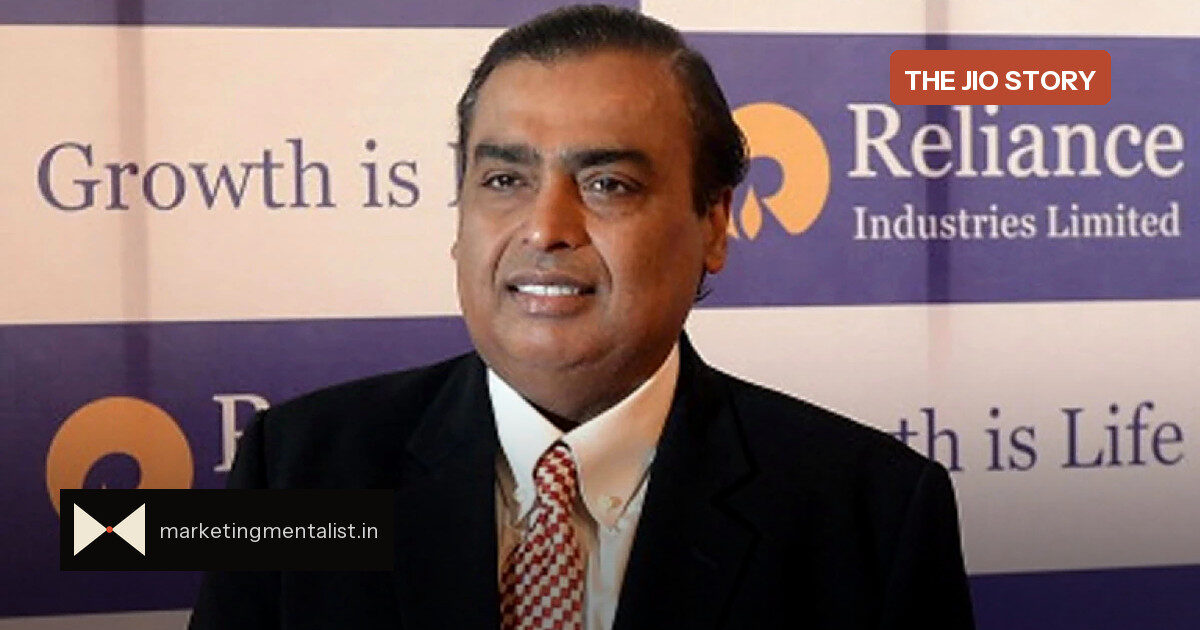
In 2016 Jio launched with the Welcome Offer: unlimited 4G data, voice, video and apps (Reliance Industries). Company-reported, Jio reached 100 million subscribers within 170 days of launch.
On the surface, it looked like a pricing war. Underneath, it was a psychological reset. The offer didn’t just lower the cost of data; it changed the reference point. Once “free and unlimited” became the starting experience, the old habit of buying small, metered packs began to feel less like prudence and more like a penalty.
Free lowered risk; unlimited removed the governor
Marketers often treat “free” as a conversion trick. Here, free and unlimited did two separate jobs.
Free collapsed the trial barrier. With no payment, there was no loss to scrutinise and no regret to manage. Unlimited then removed the usage meter, the quiet governor that had shaped behaviour. When people stopped counting data, they streamed longer, called more often, downloaded without checking balances, and began exploring services that had felt out of reach.
This is the zero-price effect in action: free doesn’t simply reduce price, it changes the emotional evaluation of an offer. But the more lasting move was pairing zero price with zero scarcity. The new behaviour wasn’t just cheap; it was easy.
Behavioural scientists call this reference dependence: people judge offers against the benchmark they already hold. Once the benchmark became “free and unlimited,” any plan that reintroduced a count felt like regression, even if it was objectively cheaper than the old tariffs.
What marketers took from the reset
- Make the new normal tangible. “Unlimited” was legible before it was experienced.
- Remove the meter before you ask for new habits. Pushing more streaming while counting data would have been uphill.
- Let early users make the shift visible. Video calls home, festival reels, downloaded films became social proof of abundance.
There was also a storytelling lesson. The offer was not framed as a discount. It was framed as a phase change: your data life before this moment was rationed; your data life after this moment was ambient. That narrative travelled faster than any tariff table.
Sell the after-state, not the offer
By March 2026, company-reported, Jio served 524 million+ customers (Reliance Jio Infocomm). A decade on, the same expectation has stretched into an ecosystem spanning connectivity, entertainment, commerce, payments, devices, cloud and AI (Reliance Industries 48th AGM, August 2025). The 2016 offer didn’t just onboard customers; it conditioned them to expect a service layer that keeps expanding.
A discount asks people to do the same thing for less. A new baseline asks them to imagine what they’d do if the old constraint disappeared. The brand’s real insight was to sell the after-state: the late-night video call, the downloaded movie, the uninterrupted stream.
That’s why the question India asked moved from “How much does data cost?” to “What can we do with data?” The 2016 launch didn’t just change a plan. It changed the frame.