
India’s Best Sellers Are Won by Trust, Not Visibility
Novelty can win trial, but Indian brand leaders say the tenth purchase is earned through performance, availability, advocacy and trust.
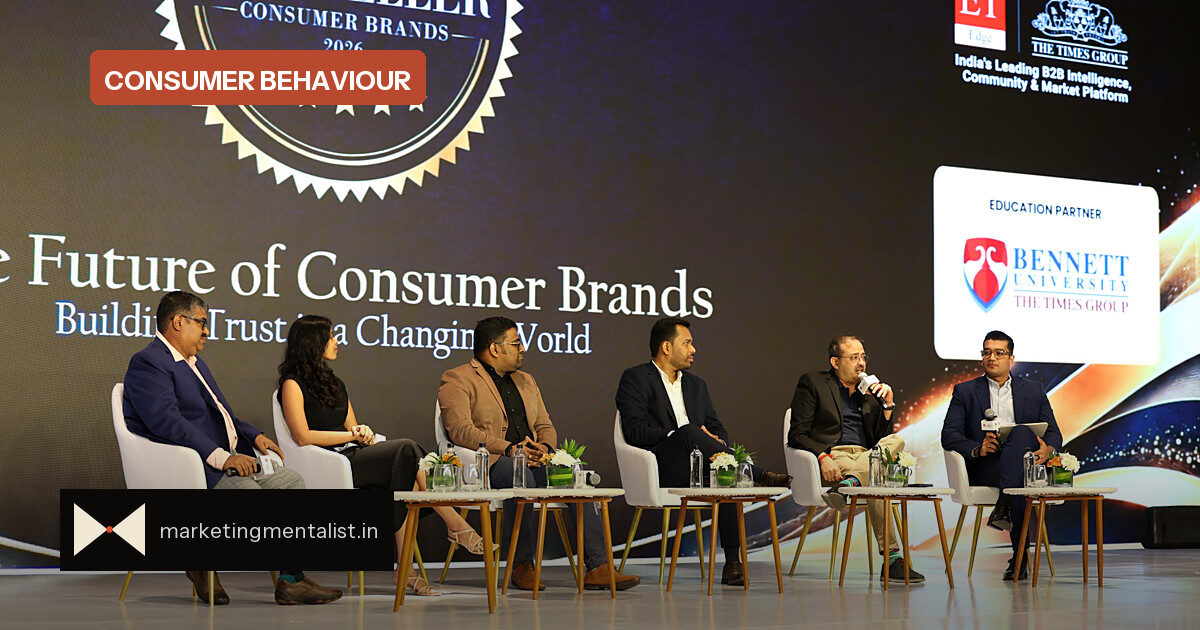
India’s consumer market has become a tale of two purchases. The first one is easier than ever to win—novelty, a new format, a well-placed shelf or a smart creator can trigger trial. The tenth one is where brands are actually built. At the ET Edge Best Seller Consumer Brands 2026, held on September 28, brand leaders made one point repeatedly: visibility now gets you a visit, but trust gets you a relationship.
For our readers, that shift is not a slogan. It changes what you optimise for.
The novelty trap in crowded categories
Naveen Murali of Sugar Cosmetics described how products such as foundation in a stick format and long-lasting crayons once had a strong novelty edge. As categories crowd, performance becomes the differentiator. His warning was blunt: “If you haven’t, then possibly you get the first purchase, not the 10th purchase.”
That is the tenth-purchase test in a sentence. Before scaling spend, ask whether the product and the experience can survive repeat use, not just unboxing day.
Availability is the new awareness
Quick commerce has made shelf presence a live issue. A shopper may love your brand, but if you are absent in the moment of need, the love evaporates into a competitor purchase. Murali put it sharply: “even if you are loved, if you are not on the shelf on that day, you’ve lost the game.”
Catch Masala’s Arnab Choudhury added that modern trade and e-commerce have weakened the old advantage of decades-old distribution networks. Quality still matters, but it must be carried by salience and storytelling. In food, changing habits and social media-driven discovery mean brands have to track behaviour continuously and respond with products that fit.
Retention is the relationship, not a metric
Shamik Banerjee of Apollo 24/7 argued marketers have over-indexed on transactions and actions while skipping awareness, interest and desire. In healthcare, where needs recur across doctors, medicines, diagnostics, hospitals and home care, the job is relationship-building. Around 76% of Apollo’s business comes from circle or loyalty members—a retention engine, not a one-off sale.
Pilgrim’s Nilesh Kambli offered a counterintuitive retention fact: customers whose problems are resolved really well show almost 60% higher retention than customers who faced no issue. Service recovery, in other words, is not cleanup; it is brand building. Pilgrim also involves its “Secret Circle” of existing customers in product feedback before launch.
Tata Salt’s Monica Yalla described a different position. The brand is so familiar that buying can be almost reflexive; with that reach comes scrutiny, and the response has to be evidence and transparency. The filter for innovation is the brand’s founding principles, not every trend.
What marketers should do now
- Design for repeat: measure the tenth purchase, not just the first transaction.
- Treat availability as brand promise: if you are not on the shelf, you are not in the choice set.
- Earn advocacy: Sugar has found creators with fewer than 10,000 followers can outperform bigger names because their communities see them as genuine.
- Use data to support major calls: instinct sets the direction, but metrics decide portfolio and strategy.
The through-line from every category was the same: product may drive trial, availability decides whether the sale happens, experience decides whether the buyer returns, and trust connects all of it. For brand managers, the ask is to stop optimising for the moment of purchase and start optimising for the memory after it.
Source: ET Edge Insights


