Bisleri’s classic ad: how the brand defended its own name
The psychology behind Bisleri’s classic ad: how it protected a brand name from becoming generic and made checking the label a smart buyer’s move.
The ad and when it ran
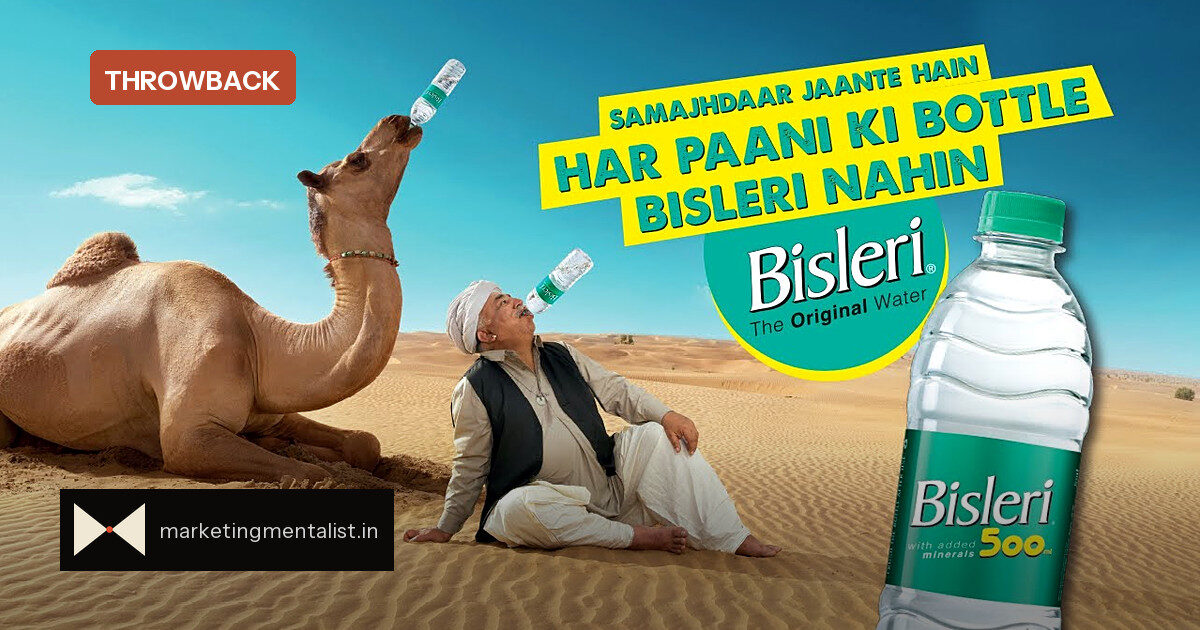
Bisleri’s “Har Paani Ki Bottel Bisleri Nahin” — not every water bottle is Bisleri — is one of Indian advertising’s sharpest defensive campaigns. The precise first air date is hazy, but it became a long-running brand platform through the era when bottled water moved from a cautious travel purchase to an everyday convenience. A 30-second Hindi film linked to the campaign, “Samajhdaar Jaante Hain Har Paani Ki Bottle Bisleri Nahin”, captures the whole argument in one social moment: someone asks for Bisleri, gets handed a different bottle, and the brand turns that everyday confusion into a lesson about checking before you accept.
The levers it pulled
Three behavioural principles do the work.
- Prototypicality and category ownership. By the time the ad ran, “Bisleri” was the default name for bottled water. Instead of fighting that, the film used it: Bisleri is the original, the category standard, so other bottles are the impostors. This reinforced the brand as the mental reference point while pulling its name back from becoming a mere noun.
- Social proof through the “wise buyer”. The phrase “samajhdaar jaante hain” does not say Bisleri is better; it says knowledgeable people can tell the difference. That turned label-checking into a small status signal. Buyers were not being scolded; they were being invited into the clever group.
- Distinctive brand assets. The brand name, the green bottle and the label are the memory hooks. The film trains recall by making those assets the thing to look for, which is exactly how brands build mental availability. When you think “safe packaged water,” Bisleri’s visual identity comes to mind first.
What it did for the brand and the culture around it
The campaign solved a strange problem: Bisleri was so famous that its name was becoming the category. In legal terms, that is dangerous; in cultural terms, it is powerful. By teaching buyers to say “not every bottle is Bisleri,” the brand kept its distinctiveness while protecting the everyday habit of asking for Bisleri.
It also changed how India talked about packaged water. “Bisleri” remained the word people used, but the ad added a layer of discernment. It linked the brand to trust, safety and good judgement in a market filling with unbranded and lookalike bottles.
What still works today and what would not
The core psychology still works. Defending mental availability and category ownership remains a legitimate brand task. Making a check-the-label behaviour a social cue is still effective, especially in categories where counterfeits or quality anxiety are real.
What would not land as easily is the gently superior tone. Today’s consumers expect evidence — purification steps, mineral content, sustainability — not just a claim that smart people know. A modern version would need to prove the difference and make checking feel empowering rather than admonishing.
Watch the original: Bisleri on YouTube