Why Woolmark’s Return to Real Makes an Old Fibre Feel New
Woolmark's Return to Real uses naturalness bias, costly craft and anti-optimisation fatigue to make wool the original wearable tech. Here's why it works.
The ad in one paragraph
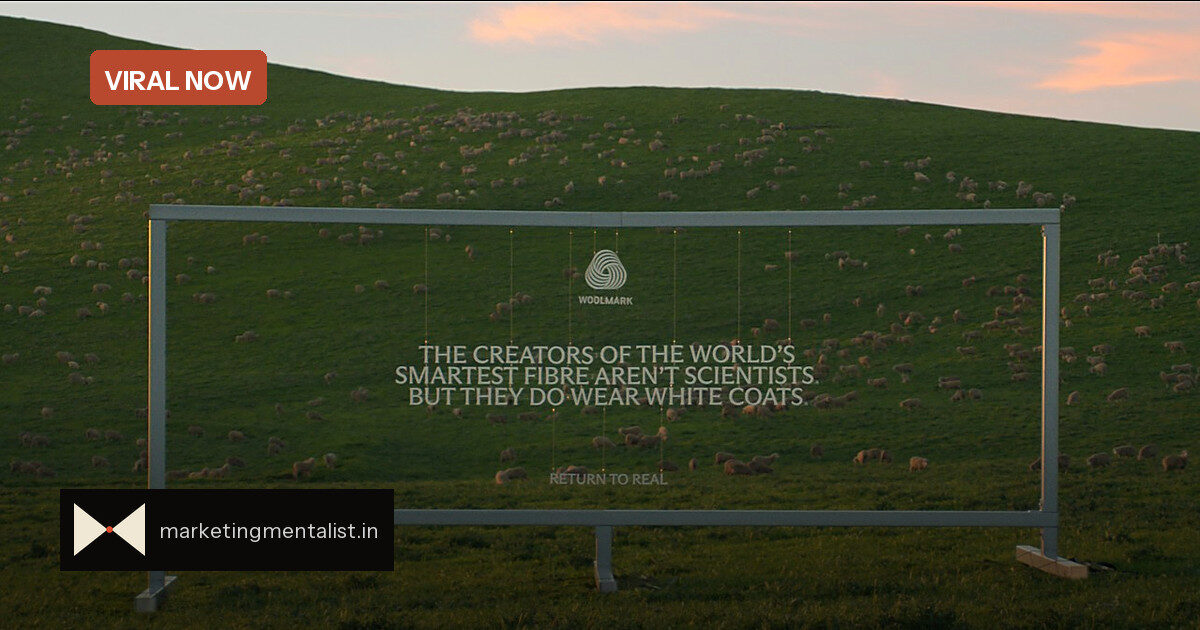
Woolmark’s first work with Wieden+Kennedy Sydney, ‘Return to Real’, is a global platform that turns wool into a cultural answer to artificial life. Across three cinematic films and photography, the campaign explores wool’s natural performance through comfort, adaptability and durability. The films were shot on 35mm by director Amara Abbas and DOP Ari Wegner, skipping scripted scenarios for authentic moments of human emotion. Hand-printed photography by Ronan Gallagher gives the work a tactile, imperfect feel, while a special-build OOH installation on a working Australian sheep farm calls wool the original wearable tech. The platform rolls out across key European markets through online film, Meta and OOH.
The levers it pulls
The campaign leans into a few psychological currents.
- Naturalness bias. People tend to assume that natural origin means better, safer and more trustworthy. The work never has to prove wool’s credentials because it keeps wool’s naturalness visible — in farms, fibre and untouched texture. Positioning wool as the original wearable tech makes natural feel smarter, not older.
- Costly authenticity signalling. The production choices do psychological work. Shooting on 35mm, hand-printing photographs and avoiding scripted scenarios are expensive, slower and less predictable than digital polish. That effort signals truth: if a brand spends craft on being real, we read the message as more real.
- Reactance to optimisation. Constant exposure to synthetic performance and algorithmic precision creates a low-level fatigue. The campaign gives people a way to opt out and choose something tactile, textured and human — a small act of resistance wrapped in a purchase.
What it does for the brand
It stretches Woolmark beyond certification and into consumer desire. Instead of a quality stamp on someone else’s product, Woolmark becomes the curator of a feeling: real, warm, alive. That gives the brand a role in modern sustainability conversations without lecturing. It also makes wool newly valuable, as Laura Armstrong puts it: people are placing new value on things with texture, character, provenance and truth.
The campaign’s analog craft gives Woolmark a premium, editorial quality that synthetic brands cannot easily copy. And by aligning itself against artificiality, Woolmark turns a commodity fibre into a point of view.
What to borrow for your next campaign
You can use the same psychology without a heritage material.
- Reframe the old as original tech. Do not defend a legacy product as traditional. Position it as the version of technology nature already perfected.
- Let the medium prove the message. If you sell authenticity, signal it with choices that cost time and money: unscripted footage, film, print, imperfect texture.
- Give people an opt-out. Name the cultural pressure your audience feels — optimisation, synthetic uniformity — and position your brand as the relief.
The lesson is not to make nostalgic ads. It is to treat realness as a feature people are willing to pay for.
Watch the original: Woolmark on YouTube
Source: Campaign Brief