Why Ray-Ban Chose Ranveer Singh for Its First India Push
The eyewear giant names its first India ambassador, using Ranveer Singh’s expressive persona to make AI glasses feel like self-expression rather than tech.
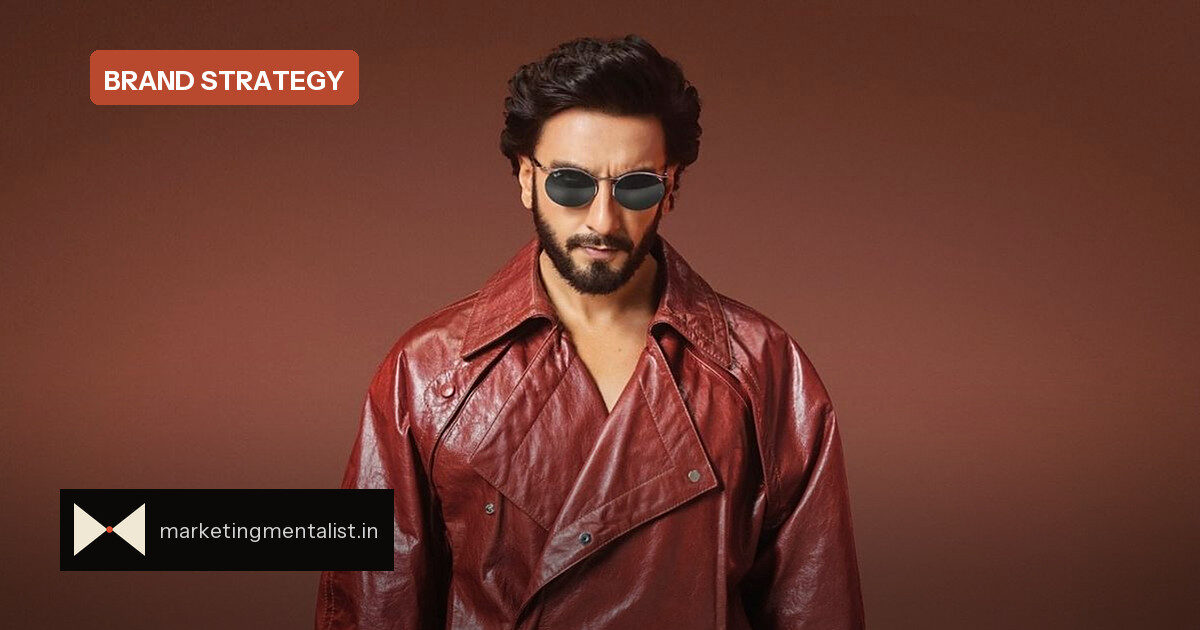
Ray-Ban has named Ranveer Singh as its first brand ambassador for India, covering both the core Ray-Ban line and Ray-Ban Meta. The campaign, built around the line “Frame Your True Self,” aims to make AI-powered eyewear feel like a natural extension of personal style rather than a gadget.
The appointment matters less for the usual “star power” reason and more for its psychological fit. Ranveer Singh has built a public identity around energy, reinvention and loud self-expression. That is not a random celebrity attribute; it is the brand promise Ray-Ban has leaned on for decades.
Why this is identity transfer, not awareness
Brand strategists call this meaning transfer. A celebrity brings a set of associations and those associations attach to the brand. When Ranveer wears Ray-Ban Meta, the hope is that consumers borrow his confidence and individuality and mentally apply them to the product.
“Style, for me, has never been about following a fixed formula – it is about instinct, mood and having the freedom to express every version of yourself,” Ranveer Singh said.
Ray-Ban Meta is a behaviour-heavy product. It promises practical help on the go, such as reminders and schedule cues, without reaching for a phone. That is a habit change. A familiar celebrity face lowers the perceived risk of trying something unfamiliar, but only if the celebrity fits the brand promise. A polished, predictable face would have been easier to buy but harder to believe.
The strategic logic
This is not simply an awareness buy. The partnership works on three levels:
- Meaning match: Ranveer’s expressive reinvention mirrors Ray-Ban’s long-standing individuality story.
- Category translation: The ambassador reframes AI glasses from hardware to style accessory.
- Market signal: Naming a first India ambassador positions the country as a priority and gives the global brand a local cultural bridge.
What marketers should do
Before signing a celebrity, define the single brand truth you want to transfer. Then evaluate candidates on whether their public identity already carries that meaning. Reach should be a filter, not the reason. If you have to invent the fit after the signing, the audience will notice.
The campaign line does useful work too. “Frame Your True Self” asks consumers to see the product as self-authorship. It reframes the buyer as someone choosing an identity, not someone buying a pair of glasses. That is classic positioning: sell the person they want to become, not the object.
The deeper lesson for brand managers and founders is simple. In celebrity marketing, relevance beats reach. A smaller star with the right identity will usually outperform a bigger star whose image has to be stretched to fit.
Source: Afaqs!