Mauka Mauka: How Star Sports Turned Rivalry Into Ritual
Star Sports' 2015 Mauka Mauka campaign didn't sell cricket; it sold the social identity of rivalry. The behavioural levers behind the chant.

The ad and when it ran
In early 2015, Star Sports had a business problem wrapped in a cultural opportunity. It held the broadcast rights for the ICC Cricket World Cup in India, and the group-stage fixture everyone circled was India versus Pakistan. The network needed a reason for casual viewers to treat the match as unmissable, not just another game.
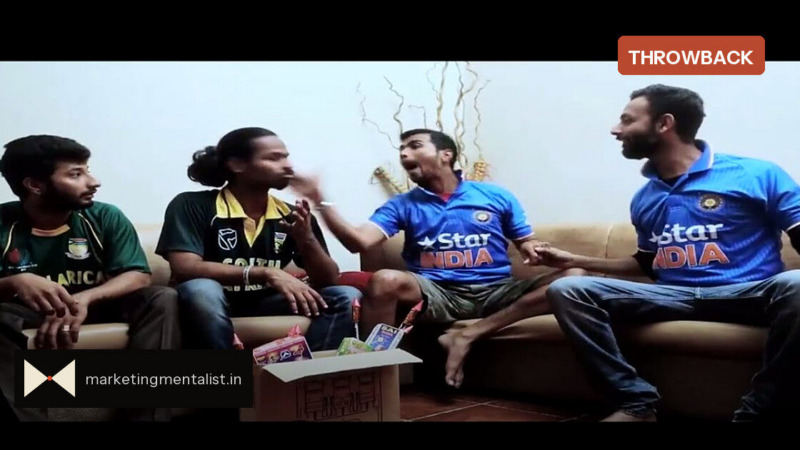
Ogilvy & Mather’s answer was the Mauka Mauka film. The commercial turns on a simple, repeated question: when will a Pakistani fan finally get the opportunity—the mauka—to celebrate an Indian defeat? Across World Cups, the answer keeps being not yet. The chant does the heavy lifting, and the film never has to explain the rivalry; it simply assumes it.
The film ran around the 2015 ICC Cricket World Cup, and its logic was so elastic that Star Sports extended the idea after India’s wins, handing the unopened celebration from one rival fan to the next.
The levers it pulled
The film reads like a short lesson in social psychology.
- Social identity theory. The ad defines “us” by giving viewers an out-group to measure themselves against. The Pakistani fan is not a villain; he is the unlucky rival, and that is enough. By making the rivalry personal, the match becomes an identity test, not a sports fixture.
- Schadenfreude, with anticipation built in. The pleasure here is not a rival’s actual failure; it is the drawn-out wait for that failure to happen. The film trains viewers to enjoy the postponement itself, turning another team’s denial into a reward for the in-group.
- The open loop. Each World Cup closes the loop only partly: the fan still has a cracker, still no celebration. That unresolved tension makes the next match feel like the episode that will finally pay off. Star Sports doesn’t just promote one game; it sells the whole recurring arc.
The chant matters because it compresses all three levers into a single, repeatable phrase. It is a brand asset that works without the film, as a taunt and a reminder.
What it did for the brand and the culture around it
The campaign gave Star Sports more than tune-in; it gave the network a voice. The phrase became social currency during the tournament—used in memes, in commentary, and by viewers to signal they understood the rivalry’s history. It helped make India-Pakistan matches feel like national events even for people who did not follow cricket closely.
The extension strategy was the smartest part. After one rival was dismissed, the mauka moved to the next fan, converting a single ad into a serialised storyline. That turned a 30-second film into a narrative engine the brand could keep feeding as results changed.
The campaign is remembered less for selling the broadcast than for making Star Sports the home of the rivalry’s banter. That is a rare branding outcome: the advertiser became part of the joke rather than an interruption to the game.
What still works today and what would not
The core mechanics still work: sharp identity, a taunt that feels proprietary, and a narrative that extends with results. Brands in any sport can borrow the rhythm—give the audience an in-group, a quirky foil, and a reason to return for the next episode.
What would not land as cleanly is the one-sidedness. The campaign’s smugness depended on India never losing to Pakistan in a World Cup. After Pakistan’s win in the 2021 T20 World Cup, the “always next time” logic needs a rewrite. A modern version would also need more care with the Pakistani fan as a figure: playful friction works, but brand mockery across national identity runs a hard edge today.
The lesson is not to avoid rivalry; it is to build rivalry that can survive losing. Mauka Mauka was brilliant because it made waiting the product. The next iteration would have to make losing part of the story, not the absence of it.
Watch the original: Star Sports on YouTube