Marico Wants Half Its Revenue From New Brands by FY30
Marico's premium and digital brands hit 37% of revenue in FY26, up from 27% in FY20. Its acquisition playbook aims for 50% by FY30.
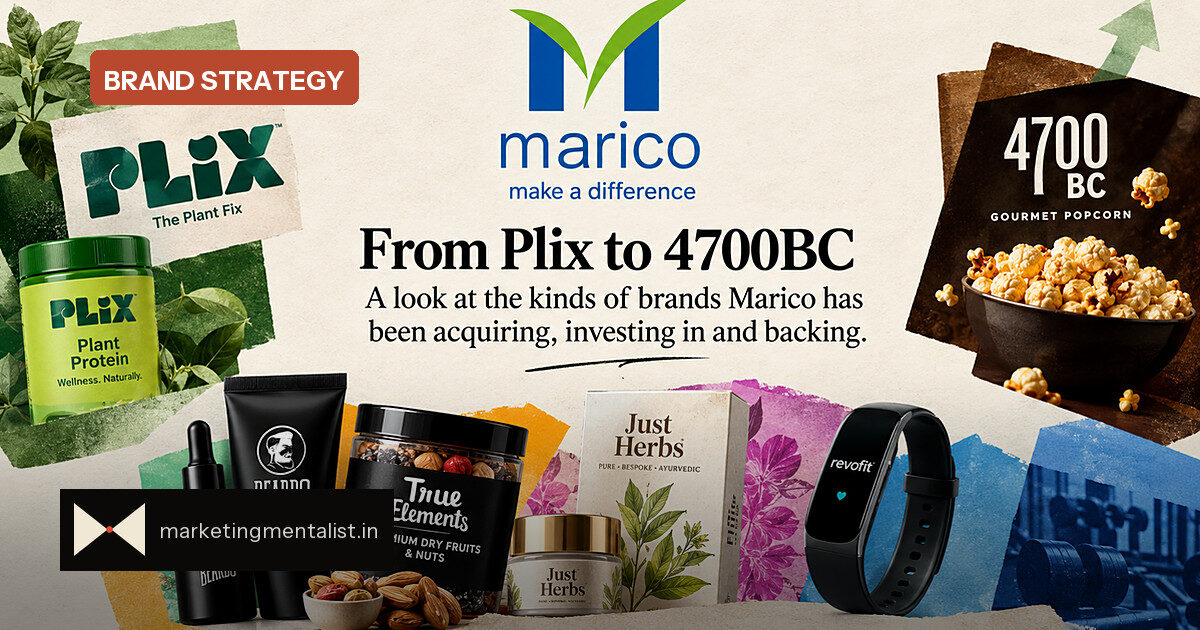
For years, Marico was the classic FMCG playbook: a few strong master brands, deep distribution, steady categories. The latest numbers tell a different story. The Mumbai company is quietly becoming a house of brands, and it is using acquisitions, not just internal launches, to get there.
The number that explains the strategy
In FY26, Marico’s premium and digital brands contributed 37% of consolidated revenue, up from 27% in FY20. The stated ambition is to take that share to 50% by FY30. Overall, consolidated revenue rose 26% year on year to Rs 13,611 crore, while recurring consolidated net profit after tax and minority interest grew 11% to Rs 1,762 crore.
That premium-brand share is the strategic centre of gravity. Marico is not simply adding scale; it is shifting the mix toward categories where consumers are trading up and buying around identity, ingredients and experience.
A house of brands, not one stretched label
The acquisition list reads like a tour of premium consumer niches:
- Plix: plant-based nutrition and wellness; Marico increased its stake to 84.09% through additional investments of Rs 1,012.
- Cosmix Wellness: a Bengaluru-based plant-protein and functional-nutrition startup, 60% acquired in early 2026 for Rs 375 crore.
- 4700BC: gourmet popcorn and snacking, a controlling stake bought for Rs 227 crore by purchasing PVR INOX’s holding.
- Beardo: male grooming; Marico first took 45% in 2017 and later moved to full ownership.
- True Elements: clean-label breakfast and snacking; a 100% stake acquired in 2025 for Rs 138 crore.
- Just Herbs: Ayurvedic and natural personal care, adding another route into beauty.
What ties these together is a house-of-brands logic. Rather than stretching a single Marico label across snacks, supplements, grooming and beauty, the company lets each acquisition keep its own positioning, community and digital-first distribution. That is how niche brands win categories where a mass-market name can feel like the wrong fit.
What marketers can borrow
The underlying bet is premiumisation. Consumers are moving toward plant-based nutrition, clean labels, specialised grooming and indulgent-but-elevated snacking. In each case, Marico is buying a brand that already has permission to play in that niche, then adding capital and distribution.
For marketers inside legacy companies, this is a portfolio strategy worth studying. If your master brand cannot credibly enter a premium niche, buying a focused challenger and protecting its name may be faster than trying to stretch the parent brand. But the work shifts from buying to scaling: aligning supply chain, keeping founder-led community energy and reaching profitability across a wider portfolio.
The caution is in the financial detail. The source notes that performance remains uneven: nutrition is a standout, while some food brands continue to struggle with profitability. Acquisition gives you the brand and the community; it does not automatically give you the unit economics.
Source: Afaqs!