Kids’ TV Hits a 50-50 Split and Breaks a Remote Bias
Warner Bros. Discovery's kids' chief traces the missing girl characters to a remote-control bias — and the 50-50 split now forcing change.
When Sai Abhishek took charge of Warner Bros. Discovery’s kids’ networks in South Asia, he asked a disarmingly simple question: “What happened to all the girl characters?” The launch of Rise of Anshaks: Heroes of Destiny, a Pogo crossover starring male heroes Chhota Bheem and Little Singham, makes the question feel less like nostalgia and more like a diagnosis.
The remote-bias loop
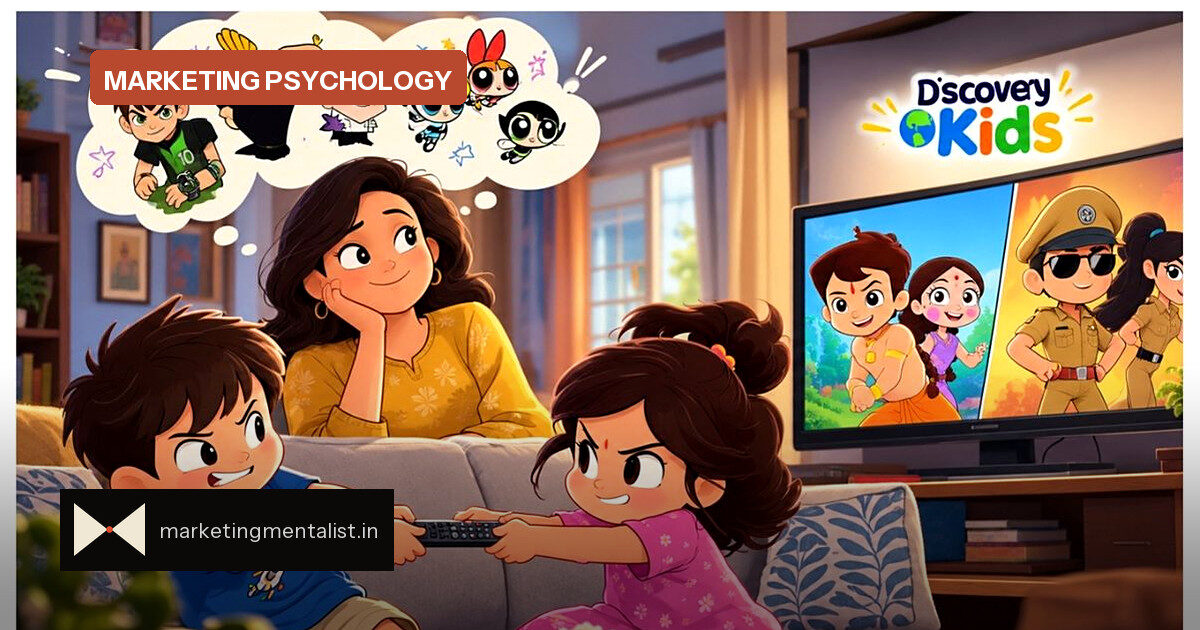
Abhishek’s answer points to a classic behavioural trap. Early studies suggested boys controlled the linear TV remote at home. Networks and studios made cartoons for that presumed audience. The market leader set the pattern, others copied it, and, as Abhishek puts it, “that pattern just became entrenched.”
Girls then exited cartoons earlier, moving to general entertainment with their mothers, which skewed the data and confirmed the original assumption. The loop fed itself.
The 50-50 reset
That skew is finally loosening. Abhishek says the boy-girl split is now “more or less 50-50.” WBD is responding by putting strong female leads at the front of new intellectual properties, not as sidekicks. “Kids learn many of their early values from cartoons,” he maintains, and the company ensures “no male versus female bias” in its programmes.
The lesson: audience data is only as good as the behaviour it captures. Who holds the remote is not the same as who wants the story.
Three brands, three jobs
WBD runs Pogo, Cartoon Network and Discovery Kids under one roof — a portfolio that crossed Rs 1,000 crore in revenue by end-FY2025, per Tracxn, across 18 channels. Preventing cannibalisation is deliberate:
- Pogo — the flagship, built on desi heroes like Chhota Bheem and Little Singham.
- Cartoon Network — the premium global identity, home to Ben 10 and Teen Titans Go!.
- Discovery Kids — a flanker, leaning on slice-of-life local hits such as Titoo.
“We always prioritise clear brand definition,” Abhishek says. He adds that Pogo and Cartoon Network do the heavy lifting audience-wise, while Discovery Kids avoids overlap.
Competing with the scroll
Kids now have phones, gaming and a “host of kid influencers on Instagram and YouTube,” Abhishek acknowledges. So WBD is betting on narrative depth, not stimulation. The Origin of Bheem special mined 18 years of story and “broke all records in the kids’ category,” he says.
The animation borrows from anime: after Dragon Ball and One Piece connected with kids, workshops with Green Gold Animation and Reliance Animation studied manga storytelling. “The look was always in service to the story,” Abhishek explains.
What marketers can use
Three takeaways stand out. First, question the data loop: if a category keeps serving one audience, ask whether the measurement created the preference. Second, define each brand’s job to prevent self-competition. Third, when children are the user but parents are the buyer, retention comes from character affinity and ground-level engagement, not just reach. WBD’s B2B2C bundling with partners like Jio, Amazon and OTTplay sits alongside school contact programmes reaching “lakhs” of children and the Heroes of Kindness classroom initiative across more than 15 cities.
Source: Afaqs!