
ixigo’s sheep-headed ad exposes travel herd mentality
ixigo's latest film uses sheep-headed tourists to make social proof visible, positioning TARA as the way back to individual taste.
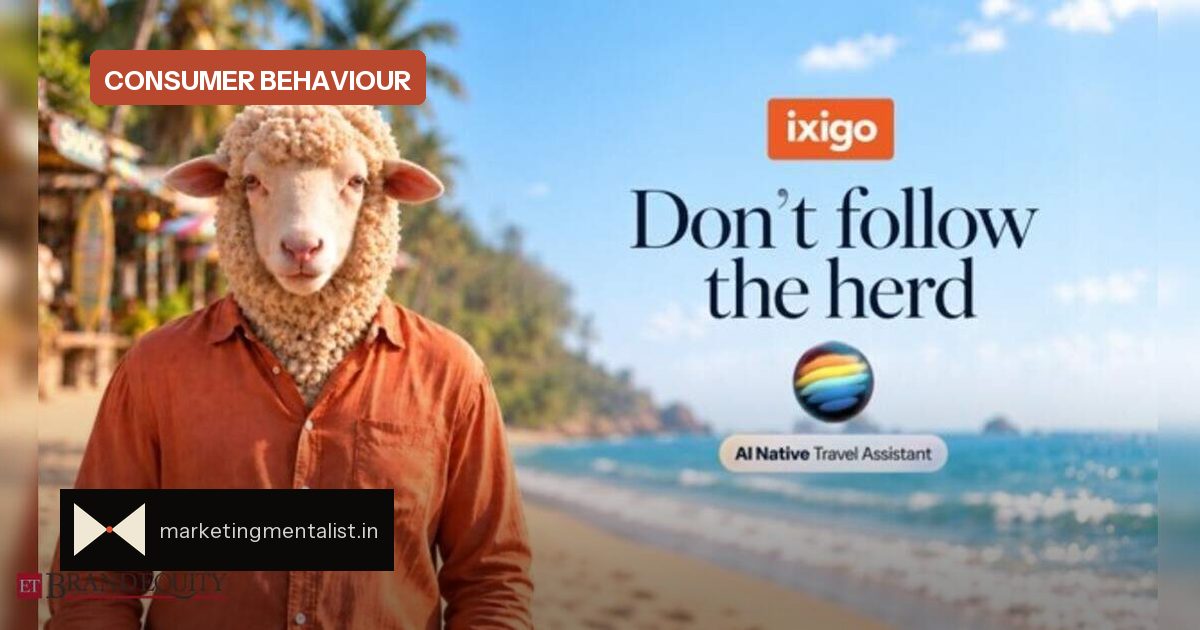
Travel brands usually sell the destination. ixigo’s new digital campaign sells the uncomfortable moment before it: the realisation that you are standing on a crowded beach because everyone else is too.
The film opens on sunbeds and sand packed with holidaymakers whose heads have been replaced by sheep — a literal mob of followers. Into this monotony steps a traveller who asks TARA, ixigo’s AI-native travel assistant, for something more personal. She points him to a quiet seaside escape, and as he breaks away from the herd he transforms back into his human self.
“We have all had moments when we have picked a holiday destination simply because everyone else seems to be going there,” said Ameya Velankar, group senior vice president of marketing and public relations at ixigo. “With this film, we wanted to bring that behaviour to life in a playful, instantly recognisable way.”
The psychology behind the herd
Overtourism is not just an infrastructure problem. It is a social proof problem. When a choice is uncertain — where should I go, is it good, will I regret it — people look at what others are doing and copy it. The more people who post the same beach, the more validation it seems to have.
But social proof has a side effect: it can crowd out the exact thing travellers wanted in the first place — discovery, space, difference. ixigo’s film makes that tension visual.
Why the metaphor works
Calling consumers sheep would normally be risky. Here it works because the brand does not stand above the joke. The sheep-head device gives the viewer an instant, pre-verbal understanding of conformity, while the hero’s transformation sells the payoff.
- It externalises the inner compromise: “I know it’s crowded, but everyone is going.”
- It makes personalisation feel like escape rather than a feature list.
- It lets viewers identify with the transformed traveller, not the herd.
What marketers can borrow
This is not just a travel insight. Any category where consumers chase popularity can use the same structure: name the conformist behaviour, show its cost, and position the product as the way back to the customer’s own taste. The AI assistant is not presented as a tech demo; it is the key that restores identity.
The campaign’s real lesson is that differentiation can feel emotional, not just rational. If your product gives people a more individual choice, show what they lose when they follow the crowd.
Source: ETBrandEquity.com