Hero MotoCorp Hum Mein Hai Hero: The Psychology of an Anthem Ad
A 2011 rebrand film stopped selling motorcycles and started selling self-belief. These are the behavioural levers that made Hum Mein Hai Hero land.
The ad and when it ran
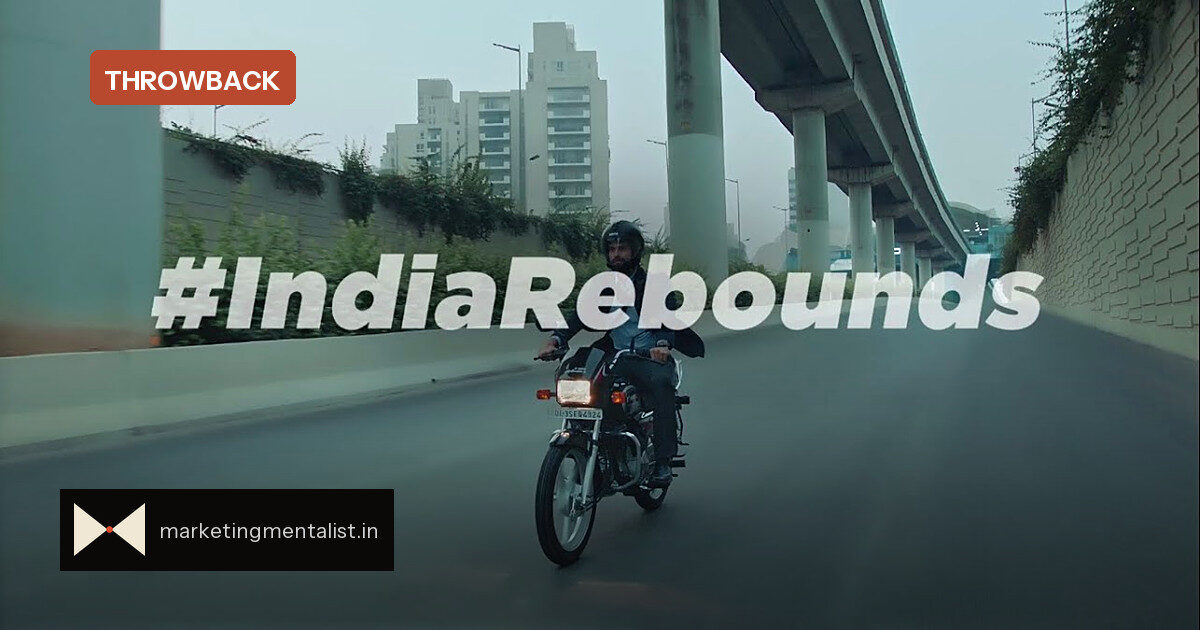
In 2011, Hero MotoCorp was stepping out of one of India’s most trusted brand relationships. The Hero Honda joint venture had ended, and the company had to prove it could stand alone. Its first major statement to customers was not a spec sheet or a price cut. It was an anthem: Hum Mein Hai Hero.
Created by Law & Kenneth, the film runs as a montage of ordinary people finding moments of courage, kindness and resolve. It builds toward a simple payoff: the hero is not the machine, but the person who rides it. It ran across cinema and television as the new identity launched, giving the company a clean break without abandoning the familiar word ‘Hero.’
The levers it pulled
Identity-based motivation. The film never asks the viewer to evaluate a motorcycle. It asks the viewer to recognise themselves as a protagonist. Behavioural science says people prefer products that reinforce a valued identity. Hero stopped selling transport and started selling self-belief.
In-group pride. The montage draws on a shared sense of Indian aspiration. It makes heroism a trait of the many, not the exceptional. That is social identity theory at scale: if you see yourself in these moments, the brand no longer needs to argue with you — it belongs to you.
Reframing. Losing Honda could have read as loss. The film changed the meaning of the facts. The story became not ‘we changed partners’ but ‘the hero was always us.’ A corporate shift was rebuilt as self-discovery, which is far easier to celebrate than a legal separation.
What it did for the brand and the culture around it
The campaign gave Hero MotoCorp an emotional story to survive its independence. The company kept its place as the world’s largest two-wheeler maker by volume through the transition, and Hum Mein Hai Hero became a shared phrase that outlived the launch. It showed up in showrooms, in later social campaigns and in the brand’s public language, turning a legal separation into a folk sentiment.
Culturally, it landed just before self-empowerment storytelling became an industry default. It made everyday decency feel cinematic and let ordinary riders own the word ‘hero.’ For Indian motorcycle buyers, the line made the purchase less about mileage and more about self-worth.
What still works today and what would not
The strategic core still works:
- Sell the customer’s identity before the product.
- Give the brand a single reusable phrase that carries the whole platform.
- Reframe a business change as continuity of customer identity.
What would not work as easily is the format. A two-minute montage of broad heroism now risks feeling like emotional wallpaper. Audiences have more choice and less patience. A brand that claims ‘hero’ without showing precisely what it enables can be admired and then forgotten. On mobile, the sharpening has to happen in the first three seconds, and the proof has to be as specific as the feeling.
Watch the original: Hero MotoCorp on YouTube