20,000 Sq Ft Flagships Turn Stores Into Brand Worlds
Indian designer fashion is betting on immersive flagships. Inside the architecture, psychology and pricing power behind the new brand worlds.
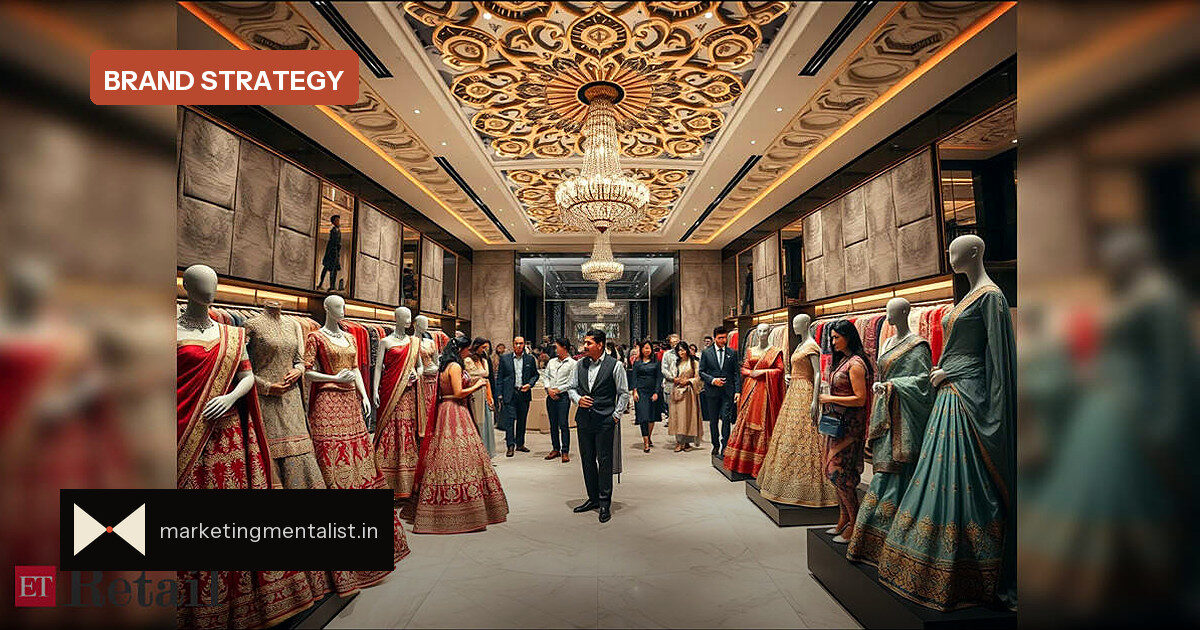
Indian designer fashion is having a physical retail moment, but the new flagship is not really about the clothes. It is being built as an immersive brand world, with architecture, art and craft doing the storytelling before a single garment is touched.
Amit Aggarwal’s windowless brand world
Amit Aggarwal’s new flagship opened on 1 October in Mumbai’s Kala Ghoda. The 6,000 sq ft, two-level store sits inside a windowless heritage structure with exposed girders, split levels and irregular geometry. A 13-foot suspended pod is one focal point. The store brings couture, occasionwear, menswear, accessories and the pret line AM.IT under one roof for the first time.
Aggarwal says the brief was to communicate “the world of Amit Aggarwal before you encountered the clothes.”
Fashion is spending big on architecture
He is not alone. Abu Jani Sandeep Khosla’s Mubarak Baug, which opened in August inside Mumbai’s Framjee Cawasjee Institute, spans 20,000 sq ft. Designed by A Wonder Room, the space is an homage to 40 years of Indian maximalism, mixing couture with murals, sculpture, installations and archival textiles.
Péro has opened its first retail store in India, Pérodise, in Delhi’s Lodhi Colony Market. It has 1,500 sq ft of covered space and another 2,500 sq ft outdoors. Studio Medium’s Delhi flagship incorporates textile installations.
The architect’s brief has changed
Vami Koticha, partner at sP+a, has worked on Ritu Kumar Couture in Hyderabad and AK-OK at Palladium, Mumbai. She says brands now want an interior that carries their design ideology. “A traditional boutique presents product, while the new flagship presents an idea,” she says.
At Ritu Kumar, a 3D-printed concrete wall pairs an old material with robotic technology. At AK-OK, an aluminium skin lets displays keep changing. Her test is memorable: “You could take the clothes away and still know who the brand is.”
Why flagships work as marketing
Abhay Gupta, founder and chairman of Luxury Connect, says India’s luxury market is maturing and the economics of a flagship now extend far beyond what is sold inside it. Done well, a flagship becomes a strategic brand asset.
- Controls storytelling, discovery, service and conversion
- Improves full-price selling and cross-category purchases
- Strengthens client relationships
- Builds pricing power and brand equity
“A permanent physical address signals scale and permanence,” Gupta says.
What brand teams can borrow
The psychology here is simple: physical immersion creates richer memory associations than a product grid. Touching clothes, walking through a sculptural space and feeling welcome changes how people encode the brand, and whether they compare it on price. Péro’s Aneeth Arora says fashion is tactile, and certain retail experiences are going to stay.
For founders and brand managers, the move is to treat a store as media, not just distribution. Give it one signature material or object, let the space carry the ideology, and welcome people who are not buying yet. The acid test: remove the product and see if the brand is still recognisable.
Source: ETRetail.com