Decathlon’s KIPRUN Bet on Serious Runners
Decathlon Sports India is launching KIPRUN to move beyond beginners and keep runners as they train harder—without breaking its value positioning.
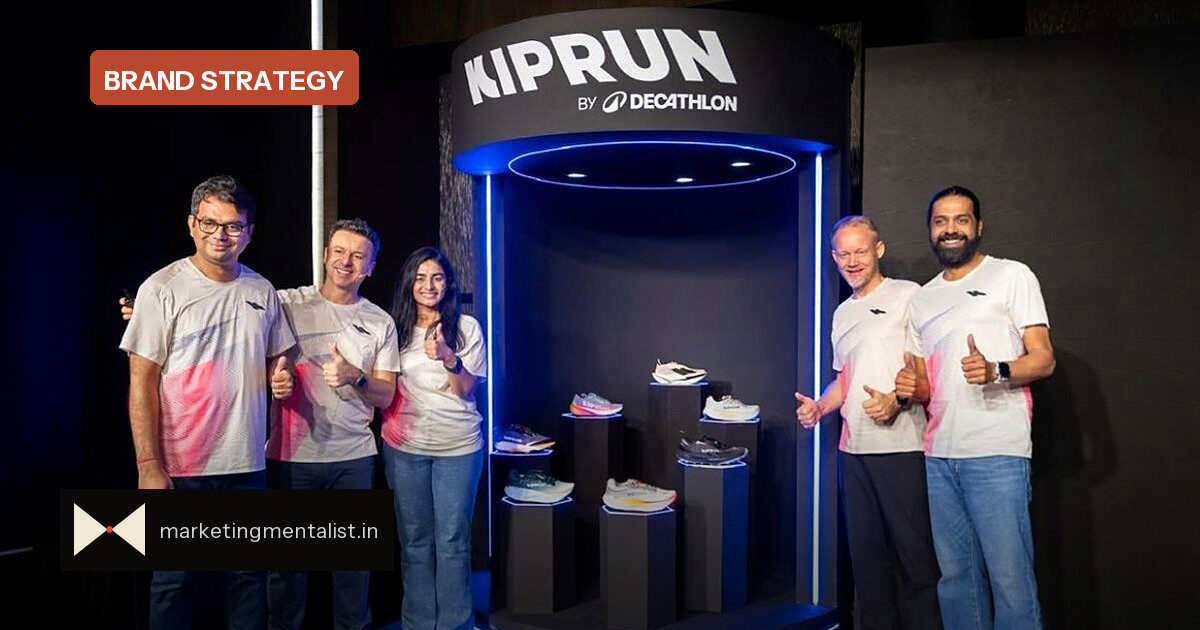
A new rung on Decathlon’s running ladder
For years, Decathlon’s running story in India was built on accessibility: affordable shoes and gear for beginners and recreational runners. With KIPRUN, the retailer is adding a specialist running sub-brand, covering performance shoes, apparel, hydration, trail gear and accessories. This year Decathlon will introduce 35 new running products, 17 of them high-performance shoes.
Sankar Chatterjee, CEO of Decathlon Sports India, puts it simply: the brand has “focused only on beginners and intermediate runners” and can now serve “performance-driven users as well.”
Why this is really about retention
KIPRUN is less a product-line extension and more a customer-lifetime play. Decathlon wants the runner who starts at Rs 5,000 to stay when they train for a marathon. The sub-brand gives the parent permission to meet advanced needs without forcing the masterbrand to become premium overnight.
This matters because experienced runners in India have traditionally had access to a wider choice of specialist global running brands. KIPRUN is an attempt to hold those customers as their buying criteria shift from price to pace, recovery and race-day performance.
Value is the positioning, not the compromise
The pricing shows the tension. The KIPRUN Elite carbon-plated shoe is priced at Rs 19,999. Next year, Decathlon plans a carbon-plated shoe below Rs 10,000. Bruno Araujo, country sports leader for running, frames the strategy as value.
“We are obsessed about value for money,” he said.
Decathlon is not trying to out-premium premium brands. It wants to democratise high-performance running for price-sensitive runners who would not otherwise buy carbon-plated shoes.
- Retain runners as their needs climb from beginner shoes to marathon gear
- Keep the parent brand on accessibility while the sub-brand carries performance
- Use athlete validation and community events to build performance credibility
Community proof closes the credibility gap
Specifications alone will not win serious runners. Araujo says products are validated by athletes before launch, with some co-designed. Involving local athletes is a priority, and that matters as running communities spread into Tier II and Tier III cities.
Behaviourally, performance purchases travel through community proof. A sub-brand supplies the technical signal; athlete co-creation and events such as Decathlon Sports Utsav supply the social proof.
The lesson for Indian brand builders
Decathlon is testing whether a value parent can hold a performance sub-brand. The ambition is significant: running is expected to contribute more than Rs 1,000 crore of a planned Rs 10,000 crore India business in four years, with more than five million active runners.
The financial context is sober. FY25 revenue rose only 3.1% to Rs 4,133.1 crore and the company reported a net loss of Rs 65.03 crore after a profit of Rs 197.19 crore in FY24. Yet the stated approach is long term: invest in stores, digital and automation while credibility builds.
The strategic takeaway is a classic brand ladder move. Do not stretch the parent brand; build a distinct rung. Keep the old promise of accessibility, and let the sub-brand earn the new promise of performance.
Source: Afaqs!