Candyman turns Halloween fear into a desi bonding ritual
Afaqs reports on Candyman's Halloween film that turns darr into togetherness. Local horror codes and quick-commerce extensions make it a ritual.
Our score: 7/10 · Candyman, “Candyman Halloween campaign”
Verdict: A smart desi reframe makes fear a social ritual, though a borrowed premise keeps it from mastery.
What works
- Reappraisal turns fear from avoidance into togetherness
- Local horror codes give an imported festival a desi texture
- Quick-commerce and GRWM extensions make it a shareable ritual
What misses
- The ghost who cannot scare anymore is a familiar trope
- The candy stays more coach than centrepiece in the idea
The lesson: Anchor foreign occasions with local archetypes, then let the product close the ritual.
The ad
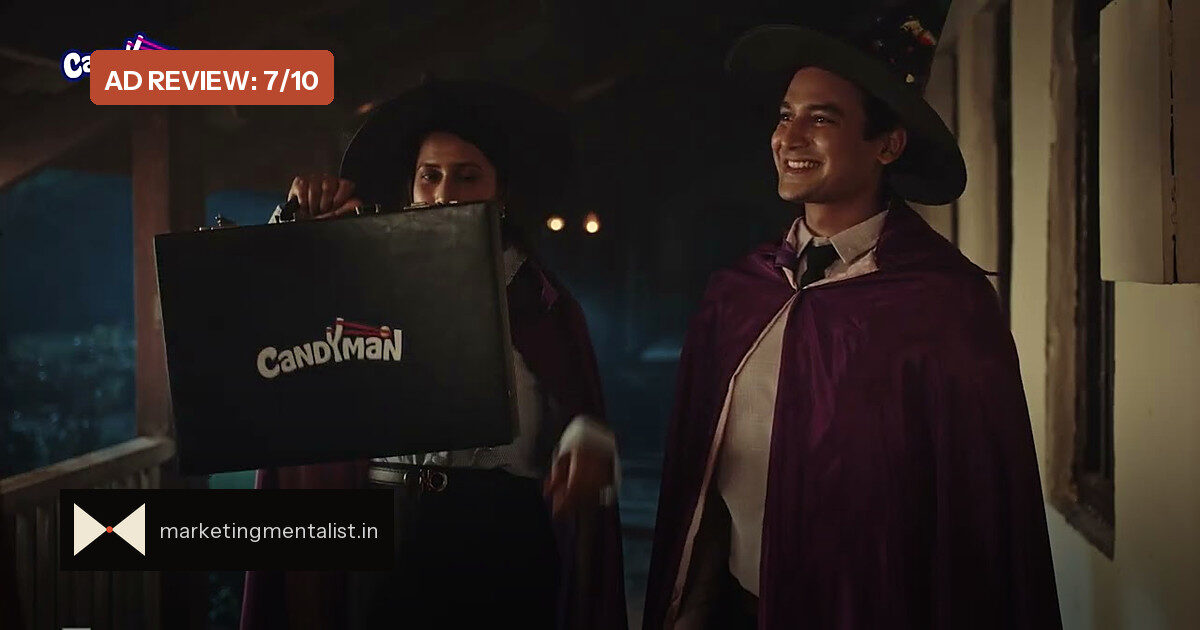
Candyman’s Halloween campaign, “A Desi Halloween,” follows Tangy Tantrik, an old-school ghost who can no longer frighten people. Candyman gives him a new role: use fear to bring people closer. Created by Ulka, part of BBDO Group India, the film runs online with digital and on-ground support.
The campaign is built on the thought, “Darr sirf bhagane ke liye nahi, logon ko paas lane ke liye bhi hota hai.” Subash Balar, vice president and business head for chocolates, coffee and confectionery, frames the play as tapping Halloween’s growing relevance while matching the brand’s “playful mischief” personality.
What works
The strongest lever is reappraisal. Fear typically triggers avoidance. The campaign changes the meaning of the same arousal: darr becomes an excuse to huddle, laugh and celebrate together. That is not a decoration change; it repositions the occasion itself.
Localisation does the heavy lifting. Tangy Tantrik gives an imported festival a recognisable desi horror code, making the celebration feel culturally closer. It also fits the brand persona: the film is about mischief, not menace.
The extensions matter because they turn a one-film idea into a ritual. Zepto masks, an exclusive quick-commerce SKU and GRWM content give people props and prompts to perform Halloween instead of just watching it.
What misses
The premise is borrowed: a scary character who cannot scare anymore is well-worn territory. The film leans on local detail and the strength of the line to feel fresh. As described, the candy is also more coach than centrepiece; the product could anchor the moment of connection more strongly.
The verdict
7/10. The reframe is tight, culturally smart and built for activation. It loses points for the familiar trope and for leaving the product slightly outside the emotional payoff. Still, it gives Candyman a clear stake in a new celebration ritual.
The lesson
Import the festival, not the monsters. Anchor a foreign occasion with local characters and language, then use product and partners to close the ritual.
Watch the original: Candyman on YouTube. Shown for review; the rights stay with the brand.
Source: Afaqs!