The Psychology Behind Borosil’s Everyday Hassles Ad
Borosil’s ‘Designed for a Better You’ campaign skips feature lists to sell organisation and juicing as relief. The psychology behind why it spreads.
The ad
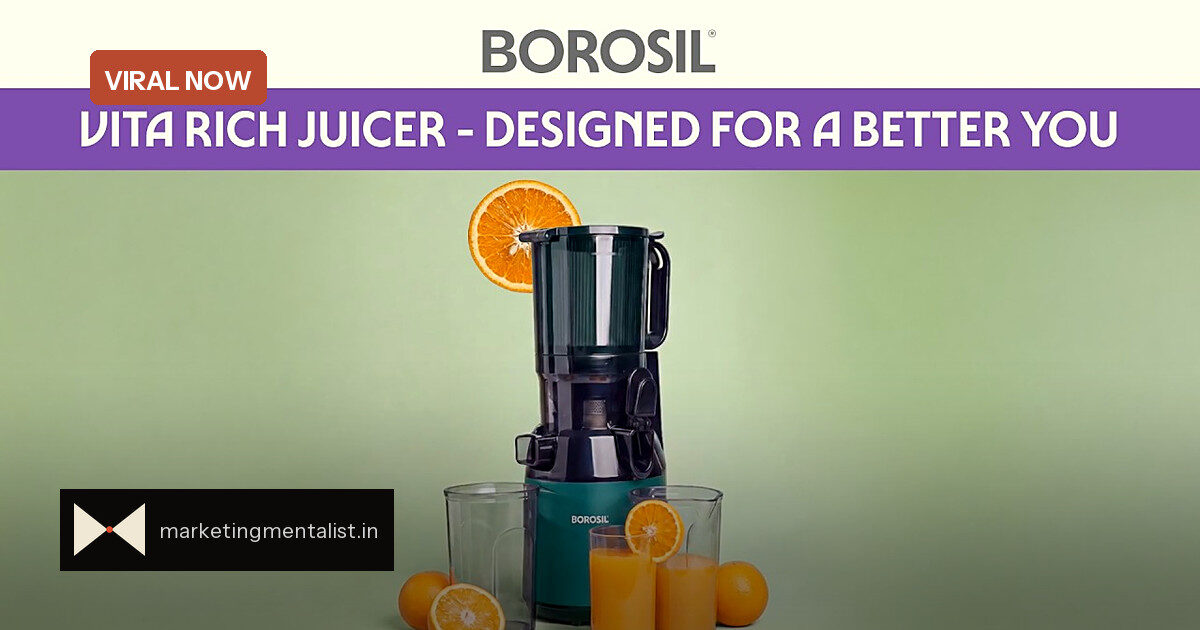
Borosil’s juicer film from the “Designed for a Better You” campaign starts with a small, recognisable rut: the same few juice combinations made on repeat. A home cook pushes past that routine, feeding the Vita Rich Slow Juicer a wider spread of fruits and vegetables. The payoff is the juice, not the appliance. The film is a short product story about escaping a habit, aimed at anyone who has stood in front of a fridge and thought, “not this again.”
The levers it pulls
The film works less like a demonstration and more like a behavioural nudge.
- Outcome simulation. By showing produce turning into juice, the ad lets the brain pre-experience the result. The benefit stops being abstract and starts feeling like something you can taste.
- Variety seeking. Behavioural science says people grow bored with repeated choices. The film moves beyond familiar combinations, turning a kitchen appliance into a small act of novelty.
- Identity framing. The campaign line “Designed for a Better You” attaches the product to an upgraded self. The ad quietly invites the viewer to imagine being the kind of person who has an easier, more creative routine.
What it does for the brand
Borosil moves from being a maker of glass containers and appliances to a brand that studies real kitchen behaviour. Barnali Shankar, Borosil’s VP of marketing, frames the campaign around products that start with the people who use them and make daily life easier. That makes the brand feel observant and user-first, not feature-obsessed.
What to borrow for your next campaign
Keep the creative small and shareable.
- Start with the hassle, not the feature. Name the tiny frustration before you introduce the product.
- Show the relief. Let the result—juice, a tidy shelf, saved space—do the persuading.
- Sell the upgraded self. Anchor the product to an identity shift, not a utility list.
If the moment is specific enough, people will tag the friend who shares it. That is the whole distribution plan.
Watch the original: Borosil on YouTube
Source: ETBrandEquity.com