Retention isn’t about stopping customers from leaving
BFSI marketers say low CAC, frequent UPI use and more data don't equal loyalty—transparency, ease of exit and lifetime value do.
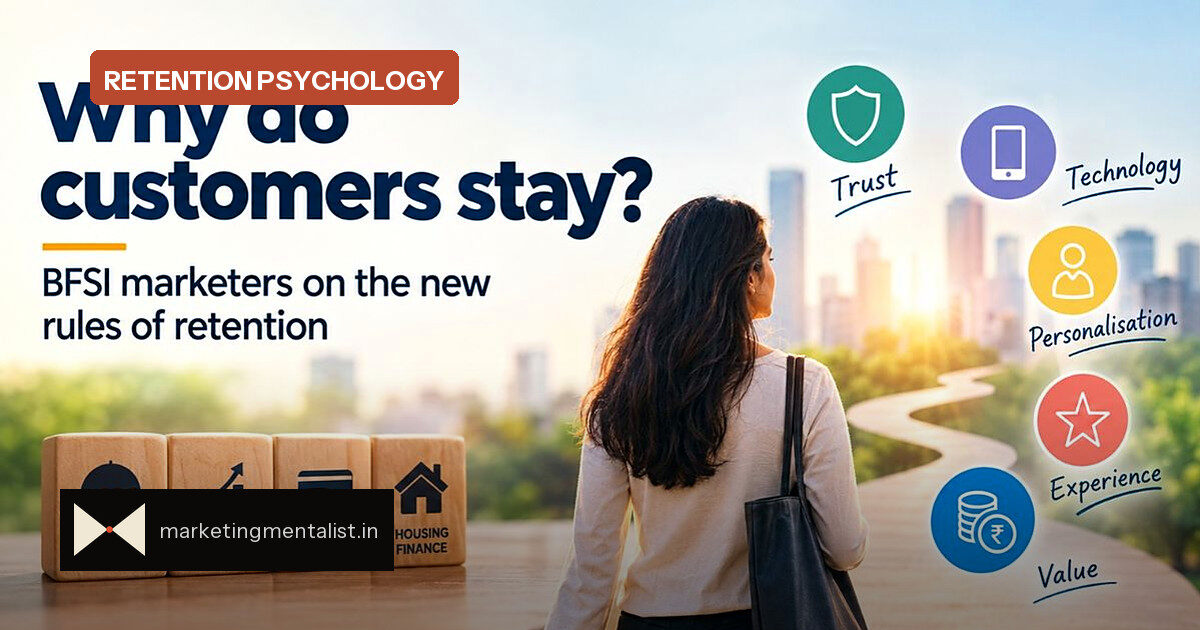
Ask a BFSI marketer what makes customers stay, and the honest answer is no longer “more touchpoints.” At the afaqs! BankFin 360 conference, marketers from insurance, mutual funds, fintech, housing finance and banking argued that loyalty is built on trust, clarity and lifetime value—not on locking people in.
Low CAC can hide the wrong customer
Shriram Life Insurance’s Rahul Adaniya said customer acquisition cost is a well-optimised digital metric, but a low CAC doesn’t prove the brand brought in the right customer. The experience after the first transaction is what makes someone sticky. In financial services, that means clear communication about payments, fees and product terms—without fine print that invites misinterpretation. The metric he pointed to is customer lifetime value: the total worth of a customer across the whole relationship, not the price of getting them in the door.
Retention is not a messaging quota
Manas Gulati, co-founder and CEO at ARM Worldwide, pushed back on the idea that brands underspend on retention. For client Bajaj Finserv, he said, roughly 70% of effort is directed at existing customers—introducing them to other products and keeping them engaged. But the danger is treating retention as a licence to send more of the same. He said brands need fresh ways to engage rather than overwhelming people with repeated communication.
Sometimes the exit button builds the relationship
Mirae Asset Mutual Fund’s Shrinivas Khanolkar said the past 18 months have tested investor relationships, especially for a new generation facing serious volatility for the first time. His retention move is deliberately counterintuitive: the first transaction option on Mirae’s app and website is redemption. If an investor needs their money, let them take it—that builds more trust than trying to hold the door shut. Redemptions, he noted, are often tied to a financial goal or an immediate need, not just poor market performance. The brand’s job isn’t always to stop a decision; sometimes it is to remind the customer why they made it.
Sixty attributes still aren’t an explanation
SBI Mutual Fund’s Pooja Menon Vaidya cautioned against confusing data volume with understanding. A brand can hold 60–80 attributes about a customer, but that doesn’t explain why the customer is behaving a certain way. A redemption, for example, could have several motives; assuming one from digital behaviour alone can lead to the wrong conclusion. She also warned against applying demographic rules too mechanically—marital status, location or language may signal something, but they shouldn’t automatically dictate the message.
Human reassurance at hard moments
In housing finance, Aadhar Housing Finance’s Noel Mascarenhas said speed and convenience matter while everything runs smoothly. But when a customer is deciding whether they can afford an EMI or sustain a long-term loan—often with unpredictable employment—they need reassurance that digital tools alone cannot give. His answer is not digital versus human; it’s both, with human intervention rising at moments of extra stress.
Frequent use is not loyalty
HDFC Bank’s Mohit Gosain put it bluntly: “Frequency of use is not the same as loyalty.” A customer might make 5, 20 or even 30 UPI transactions a day, but that does not make them loyal to the bank or its app; a better cashback offer tomorrow could pull them away. Banks need to give people clearer reasons to engage beyond checking a balance or statement. Better technology helps, but only if the customer sees tangible value in the relationship.
Transparency starts at acquisition
Kissht’s Shwetha Iyer tied retention to the quality of the first relationship. In fintech, customers need clarity on payments, fees and terms. Over-communication can be a risk, she said, but ambiguity is often bigger. The goal is that customers understand exactly what they are signing up for—and don’t feel misled once inside.
Three retention myths the panel challenged:
- Low CAC means a good customer. It doesn’t guarantee fit or a strong post-purchase experience.
- More messages equal more retention. Repetition can overwhelm rather than engage.
- Frequent usage equals loyalty. A UPI-heavy user can still switch for better cashback.
The throughline for marketers: stop treating retention as a campaign or a lock-in mechanism. It is the result of clear promises, real value and enough respect to let customers leave when they need to.
Source: Afaqs!