Ather’s 50,000-vs-30,000 Gap Is a Branding Test
Ather's demand of 50,000 scooters a month outruns its 30,000 supply. The upcoming Konarc tests whether premium product DNA can scale.
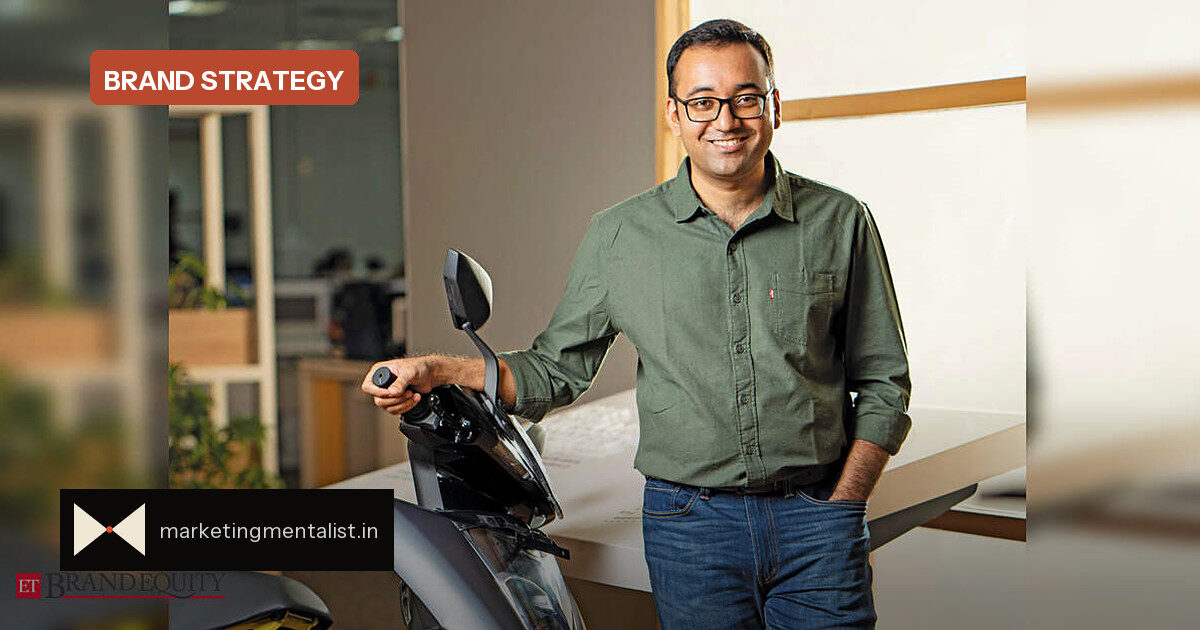
Ather Energy’s reputation rests on a simple promise: an electric scooter for people who care about technology, performance and design. The 450 defined that identity. Rizta widened the market to families. Now the upcoming Konarc scooter aims at a far more conventional buyer—someone raised on petrol two-wheelers. The question is not whether Ather can build three scooters. It is whether a product-first brand can scale into the mainstream without losing the very thing that made people choose it.
Three scooters, three jobs
Tarun Mehta, co-founder and CEO, describes the range as one philosophy, not a slide from premium to mass. “Premium has meant luxury for too long,” he told ETBrandEquity. “Luxury is only defined by price. Premium means something else.” For Ather, premium means delivering more from the same specifications—via quality, software and the ownership experience. “We are not trying to be the cheapest offering,” he adds.
- 450: performance and agility, with a stiff suspension that keeps riders connected to the road.
- Rizta: family storage, a larger seat and a relaxed riding position for daily commutes.
- Konarc: soft suspension, a long wheelbase, a metal body and a handlebar-mounted headlight—familiar cues for petrol scooter riders.
Marketers will recognise this as Jobs to be Done: each product is built around a distinct task, not a price tier or an EV badge.
Experience before product
Ather’s differentiation starts before engineering. Months ahead, product, marketing and design teams hold demo days. They imagine the customer experience, write the product story, create mock-ups and shoot a concept ad. Only then do engineers get the brief to make the proposed experience real. Cruise control, hill hold, pothole alerts and Airwalk all emerged this way. The lesson for brand builders is to sell the outcome—starting on an incline without awkwardness, moving through a tight parking spot—rather than the component that enables it.
The demand pressure
Ather is expanding just as demand runs ahead of supply. Mehta puts monthly demand at 50,000 scooters against supply of 30,000, a gap that helps explain why its market share has slipped from 20 per cent to 15 per cent. A new plant should eventually lift capacity to roughly 77,000 units a month, but that takes time. For the next 18 months, the metrics Mehta wants investors and employees to watch are production output and capacity utilisation.
Mehta’s longer-range bet is on the market itself. He expects India’s annual scooter market to cross one crore units, with electric two-wheelers accounting for 70–80 per cent within six years. Ather, he argues, can eventually command more than 20 per cent of that market—but only if quality does not slip as the portfolio widens.
Quality gates ahead of speed
Ather says it will slow down rather than ship something it is not satisfied with. The company delayed Konarc’s launch and started production at its existing facility instead of introducing a new product on a new platform at a new plant. It took a similar call with its smart helmet, launched in 2024 and paused for much of the following year. “If you’re not happy with the quality, we will stop,” Mehta says. “Growth is not more important than delivering the product we promised.”
That discipline extends to partnerships. Ather sees room to work with shareholder Hero MotoCorp on charging standards and infrastructure, but not on product identity or technology. “Two different brands should not try to become one.” The ambition is bigger than any single model: Mehta wants Ather to be known as a product company, not a two-wheeler brand defined by a price band. The hard part will be carrying that identity from a small group of tech-conscious buyers into the mainstream showroom.
Source: ETBrandEquity.com