When AI Is Table Stakes, Ideas Are the Moat
A 10-minute AI creative contest in Mumbai showed that execution is now table stakes. The winners imagined the idea first and let the machine execute.
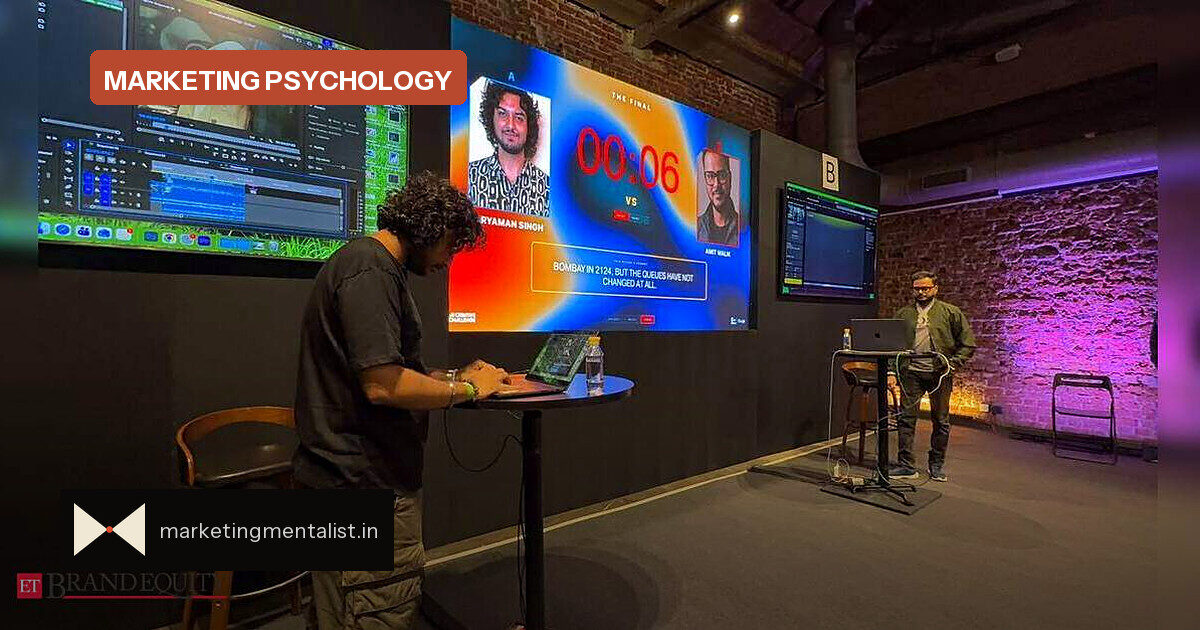
At The One Show x Google AI Creative Challenge in Mumbai on October 27, eight creators had minutes to turn surprise briefs into short films. The final prompt asked them to imagine Bombay in 2124 with one familiar feature stubbornly unchanged. The contest highlighted a paradox that goes far beyond advertising: as execution gets faster, the idea itself becomes the scarce input.
Speed is not the real test
The format was tight: 10 minutes in the opening round, then 15-minute rounds in the semi-finals and final. But the contest was not arguing that a campaign can be conceived and delivered against a stopwatch. Dylan Swanepoel of The One Club for Creativity said the goal was to see what a creator can do with the tools available, not to diminish months of real campaign work.
Aryaman Singh, a creative strategist at Leo India, won the India edition and will represent the country at the global finale in New York.
The idea stayed human
Advertising veteran Prasoon Joshi set the tone with a line that reframed the challenge: the most beautiful song is yet to come.
Singh trained Claude to translate his spoken ideas into detailed prompts for video generation. He fed it scripts he admired so it could learn his pacing, aesthetics and storytelling style. Yet he made a rule for himself: the idea had to come from his own mind.
“Because it’s always referencing from something that exists. So I made it a rule for myself that the idea has to be from my own mind.”
During the contest, he spent a few minutes thinking before typing anything. AI could shape and execute the idea; the idea itself remained human.
That distinction became the judging criterion. Harshil Karia, founder and CEO of Schbang, said the winners imagined the idea themselves and then used AI to bring it to life. A technically polished film was not enough without a distinctive point of view.
When everyone has a Ferrari
Amitesh Rao, CEO South Asia at Leo, framed the shift: “Everyone has a Ferrari. So then you’re back to individual creativity, differentiation. Who’s a better driver?”
The psychology here is simple. When execution becomes cheap and abundant, the scarce asset is judgment. Marketers should treat this as a shift in where competitive advantage lives:
- AI lowers the cost of execution, so the idea becomes the differentiator.
- Train AI on your taste, but do not ask it to do the thinking.
- Judge work by the strength of the idea, not the polish of the output.
- Agencies that sell only production lose their defensible layer; insight and strategy are the moat.
What to do about it
Treat AI as an execution partner, not an ideation replacement. Write the brief and the hook yourself, then let the tool handle iterations, formats and technical tasks. Use the saved time to deepen consumer understanding, sharpen positioning and pick the one idea worth making.
Subhash Kamath, former CEO of BBH India and Publicis Worldwide India, warned that agencies become vulnerable if they sell creative execution as their primary value. He argued they must become business partners with better consumer knowledge than their clients.
The contest left one open question: if everyone can generate a polished film, who decides which idea deserves to exist? That judgment may be the new creative advantage.
Source: ETBrandEquity.com