Fevicol’s Dum Lagaake Haisha: The Ad That Made Glue Cultural
How Fevicol's Dum Lagaake Haisha used effort, social proof, and an earworm to turn an adhesive into an Indian cultural truth.
The ad and when it ran
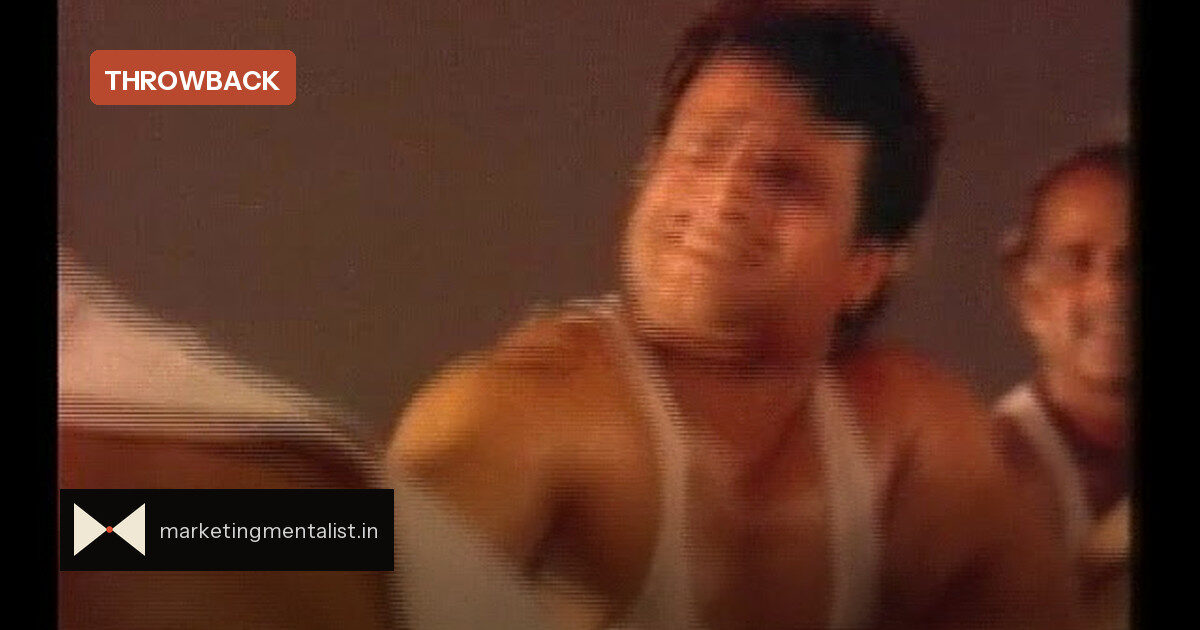
Fevicol’s ‘Dum Lagaake Haisha’ arrived in the 1990s and behaved more like a small-town skit than a utility pitch. The film sets up one absurd physical test: wood joined by Fevicol, a crowd gathering, and a hero of the moment straining with full force. It never feels like a laboratory demo. It feels like a tamasha.
The spot’s hook was the jingle with the title phrase, repeated until it stopped being a product line and started being something people said while pushing a scooter, lifting a trunk, or trying to open a jar.
The levers it pulled
The effort heuristic. People readily use visible effort as a cue for quality. The straining is not failure; it is evidence. The harder the pull, the more invincible the bond appears. Fevicol didn’t need a comparison chart—it needed one person fighting the joint and losing.
Social proof. The crowd around the action does the persuading. Their attention, laughter, and growing involvement tell the viewer how to feel. They treat the bond as a local legend in the making, so consumers do too.
Auditory encoding. The jingle and the phrase ‘Dum Lagaake Haisha’ compress the entire argument into a chanted mnemonic. It makes the brand easy to recall and easy to reuse in everyday language.
What it did for the brand and the culture around it
The campaign shifted Fevicol from a functional adhesive to a shorthand for bonds that don’t break. The long-running line ‘Fevicol ka mazboot jod hai, tootega nahi’ became the idea; the jingle became the delivery system. In a category bought by carpenters and household users, Fevicol earned a rare consumer-brand glow.
Around it, the phrase left the ad and entered Indian speech—used for effort, stubbornness, or attachments that refuse to end. The campaign also gave Fevicol permission to stay playful in later work, where absurd sticky situations kept appearing without the need to explain product chemistry.
What still works today and what would not
What still works is the structure: build a small drama around a product truth, add a crowd that models belief, and wrap it in a phrase people can steal. The idea of staging an over-the-top proof, rather than saying the product is strong, remains a powerful brief for any category.
- Let the product truth be seen, not stated.
- Use the crowd to model belief.
- Compress the argument into an earworm phrase.
What would not survive unchanged is the medium. The original was built for a patient TV audience, with a slow reveal and a single payoff. Today it would need shorter edits, caption-first storytelling, and a participation loop: invite people to submit their own unbreakable Fevicol moments, then let the crowd on socials become the next ad.
Watch the original: Fevicol on YouTube