Parachute Advansed Gold sells girlhood, not hair oil
Marico's new Parachute Advansed Gold film uses coastal Andhra traditions, braids and friendship to sell girlhood, memory and emotion instead of hair repair.
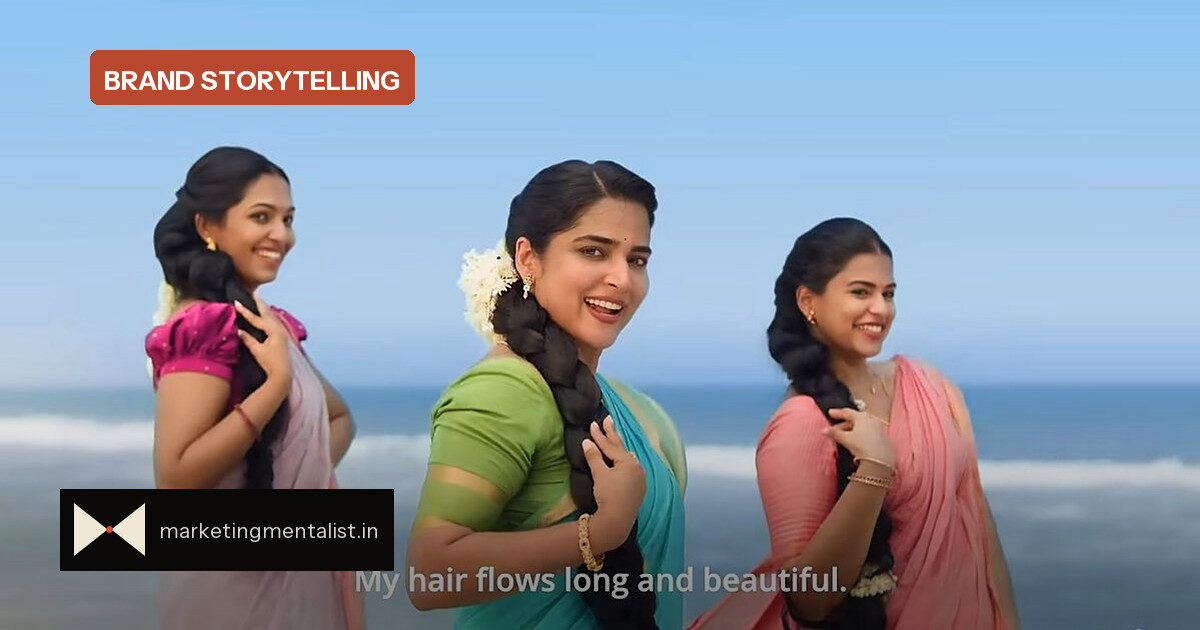
Parachute Advansed Gold’s new campaign is not really about split ends, dryness or growth. “Feel Like a Girl Again” is about memory: the kind of girlhood stored in long braids, seaside afternoons and friendship. Directed by Gautham Vasudev Menon and conceptualised by Kakkoii Entertainment, the film follows three friends who step away from their everyday responsibilities and reconnect with their younger selves on a beach in coastal Andhra Pradesh. It will run across television, cinema and digital.
The brand pivot: from repair to remembrance
Hair oil advertising in India has usually been functional—stronger, longer, less breakage. Marico’s new work keeps long hair at the centre but changes what it means. The braid is not a problem to be fixed; it is a reminder of who the consumer was before responsibilities arrived.
Marico CMO Vikram Karwal explained the shift: “Today, consumers seek brands that understand not just their needs, but also the emotions and memories that shape their lives.”
The insight under the film
Kakkoii founder Yousuf Rangoonwala said the team’s research surfaced a nuanced loss. For many Indian women, especially at a mass level, the biggest loss is “not of opportunity, but of innocence.” Maturity and domesticity arrive early, and the playfulness of girlhood gets compressed.
That explains the strategic choice. The film does not present a hair problem and then a product solution. It offers affirmation and positive reinforcement—the brand as witness to a feeling rather than fixer of a flaw.
Why the psychology works
Nostalgia marketing is powerful because it lets people borrow positive emotions from the past and attach them to a present-day brand. The effect is stronger when the memory is culturally specific rather than generic. Here, coastal Andhra traditions, braids and local rituals make the girlhood being remembered feel real.
- Memory over message: The product claim is quiet; the emotional recall is loud.
- Specific culture beats generic sentiment: Local visual codes make nostalgia credible.
- Affirmation beats accusation: The brand celebrates the consumer instead of pointing out what she lacks.
What marketers can borrow
The transferable move is to find the emotional memory already attached to your category and treat your product as the object that holds that memory. In this case, long hair is the souvenir of girlhood; the oil is what protects the souvenir. The consumer remains the hero.
For a founder or brand manager, that means asking one question before writing the brief: what does your product let people remember about themselves? If the answer is only functional, the campaign may still be clear, but it will struggle to be felt.
Source: Afaqs!