Pidilite lifts ad spend to 5.4% of sales to build categories
Pidilite is spending more on marketing. The real shift is where the money goes—into building categories before brands, from construction chemicals to paints.
Pidilite Industries is spending more on advertising, but the interesting shift isn’t the size of the cheque. It’s the job the money is being asked to do. In Q4 FY25, advertising and sales promotion expenditure touched 5.4% of net sales, up from 4.7% a year earlier and 3.9% in the previous quarter. The company entered FY27 with revenue from operations up 22.1% year on year to Rs 4,249.38 crore in Q1 FY27.
That growth, CMO Sandeep Tanwani told ETBrandEquity, means media investment has moved “in line with our growth plans.” But where the next rupee goes is now a very different decision, because Pidilite is increasingly selling categories people don’t yet know they need.
The real task is demand, not share
Tanwani’s distinction is simple and useful. In a mature category, the marketer’s job is to win share. In an emerging category, the job is to create demand. That changes the sequence.
Construction chemicals are the clearest example. Pidilite estimates tile adhesive penetration is only around 25%, meaning most tile installations still use cement or another alternative. So the first task is not pushing a brand promise; it is making the buyer understand why the category matters at all.
“Education often precedes mass media for Pidilite’s growth categories,” Tanwani said. The company builds the ecosystem first—training applicators, ensuring availability—and only then scales awareness through mass communication.
This is why category creation cannot simply copy an FMCG media plan. The person deciding and the person using the product are often different. Pidilite reaches around five lakh carpenters through one-to-one engagement, and is extending that into short-form video, demonstrations and professional testimonials.
A portfolio, not a single playbook
Pidilite’s marketing mix now looks like what Tanwani calls a “graphic equalizer”: each brand gets a different calibration depending on its role. A core brand such as Fevicol, a digital-first brand such as Shoefix, and growth-stage brands like Roff and Dr Fixit each need a different media balance.
The portfolio itself is changing quickly. Tanwani said around half of Pidilite’s turnover now comes from core categories and half from growth and pioneer categories, compared with roughly 70:30 earlier. That means marketing allocation is becoming a portfolio decision: the question is where the incremental rupee creates the most value, not whether one brand’s awareness score moves.
Here’s the sequence Pidilite keeps repeating for its growth categories:
- Build the ecosystem and train applicators first.
- Educate the user on why the category matters.
- Secure availability so demand converts.
- Scale with mass media only after understanding exists.
Commerce and content become demand channels
E-commerce and quick commerce are no longer just shelves. Pidilite treats them as communication channels too. Shoefix and Fevikwik suit quick commerce for immediate-use needs, while Fevicol and Dr Fixit use e-commerce for discovery. Tanwani pointed to Shoefix’s Valentine’s Day tie-up with Blinkit as an example of building demand close to purchase.
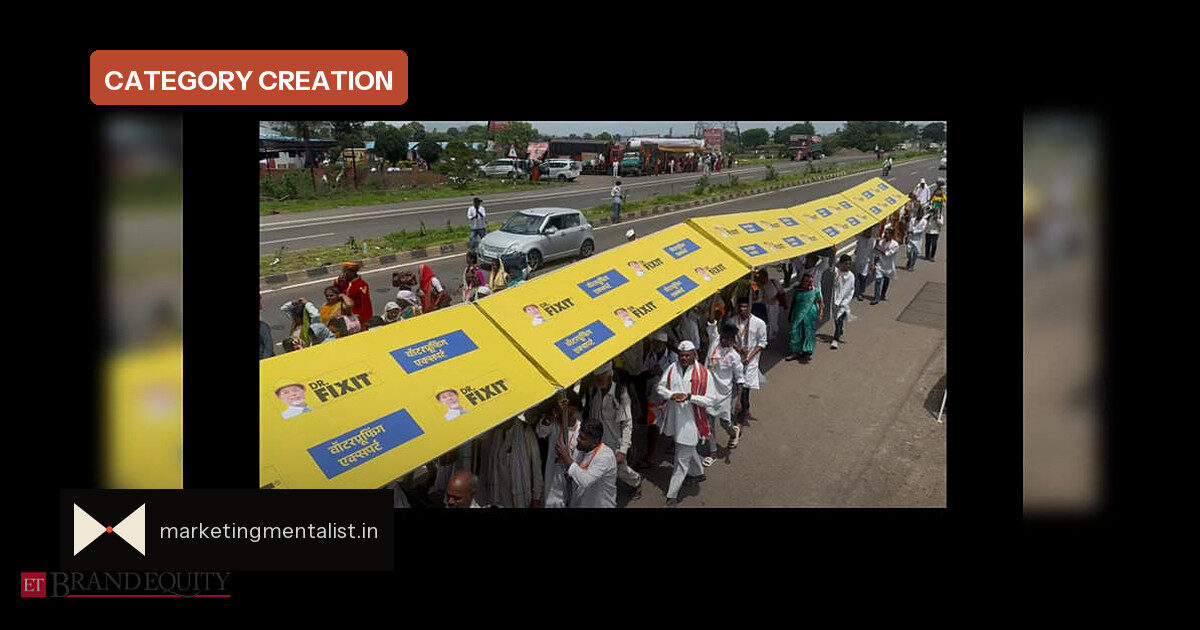
The same relevance filter is being applied to cultural marketing. At the Pandharpur Wari, Dr Fixit moved from rain shelters to drying stations for pilgrims; during the Kanwar Yatra, M-Seal was used to help stop water leakage from pots. “I don’t think we will just use salience or buying space for visibility,” Tanwani said. “It will need to be something which starts mattering to people.”
What to take from Pidilite
The lesson for brand managers is not “spend more.” It is to name the job before you allocate the budget. If penetration is low, brand preference is a second-order problem; category understanding is the first. Build the channel and the educator network first, then advertise. And when you do buy visibility, make it useful enough that people remember the brand for what it did, not just what it said.
Pidilite’s late entry into paints with Haisha shows the same discipline. Instead of replicating its adhesive authority, the team is trying to find a distinct pain point and build a unique experience around it. Whether that works is still open, but the strategic question is the right one: not “how do we beat the leader?” but “what unmet job can we own?”
Source: ETBrandEquity.com