Why AI Personalisation Still Needs a Human Touch in Insurance
Why more insurance choices leave buyers less confident, and why AI personalisation still needs human trust to close the decision gap.
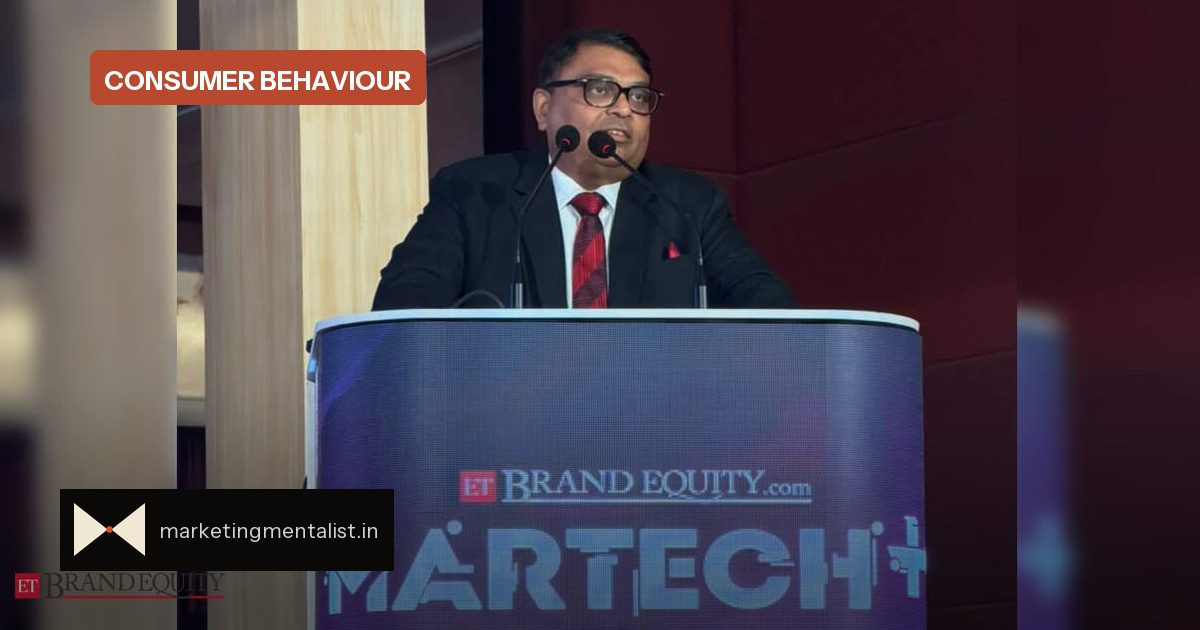
Insurance rarely triggers the instant desire that travel, fashion or food do. But that is exactly why the way people buy insurance reveals so much about consumer trust. Speaking at the seventh edition of ETBrandEquity.com’s MarTech+ Summit 2026, Alok Rungta, MD and CEO of Generali Central Life Insurance, offered a sharp diagnosis: customers have more information and choices than ever, but that has not translated into confidence.
An audience poll during the session underlined the problem. Only 20 percent said they were very confident about buying the right policy entirely on their own, while another 30 percent were not sure. More choices, it turns out, have made the decision heavier, not easier.
The confidence gap, not the information gap
Rungta framed this as a gap between the availability of digital information and a customer’s ability to use that information for a long-term financial commitment. Since the sector opened up in 2000, the old agency-led model has given way to a journey of search, comparison, research, validation and purchase. Yet even when the first stages are completed diligently, the final decision still stalls.
“Even if the first three steps are done very smartly through homework, video and research there is still a gap when it comes to decision-making,” Rungta said.
The friction is not ignorance. It is uncertainty about whether the information is complete, current and trustworthy. In behavioural terms, the buyer is facing an evaluation problem, not an awareness problem.
From set menu to buffet
Rungta’s proposed shift is from conventional segmentation to genuine individual-level personalisation. He compared segmentation to a set menu: customers choose from predetermined options. True personalisation is closer to a buffet, assembled around an individual’s unique requirements.
- Set-menu thinking: push a standard product to a demographic segment.
- Buffet thinking: understand one customer’s background, income, values, family structure and risk appetite before recommending.
- AI’s role: use customer data to create “one customer, one view and one solution.”
That requires a different commercial instinct — from product selling to solution creation. Rungta put it plainly: rather than saying “let me push a product for you,” the organisation wants to hear who the customer is and what they want, then recommend accordingly.
Why trust still needs a human presence
Rungta was equally clear that technology should complement human engagement, not replace it. After-sales relationships have historically received less attention than acquisition. As more interactions move to machines, brands risk weakening the relationship built by earlier face-to-face contact.
“A large part of India still wants to know: where is your office? Are you a one-man operation? Are you real?” he said.
This is the practical heart of the insight. Insurance decisions carry emotional and social weight — family protection, children’s education, retirement. In such categories, credibility cues and human presence do some of the heavy lifting that data alone cannot.
What marketers can do
For founders and brand managers, the lesson is not to choose between digital and physical. Rungta expects both models to coexist. AI can help at discovery, research, validation, lead management and recommendation. But the aim is relevance, not deployment: hyper-personalised technology, matched with a credible human layer, is what moves confidence.
Source: ETBrandEquity.com