India Is L’Oréal’s Pressure Test for Global Beauty
L’Oréal SAPMENA president Vismay Sharma says India’s demanding consumers are its global beauty lab—where science, accessibility and authenticity win.
L’Oréal is talking about India less as a market and more as a proving ground—a beauty laboratory where products are stress-tested by some of the world’s most demanding consumers before they are rolled out to the rest of the world.
Demographics, desire and digitalisation
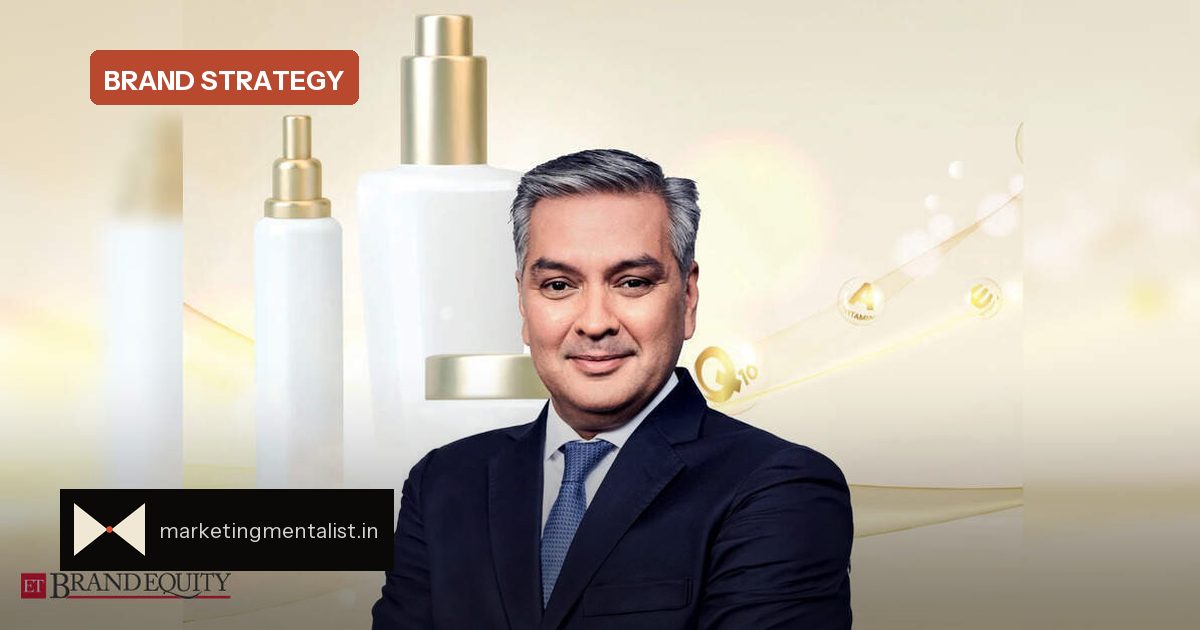
Vismay Sharma, president of L’Oréal SAPMENA, told ETBrandEquity.com that the region stretches from New Zealand to Morocco, covering 35 markets, roughly 3 billion people and 40% of the world’s population. The average age is about 28, and more than 40% of people are under 25.
Yet the region accounts for less than 10% of the global beauty market. That gap is the growth story. L’Oréal grew 6.5% globally, while SAPMENA grew almost 14%—more than twice the group average.
India as pressure test
Sharma expects one in two new L’Oréal consumers over the next decade to come from SAPMENA, and half of those from India. It is why the group has built two factories, research and innovation centres and an IT hub in the country.
India’s diversity makes it a useful testbed:
- It has the most versions of human hair and skin in the world.
- The climate is becoming hotter, more humid and more polluted.
- Consumers are price-conscious and increasingly ingredient-literate, talking about niacinamide and melasyl rather than just rose water.
“When something has gone through the pressure test of the Indian consumer, it works in most parts of the world,” Sharma told ETBrandEquity.com.
That test has produced global wins: the Melasyl pigmentation molecule, one of the group’s best-selling vitamin C serums, and the co-emulsion chassis behind many shampoos were all developed with significant Indian lab input.
Protect the premium, cascade the molecule
Sharma was clear that making premium beauty accessible does not mean discounting YSL or Lancôme. Those products carry brand equity, packaging, imagery and formulation that justify their price.
Instead, L’Oréal waits until volume allows a proven core molecule to move into mass brands such as L’Oréal Paris or Garnier, where formulations, fragrance and sensorials can vary. It is an ingredient cascade, not a price cut—a cleaner way to widen access without diluting aspiration.
Consumers own the relationship
With influencers, affiliates, retailers and AI all shaping discovery, Sharma argues the consumer ultimately controls the relationship. A retailer that delivers poor service, a brand that breaks its promise or an influencer who shares wrong information will simply be abandoned.
“The content that connects best is authentic and unscripted,” he said.
As AI recommendations grow, Sharma says the key is the quality and veracity of sources—brand sites, publications and scientific journals. Because L’Oréal is among the largest beauty companies in scientific publications, its brands are more likely to surface automatically.
The strategic lesson for brand managers: use a demanding market as your pressure test, protect premium equity, and build scientific credibility that travels across channels, retailers and algorithms.
Source: ETBrandEquity.com