ChatGPT India’s first microdrama makes age the hook
The Grand Return casts Revathy as an older intern, using an intergenerational setup to position ChatGPT as useful across age groups.
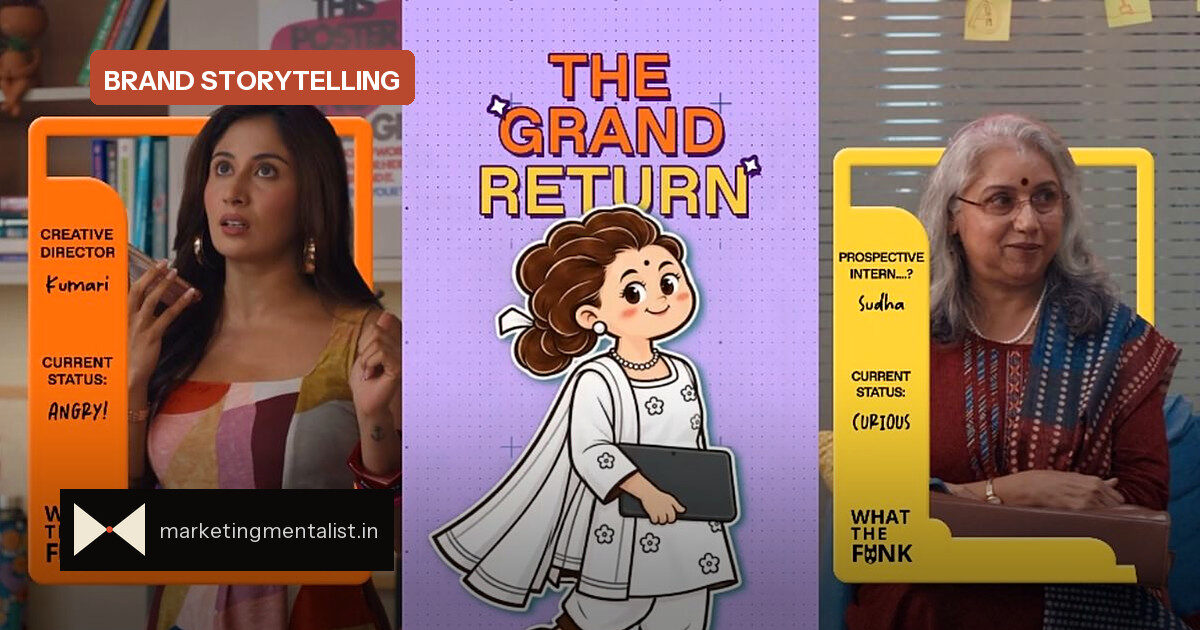
When a technology brand wants to feel universal, it often shows young people using it in cool ways. ChatGPT India’s first microdrama takes the opposite route: its protagonist is a retired grandmother walking into an unfamiliar, digitally fluent marketing agency.
A familiar premise, a positioning job
The Grand Return casts Revathy Asha Kelunni as the grandmother who applies for an internship at a new-age marketing agency. The younger team is played by Shreya Kalra, Vineeth Beep Kumar and Sanjana Sarathy. The opening episode quickly establishes that each younger character already uses ChatGPT in a different way, then the older protagonist arrives and has to decode that environment.
The setup deliberately echoes The Intern, the 2015 Hollywood film in which Robert De Niro’s retired character joins a young fashion startup. That borrowed familiarity does two things. It lets viewers understand the story world almost immediately, and it lets the brand make a broader case: ChatGPT is not just a productivity tool for early adopters, but something that can help people across age groups with work, everyday tasks and getting oriented in a new situation.
The move is consistent with OpenAI’s earlier two-minute ChatGPT Voice film. There, actors SJ Mendelson, Lavelle Roby and Constance Brenner used ChatGPT in deliberately ordinary moments: baking cookies, gardening, selling pottery, checking a bank account for duplicate charges. That film framed AI as quiet utility rather than futuristic spectacle.
Microdramas are becoming brand infrastructure
ChatGPT’s entry is part of a wider Indian brand experiment with short episodic fiction. The shape of that experiment so far:
- AJIO: Suit Yourself, a six-episode Instagram-first series launched in February 2026 under AJIO Originals and tied to an earlier campaign.
- Myntra: Folks in the Building, a four-part October 2026 story about neighbours featuring digital personalities including Anuj Gupta, Sameha Shams, Shivani Gupta and Gulshan Grover.
- Tata Motors Commercial Vehicles: Apna Superstar, made with microdrama platform BULLET, placing the Tata Azura inside a protagonist’s entrepreneurial journey.
- JK Super Cement: Tera Ghar Mera Ghar, a 53-episode BULLET series about a couple building a home.
- Flipkart: a dedicated microdrama section inside its main shopping app, introduced in September 2026.
These choices reveal a strategic split. Some brands keep microdramas on their own Instagram feeds so the story sits inside the existing content ecosystem. Others partner with dedicated platforms such as BULLET for longer, more episodic narratives. Flipkart’s in-app section points to the next step: putting entertainment directly next to the commerce experience, shortening the distance between attention and purchase.
What to take from it
For brand managers, this is not a call to copy the grandmother trope. It is a reminder that the first job of branded fiction is to lower the cost of understanding. A familiar premise does that instantly. The second job is to make the product’s role clear and repeatable without making it the hero of every scene. ChatGPT gives the grandmother a reason to ask questions, explore and catch up; the tool becomes the enabler of the story rather than the subject of it.
Before commissioning or adapting a microdrama, decide which job it is doing. If the goal is social fit and brand affinity, an Instagram-first series can extend an existing campaign world. If the goal is a longer narrative with deeper character arcs, a dedicated platform may be a better partner. If the goal is commercial action, an in-app placement shortens the path from story to sale.
Source: Afaqs!