Maaza’s first digital micro-drama is a 7-episode Diwali story
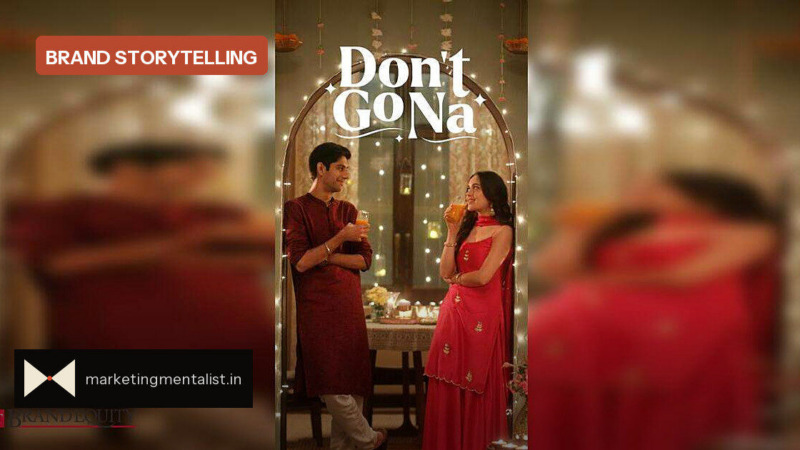
Maaza’s first digital micro-drama, Don’t Go Na, turns a festive meeting into seven episodes on Instagram and YouTube, with the drink as quiet catalyst.
Maaza is trading the ad break for the story itself. The beverage brand has launched Don’t Go Na, a seven-episode digital micro-drama built around festive gatherings, hospitality and a budding connection. It is Maaza’s first brand-led digital micro-drama, and it moves the brand beyond the television-led format it has traditionally used.
The plot follows a young man and woman who meet at a Diwali party. A shared moment over a glass of Maaza becomes the starting point for their connection, and each episode plays out around the small, warm interactions of festive hosting. The episodes are available on the brand’s Instagram and YouTube channels.
Why the format matters
Where a TV spot interrupts attention, a micro-drama competes for it. Seven short episodes fit the way younger audiences already watch: vertically, in the feed, and in snackable bursts. For a legacy mass-market brand, that is a meaningful bet. Maaza is not walking away from reach; it is testing whether episodic storytelling can build a different kind of recall, one based on emotion and narrative rather than repetition.
The creative logic is simple. A glass of Maaza is not pasted into the story as a prop. It is the quiet reason two people begin to connect. Sukesh Nayak, chief creative officer of Ogilvy India, described the approach as “bypassing standard advertising formulas” and making the drink “the quiet catalyst.” Sunainika Singh, senior director, marketing – nutrition at Coca-Cola India and Southwest Asia, added that the series celebrates “one of the most familiar expressions of warmth in Indian households, not letting a guest leave easily.”
The framework inside the campaign
- Make the product the emotional turn. The drink triggers the connection; it is not just placed in the frame.
- Anchor the story in a shared ritual. Festive hosting and the reluctance to let a guest leave give the brand cultural warmth it could not invent on its own.
- Design for the feed. Seven short episodes match the platform behaviour of Instagram and YouTube audiences.
This is really an exercise in narrative transference. The brand borrows the warmth of Diwali hosting and the small drama of new connection, then lets the product carry a little of that feeling. It is the opposite of a hard-sell spot, and the risk is equally clear: episodic content has to earn its audience one episode at a time.
What to watch
For brand managers, Maaza’s experiment raises a useful question: can a brand-owned story hold attention the way a well-placed ad cannot? The answer will show up in completion rates, shares and whether viewers actually return for the next episode. If the series works, expect more FMCG brands to swap a few television GRPs for feed-first, ritual-led storytelling.
Source: Afaqs!