Jio Story: What Changed When Data Stopped Being Scarce
The psychology of moving from rationed data and cyber cafe timers to an always-on pocket, and the habits that changed when scarcity stopped steering.
For an entire generation, the cyber cafe was a countdown. You bought a half-hour, placed your bag on the chair, and rationed attention into browser tabs. The phone in your pocket was mostly for calls, and data was a metered thing—topped up, conserved, borrowed.
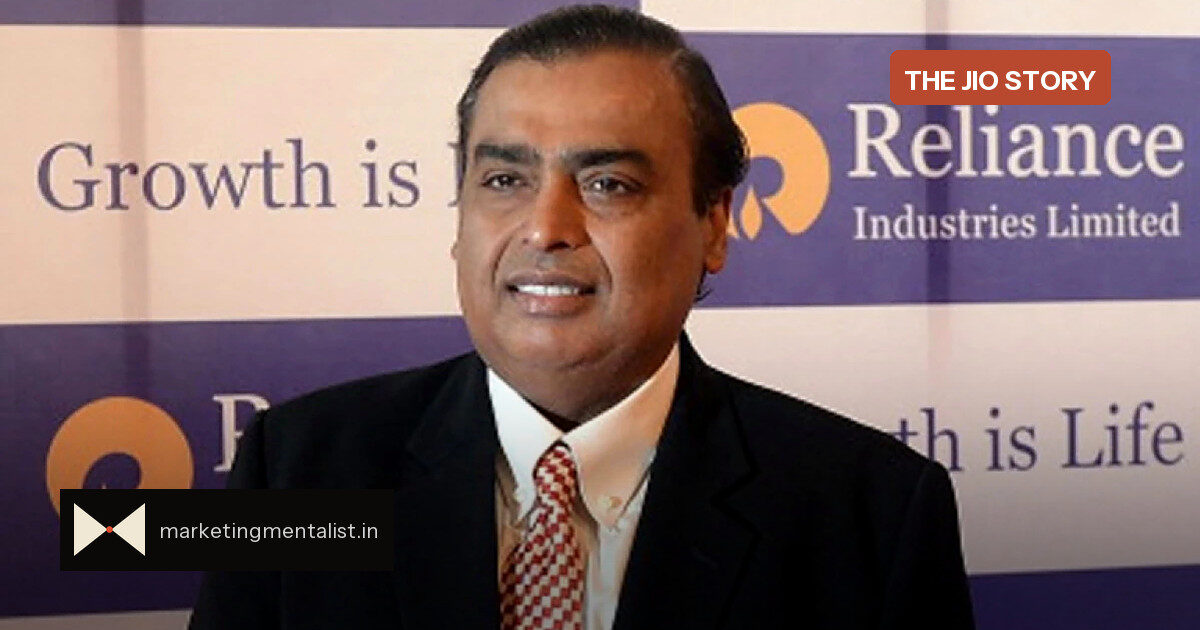
Then the frame changed. In 2016, Jio launched with the Welcome Offer: unlimited 4G data, voice, video and apps (Reliance Industries). What followed was less a tariff change than a behavioural shift. The timer did not stop mattering all at once. It stopped being the thing that organised the afternoon.
The scarcity that used to steer
Scarcity is a powerful psychological cue. When a resource feels limited, people hoard it, track it, and make smaller, more conservative choices. For years, data behaved exactly like that: plans were counted in megabytes, downloads waited for Wi-Fi, and a video call felt like an event with a meter running.
Unlimited changed the mental model. The question India asked moved from “How much does data cost?” to “What can we do with data?” Consumption stopped being an accounting exercise and became a creative one.
From the cyber cafe to the pocket
Think about what quietly disappeared: the friend who kept a hotspot for emergencies, the family group chat warning everyone not to auto-play videos, the shop that let you “just check something” for five rupees. They were all ways of managing scarcity. When scarcity faded, the rituals faded with it.
- Before: a fixed window at a shared terminal, measured in minutes.
- Now: a continuous pocket connection, measured in tasks and moments.
- The shift: the cue changed from “don’t waste it” to “what can this become?”
The change wasn’t that people suddenly had more hours in the day. It was that the decision cost collapsed. In behavioural terms, unlimited data removed a recurring micro-decision: “Is this worth the data?” When a routine no longer asks for a trade-off, it becomes a default.
The habit becomes a default
Today the ecosystem goes far beyond connectivity: it spans entertainment, commerce, payments, devices, cloud and AI (Reliance Industries 48th AGM, August 2025). Jio reached 100 million subscribers within 170 days of launch (company-reported; Reliance Industries Integrated Annual Report 2016-17) and now serves 524 million+ customers (Reliance Jio Infocomm, March 2026; company-reported). Its stated priorities include connecting every Indian, bringing digital services home, digitising businesses, and pursuing “AI Everywhere for Everyone” (Reliance Industries 48th AGM, August 2025).
For brand builders, the lesson is in what did not happen. Unlimited data did not make people value connection less. It moved the value from the meter to the moment. When a constraint disappears, customers stop comparing units and start comparing outcomes.
None of this means the old scarcity mindset vanished completely. It shows up in data-saving modes, offline downloads for flights, and the occasional “don’t stream on my hotspot.” But the centre of gravity has moved: the default is now an open connection, not a countdown.
That is the quieter shift: from rationing data to just assuming it will be there.