
Zero ads, 15,000 racers: HYROX India’s community flywheel
How HYROX India grew from 1,600 to 15,000 racers with zero paid marketing—and what measurable goals, social proof and community mean for brand growth.
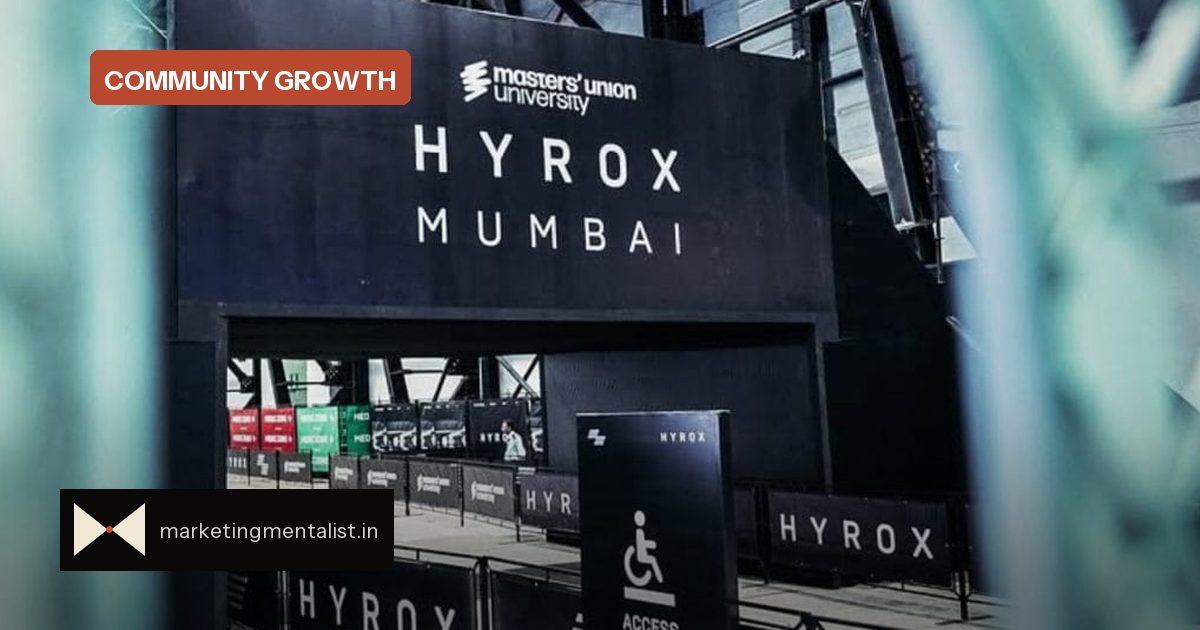
At a recent HYROX event in Mumbai, the atmosphere felt less like a niche fitness race and more like a shared ritual. People ran, lifted and dragged sleds while families cheered. That crowd energy, Storyboard18 reports, is central to how HYROX India has grown from roughly 1,600 participants at its first event to about 15,000 today.
Deepak Raj, head of HYROX India, argues the race gives gym-goers something they lacked: a measurable, time-bound goal. Runners have marathons. Triathletes have Ironman. Team athletes have tournaments. Regular gym members often have no external finish line. HYROX changed that.
The psychology behind a quantifiable finish line
People already have an interest in staying fit. HYROX added a race structure—timed stations, a recorded finish, and a number to beat next time. That turns an open-ended gym habit into goal-directed behaviour. It also makes progress visible, which is a powerful motivator.
- Goal gradient: A visible finish line makes effort feel more urgent.
- Social proof: Hearing “I did it, so can you” from a peer lowers perceived risk.
- Shared identity: Training and racing together turns a workout into belonging.
- Self-signalling: Completing a timed race changes how participants see themselves.
Why zero paid marketing works here
“We have zero paid marketing,” Raj told Storyboard18. The brand works with about seven ambassadors and influencers, but Raj does not see them as the main sign-up driver. Instead, participants become the channel. Someone who has finished tells a gym friend that with two or three months of training, they can do it too. Raj calls the growth a snowball effect.
That peer-to-peer nudge matters more than an ad because it lowers the psychological cost of trying something hard. A paid post can create awareness, but belief usually comes from someone who already knows your routine. The participant’s story—“I know you go to the gym, you can do this”—is social proof in its most concrete form.
Fewer partners, deeper identity
HYROX India’s revenue already spans tickets, sponsorship, merchandise and gym affiliations. Raj said the company wants fewer, deeper brand partnerships rather than a long list of sponsors. Partners are judged not only on product fit, but on what they represent and how their ethos aligns with the community. That could even include banks and insurers, not just fitness brands.
The team is also exploring recovery products and electrolytes, along with experiences such as a HYROX cruise in Europe. The commercial strategy is to make each revenue stream larger rather than chase every possible tie-up.
What brand managers can take away
The HYROX story is less about fitness than about designing an experience people want to narrate. Three moves stand out: give consumers a measurable goal, let customers deliver credibility rather than paying for it, and choose fewer partners whose meaning fits the community so the shared identity stays sharp.
On whether the surge could be a fad, Raj’s logic is practical: the race is built on an existing gym habit. Even if the event fades, people will likely keep going to the gym. The clearest sign may be emotional—Raj described a participant wondering whether he could compete alongside his 86-year-old father in Ahmedabad or Bengaluru next year. That is not just a fitness product; it is a story people want to be part of.
Source: Storyboard18