Scarcity Is the Product: Why $40 Vinyl Sells Out
Blood Records turns limited vinyl into a scarcity machine, with drops selling out in 10 minutes. Inside the psychology of ownership and collectible demand.
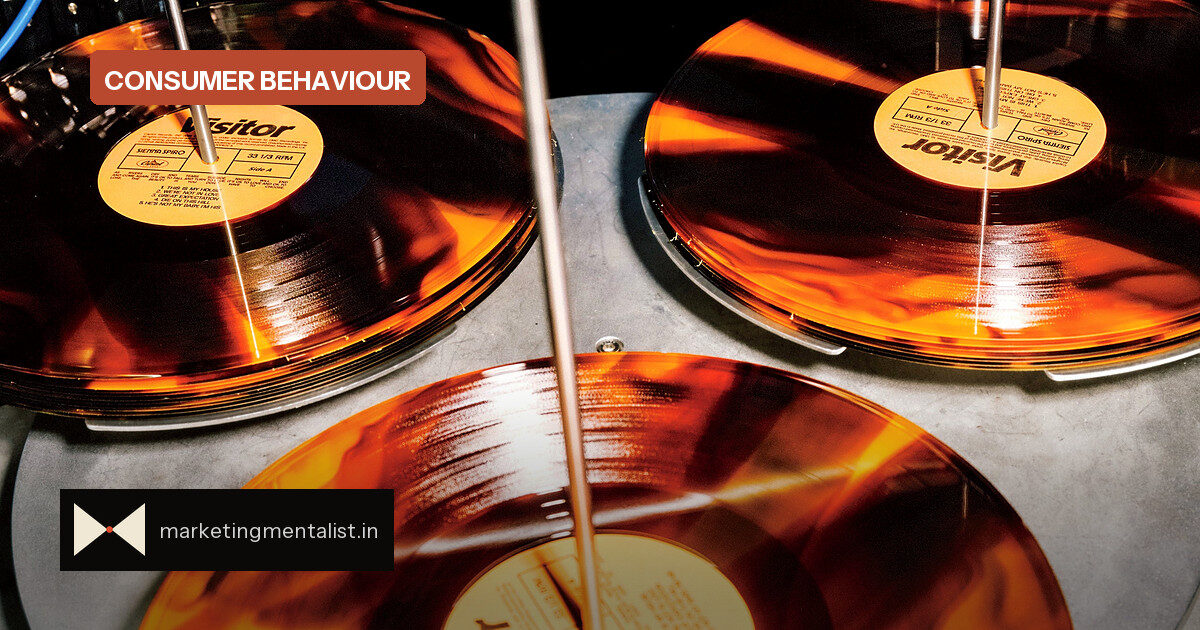
When Sienna Spiro’s debut album Visitor arrived in July, it was available as an MP3, cassette, CD and a spread of retailer-exclusive coloured vinyl. But 3,000 fans received something deliberately different: orange and black swirled discs, deeply pigmented on some copies and almost translucent on others.
The edition was made by London-based Blood Records, starting at Press On Vinyl in Northern England. A worker wrapped a black plastic snake around an amber PVC puck heated to roughly 225°F, then pressed them together between a master cutting with a hydraulic press.
The result sold for $40 and was gone in 10 minutes.
A drop model built on visible rarity
Blood Records has been doing this since 2018. Today, it releases new pressings every other day, and founder and CEO Craig Evans says most sell out within 15 minutes. It works with indie artists such as Sienna Spiro and chart-toppers like Olivia Rodrigo and Elton John.
Evans sees standard colour as a failure. “We want people to have a visceral reaction when they see our records for the first time,” he says. “The worst thing for me is when someone buys a record and they open it and go, ‘Oh, it’s an orange LP.’”
That logic has pushed the company past starbursts and zoetrope pressings. Its Bad World imprint has made editions filled with powder for a Charli XCX Brat remix, a coffee-coloured liquid for a Sabrina Carpenter “Espresso” anniversary pressing, and even one with hair for Chappell Roan’s “The Subway”.
Why ownership still wins in an access economy
The broader vinyl market is growing. Overall vinyl sales rose 8.6% in 2025 — a 19th straight year of expansion. Blood Records says its own business has grown about 30% year over year and is tracking the same in 2026.
Gary Kelly, general manager and chief revenue officer at Interscope Capitol, points to the flattening effect of streaming. “Listening on Spotify is the same as listening on Apple or Amazon,” he says. “People don’t just want access to music. Ownership is still important to them.”
Seen through a behavioural lens, Blood Records is tapping into scarcity bias: when something is rare, time-boxed and visibly unique, it feels more valuable. The fact that copies vary from deeply pigmented to nearly translucent adds an element of chance that mass-market colour variants cannot.
What brands outside music should borrow
- Make the variation visible. If every unit looks identical, there is nothing to hunt for.
- Use a genuine hard limit. A clear stock count or time window makes hesitation costly.
- Sell the moment of opening, not just the object. The surprise is part of the product.
For brand managers, the lesson is simple: when access becomes cheap and uniform, the premium moves to ownership, surprise and proof that your copy is not like everyone else’s.
Source: Fast Company