Why realme is betting on culture over specs
Gen Z buyers now weigh brand personality and cultural identity as smartphone specs converge. Inside realme's Harry Potter strategy.
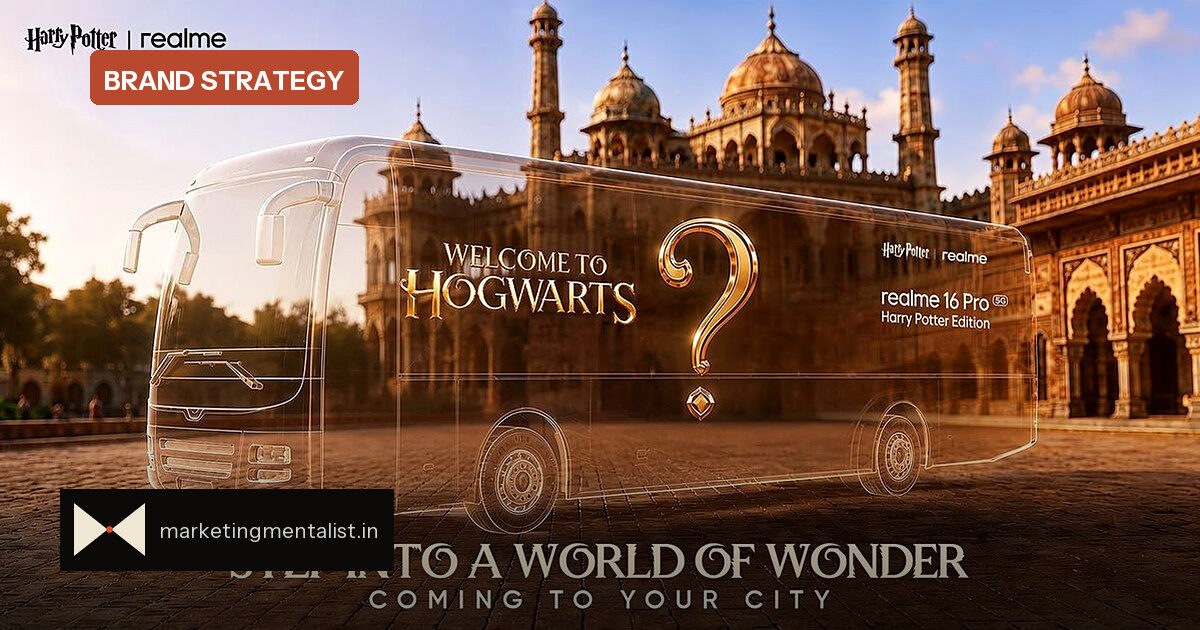
The smartphone specification war has been running on the same fuel for years: more megapixels, more RAM, faster charging, bigger batteries. realme’s global product marketing head, Francis Wong, argues that this obsession has led brands into a cycle of similarity. His counter-move is the realme 16 Pro 5G Harry Potter Edition, developed with Warner Bros. Discovery Global Consumer Products.
Why Harry Potter?
Wong sees the franchise as the right fit because it has more than 500 million fans globally and remains strong with Gen Z and young millennials, including in India. He says its values of courage and creativity align with the brand. But the collaboration is not really about Hogwarts. It is a signal that identity, fandom and experience have become purchase drivers.
The numbers explain why. According to Wong, more than 68% of young Indian Gen Z users consider brand personality and cultural identity key purchase factors, not just hardware specs. At the same time, over 90% of mid-range devices carry similar core specs. When the product is at parity, the story and the community around it become the tiebreaker.
Culture as strategy, not packaging
realme has partnered with Coca-Cola, Naruto, Thor, Game of Thrones and Aston Martin Aramco Formula One. The goal, Wong says, is to make culture part of how consumers experience the brand rather than a marketing layer bolted onto a launch.
- Exclusivity: limited editions feel scarce and collectible.
- Emotional connection: fans buy belonging, not just a device.
- Community identity: a Harry Potter phone says something about who the user is.
The research journey has changed too. Nearly 75% of young consumers now rely on social platforms and creator content when evaluating smartphones, which means cultural relevance spreads through creators rather than spec-comparison tables.
India is the test bed
India is realme’s most important market, receiving more than 25% of its global investments across R&D, retail and supply chain. Most of its sales come from the Rs20,000 to Rs35,000 segment, and over 60% of young smartphone users live outside major metros. Wong points to premiumisation, AI-powered smartphones and Tier-II and Tier-III expansion as the next growth levers. Around 70% of marketing investment goes to digital platforms and creator collaborations.
The cost pressure does not disappear
Even a culture-led strategy has to survive component costs. Rising RAM and memory prices are one of the biggest challenges, and Wong expects the industry memory crunch to continue beyond 2026. realme’s response is selective investment in what users can clearly perceive: battery performance, durability and long-term reliability.
“We cannot invest in everything. It is about making every rupee of investment count and ensuring the consumer continues to get real value from the product.”
For brand builders, the lesson is simple. When functional differences are thin, culture is not decoration; it is segmentation. The job is to pick partners whose values the brand can credibly borrow, then embed that identity in the product, content and community.
Source: Afaqs!